When comparing quotes from different tent manufacturers, buyers often begin with the specification sheet.
Two suppliers may appear to be offering almost the same product:
- 68D polyester fabric;
- PU 3000 mm waterproofing;
- aluminum poles;
- branded zippers;
- similar dimensions and accessories.
Yet the quotations may be noticeably different.
This naturally raises a question:
If the specifications are the same, why are the prices—and sometimes the final product quality—so different?
The answer is that a specification sheet cannot describe everything that determines the quality of a finished tent.
Two fabrics described as “68D polyester, PU 3000 mm” may differ in fabric construction, processing and consistency. Two tents made with apparently similar components may differ because of pattern accuracy, cutting, sewing, reinforcement, seam taping and assembly. And even a well-made approved sample does not automatically guarantee that 2,000 or 5,000 units will be produced to the same standard.
From NastoCamp’s experience working on OEM and ODM tent projects, many of the most important quality differences are found in details that are difficult to see on a quotation sheet.
This does not mean specifications are unimportant. They are essential for defining what a buyer expects.
But for OEM sourcing, they are only the starting point.
Specifications define the requirements. Manufacturing determines how consistently those requirements become the finished product.
For outdoor brands comparing tent suppliers, understanding this distinction can make supplier evaluation much more meaningful than comparing specification sheets and prices alone.
Why Tent Specifications Do Not Tell the Whole Quality Story
A tent specification is necessary because it gives the buyer and manufacturer a common technical reference.
It may define:
- fabric type and denier;
- fabric density;
- waterproof rating;
- pole material and dimensions;
- zipper brand;
- mesh type;
- dimensions;
- accessories;
- packaging requirements.
These details help establish what the factory is expected to produce.
The limitation is that a specification normally describes what the product should contain. It cannot document every decision involved in sourcing, processing and assembling those materials.
That distinction becomes important when buyers compare suppliers.
A Specification Sheet Shows Requirements, Not Every Manufacturing Detail
Consider a simple fabric specification:
68D Polyester, PU 3000 mm
At first glance, this appears quite specific.
But it still does not answer every question about the fabric.
For example, depending on how the complete specification is defined, there may still be differences in:
- yarn and base fabric quality;
- fabric density, such as 190T or 210T;
- dyeing and finishing;
- coating quality;
- waterproof performance consistency;
- batch-to-batch stability.
NastoCamp’s experience is that some of these differences are difficult for buyers to identify from the quotation alone.
The same principle applies beyond fabric.
A quotation might specify an aluminum pole, a particular zipper brand, or a certain type of mesh, but the written description may not capture every detail that affects how the component performs in the finished tent.
This is why two quotations can look similar without necessarily describing two completely equivalent products.
A More Detailed Specification Helps, but It Still Does Not Replace Manufacturing Control
One response might be:
“Then we should simply make the specification sheet more detailed.”
That is useful—and professional buyers often provide highly detailed specifications.
The more clearly a buyer defines requirements, the less room there is for misunderstanding.
However, even a detailed specification cannot replace manufacturing control.
A technical document may specify:
- fabric;
- dimensions;
- stitch requirements;
- components;
- waterproof performance;
- reinforcement positions.
The factory still has to execute those requirements consistently.
Pattern accuracy still matters.
Cutting accuracy still matters.
Sewing workmanship still matters.
Seam sealing still matters.
Assembly still matters.
Inspection still matters.
Therefore, supplier evaluation should consider two separate questions:
Has the product been specified correctly?
and:
Can the manufacturer reproduce that specification consistently in mass production?
For an OEM buyer, both are necessary.
Price Differences Should Be Investigated, Not Automatically Interpreted
When several factories quote against the same specification, buyers may see significant price differences.
A lower quotation does not automatically prove that the product will be lower quality.
Likewise, a higher quotation does not automatically prove better quality.
Different prices can result from many factors, including:
- material sourcing;
- supplier relationships;
- production efficiency;
- labor and overhead;
- component choices;
- manufacturing methods;
- quality-control requirements.
The useful question is therefore not simply:
“Why is Factory A more expensive?”
It is:
“What is actually included in each supplier’s interpretation and execution of this specification?”
That question encourages a much better supplier comparison.
Hidden Differences Behind the Same Fabric Specification
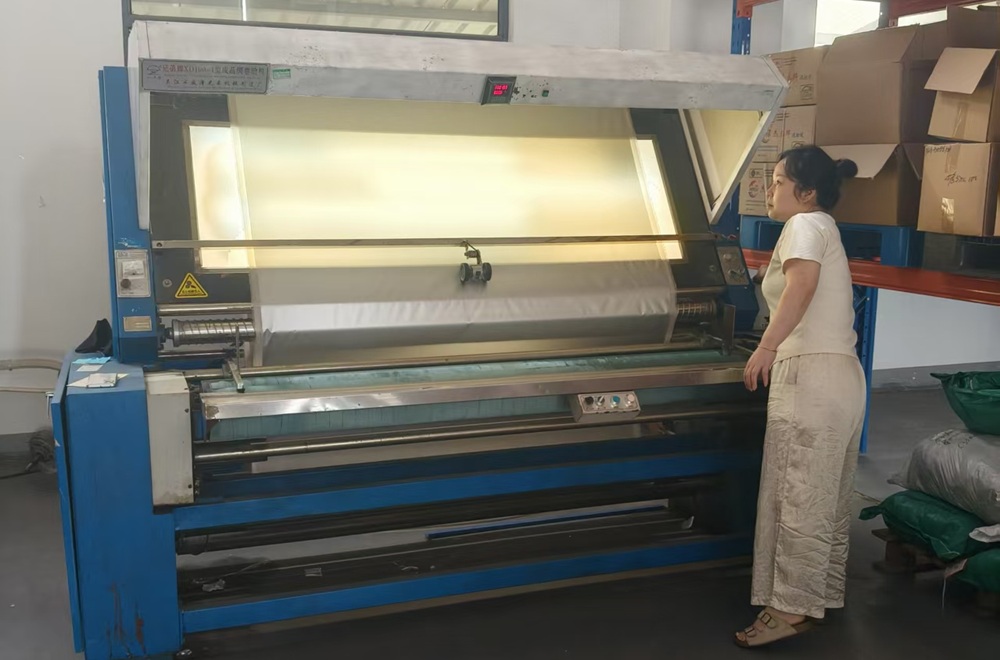
Fabric is one of the easiest places to understand why apparently identical specifications do not always tell the complete story.
For many tents, fabric represents a significant part of the material cost. Small differences in fabric sourcing or processing can therefore influence both product performance and quotation price.
But these differences are not always visible in a short specification such as:
75D 190T Polyester, PU 3000 mm
To understand why, it helps to look beyond the final line on the quotation.
Fabric Quality Is Built Through Several Stages
A finished tent fabric is not defined only by its denier and waterproof rating.
Before it becomes the material used to manufacture a tent, several factors are involved.
From NastoCamp’s sourcing experience, important areas can include:
- the base fabric;
- dyeing and finishing;
- coating;
- consistency of the finished material.
For example, 190T and 210T indicate different fabric densities. But even when two suppliers quote the same density, denier and waterproof requirement, there can still be differences that are not obvious from the specification alone.
For buyers, this means a line such as:
68D Polyester, 210T, PU 3000 mm
is useful—but it should not be interpreted as a complete description of every aspect of material quality.
The Waterproof Number Does Not Describe the Entire Coating
Waterproof rating is particularly easy to compare because it gives buyers a number.
If two quotations both state:
PU 3000 mm
they may appear equivalent.
But the number primarily tells the buyer about a specified waterproof-performance requirement. It does not, by itself, describe every aspect of how the coating was produced or how consistently the fabric will perform from batch to batch.
In NastoCamp’s material evaluation, coating quality and stability are therefore considered alongside the requested waterproof specification.
This distinction matters because an OEM manufacturer is not purchasing a number on a specification sheet.
It is purchasing production material that must remain sufficiently consistent for the finished product.
For buyers who want to understand waterproof ratings in more detail, the hydrostatic-head number should therefore be viewed as one performance requirement within a larger material and manufacturing system, rather than a complete measure of tent quality.
A Real NastoCamp Example: Paying More for Greater Material Stability
A real sourcing decision from NastoCamp illustrates why specification and price should not be considered separately.
For one project, the required tent fabric was:
75D 190T Polyester, PU 3000 mm
The customer placed particular importance on product quality.
When sourcing the fabric, NastoCamp could choose between suppliers capable of providing material against the requested specification. Instead of selecting only on the lowest material price, the team chose a supplier considered more stable for the quality expectations of the project.
The difference was approximately:
RMB 0.4 per meter
That amount may look small when comparing one meter of fabric.
Across the total fabric consumption of a production order, however, it becomes a real cost difference.
Why accept the additional cost?
Because for this project, NastoCamp considered material consistency more important than minimizing that part of the quotation.
This example does not mean that a more expensive fabric is automatically better.
It illustrates a different point:
Two manufacturers can quote the same written fabric specification while making different sourcing decisions behind that specification.
Those decisions may never appear on the buyer’s comparison spreadsheet, but they can influence both quotation price and production consistency.
What Should OEM Buyers Ask About Fabric?
Most buyers do not need to become textile engineers before ordering tents.
But when two quotations appear identical and the price difference is difficult to understand, several practical questions can help.
Instead of asking only:
“Is this 75D polyester PU3000?”
buyers can also ask:
- Have you used this fabric for similar products before?
- How do you confirm incoming material against the approved sample?
- Is the same material supplier intended for mass production?
- What happens if the production fabric differs from the approved material?
- Can material performance be tested when the project requires it?
These questions move the discussion away from simply matching words on a specification sheet.
They help buyers understand how the manufacturer controls the material behind those words.
Quality Differences Also Come From Components and Construction
Fabric is only one part of a tent.
Even when two suppliers appear to quote the same major components, the written specifications may still leave out details that influence the finished product.
This is particularly important for components such as tent poles and zippers, where a short description can make two quotations look more similar than the actual components may be.
For OEM buyers, the objective is not to make every quotation infinitely detailed. It is to recognize which components are important enough to verify before approving the product.
“Aluminum Pole” Is Not a Complete Pole Specification
A quotation may simply state:
Aluminum poles
A more detailed quotation may include the aluminum grade and tube diameter.
That is useful information, but NastoCamp’s experience is that the performance of the finished pole system can also depend on details such as:
- tube wall thickness;
- material hardness;
- surface treatment and oxidation quality;
- consistency of the supplied components.
These details may not all appear in a basic quotation.
For an outdoor brand, this matters because the pole is not simply a material item. It is a structural component that has to work with the tent geometry, fabric tension and intended use.
If the pole system is important to the product’s positioning, buyers should confirm the actual approved component rather than relying only on a general description such as “aluminum pole.”
A Zipper Brand Does Not Describe Every Zipper Detail
Zippers provide another useful example.
A quotation may identify a zipper brand, which gives buyers an important reference point.
But the brand name alone does not necessarily describe every detail of the zipper system used in the finished tent.
Depending on the product, considerations may include:
- zipper type and specification;
- zipper tape;
- durability requirements;
- water-repellent requirements where needed;
- how the zipper is integrated into the tent structure.
This is especially relevant because a zipper does not perform independently.
Its final performance also depends on how it is sewn into the tent, how surrounding fabric is tensioned, and whether the construction is appropriate for the intended use.
For buyers, the practical lesson is similar to the fabric example:
A recognizable component name is useful, but the approved component and its application in the finished tent matter more than the name alone.
Component Quality Must Be Evaluated as Part of the Complete Tent
It is tempting to evaluate a tent as a list of separate materials:
Fabric + poles + zippers + mesh + buckles + webbing.
Manufacturing does not work that way.
A tent is a system in which these components interact.
For example:
- pole geometry affects fabric tension;
- fabric tension affects how the tent holds its shape;
- zipper installation affects opening and closing;
- reinforcement affects how loads are transferred at stress points;
- seams and connection areas affect waterproof performance.
This is why a supplier comparison based only on individual component names can miss an important question:
How well have those components been designed and assembled to work together?
The answer begins to move beyond material sourcing and into manufacturing execution.
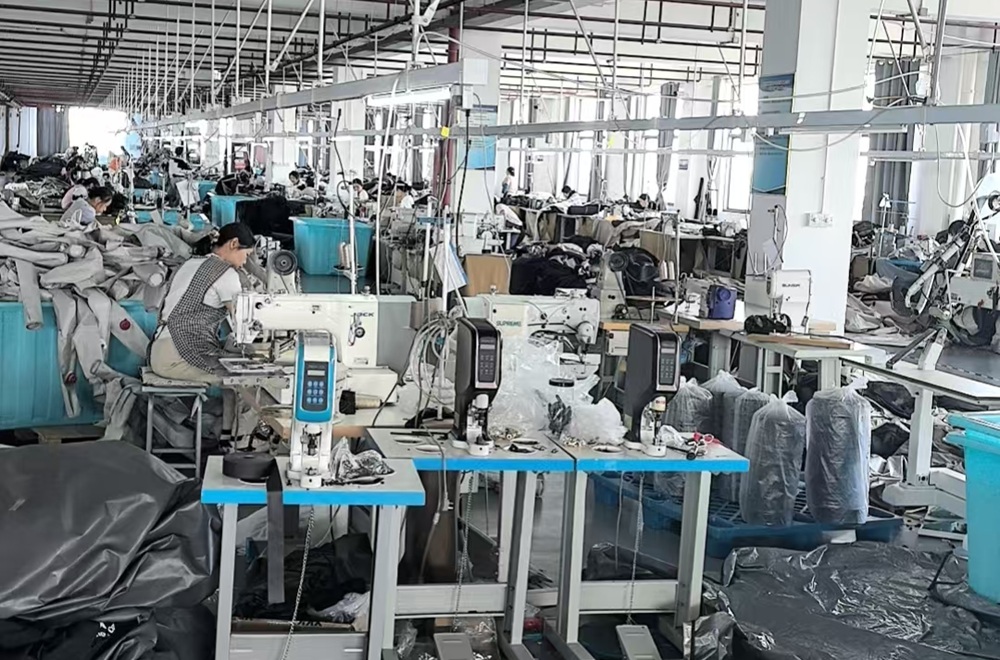
The Manufacturing Process Creates Quality Differences
Suppose two factories go one step further.
They purchase the same fabric.
They use the same poles.
They use the same zipper supplier.
They work from the same approved specification.
Will the finished tents necessarily be identical?
No.
Once materials enter production, another set of variables begins to influence the result.
From NastoCamp’s manufacturing experience, differences can be created through:
- pattern making;
- cutting accuracy;
- sewing workmanship;
- stitch control;
- seam allowance;
- reinforcement;
- seam taping;
- assembly accuracy;
- operator experience;
- inspection.
These factors are much harder to compare in a spreadsheet, yet they can have a direct impact on how the finished tent looks, fits and performs.
This is one of the main reasons OEM buyers should evaluate the manufacturing system behind the specification, not only the specification itself.
Pattern Accuracy Determines Whether the Design Can Be Reproduced Correctly
Before fabric is cut and sewn, the tent design must be translated into patterns.
For a relatively simple product, small pattern differences may appear insignificant.
For a tent, however, multiple panels eventually need to form a three-dimensional structure under tension.
Pattern accuracy can influence:
- overall shape;
- panel alignment;
- fabric tension;
- zipper alignment;
- connection between the tent body and frame.
A problem at this stage can continue through the rest of production.
Sewing cannot fully correct an inaccurate pattern.
Likewise, better materials cannot compensate for a structure that does not fit together correctly.
This is why pattern development is not merely a preparation step. It is part of product quality.
Cutting Accuracy Carries the Pattern Into Production
Once the pattern is confirmed, the factory has to reproduce it accurately across production quantities.
This introduces another challenge.
A sample room may carefully cut material for one prototype. Mass production requires the same shapes and dimensions to be reproduced repeatedly across many layers of fabric and many units.
If cutting accuracy varies, the effect can appear later as:
- misaligned panels;
- inconsistent dimensions;
- uneven tension;
- assembly difficulties.
For buyers, this illustrates an important difference between:
making one tent
and
manufacturing the same tent repeatedly.
The second requires process control.
Sewing Quality Is More Than Whether the Stitch Looks Straight
Sewing is one of the most visible aspects of tent workmanship, but visual appearance is only part of the issue.
In production, NastoCamp pays attention to factors such as:
- stitch density;
- seam allowance;
- alignment;
- reinforcement;
- consistency between operators and production units.
A seam can look acceptable at first glance while still being inconsistent with the approved production requirement.
Likewise, very neat stitching does not automatically mean the entire tent has been assembled correctly.
The more useful question is:
Is the sewing process controlled so that the approved construction can be reproduced consistently?
This becomes particularly important at:
- stress points;
- pole attachment areas;
- corners;
- zipper connections;
- reinforced sections.
These areas often carry more load than a simple straight seam.
Small Construction Details Can Have Large Consequences
Some of the most important manufacturing differences are easy to overlook because they occupy only a small part of the tent.
Consider reinforcement.
Two tents may use the same main fabric and poles, but the way a stress point is reinforced can differ.
The same applies to:
- webbing attachment;
- guy-out points;
- pole connection areas;
- corners;
- zipper ends.
These are not always the first details a buyer sees in a quotation.
But when a tent is repeatedly pitched, tensioned, packed and used outdoors, these small construction decisions can become important.
This is why experienced buyers often inspect not only the large fabric panels, but also the areas where forces are concentrated.
Seam Taping Is a Good Example of Why Process Matters
Waterproof seam construction provides one of the clearest examples of why identical specifications can produce different results.
A quotation may state:
Seam taped
The fabric may meet the required waterproof rating.
The correct seam tape may also have been selected.
Yet the final waterproof performance still depends on how the sealing process is executed.
In production, factors such as:
- equipment adjustment;
- temperature;
- pressure;
- production speed;
- operator experience;
- seam condition;
- inspection;
can influence the finished result.
If the process is not properly controlled, problems may appear even though the material specification itself is correct.
This is why NastoCamp treats seam sealing as a production process that requires control and inspection, rather than simply a checkbox on a specification sheet.
For buyers, this is a useful example of the difference between:
having the required material
and
using the required material correctly.
Assembly Accuracy Determines Whether All the Parts Work Together
After individual components are prepared, the tent still has to become a complete structure.
At this stage, small deviations accumulated earlier in production can become visible.
For example:
- panels need to align;
- zippers need to close smoothly;
- poles need to match the intended geometry;
- attachment points need to be positioned correctly;
- the tent body needs to maintain the designed tension when pitched.
This is why finished-tent inspection is important.
Individual components can each appear acceptable before assembly, while the completed tent reveals a different problem.
For OEM production, quality control therefore cannot stop at incoming materials or individual sewing operations.
The finished product also needs to be evaluated as a complete tent.
Skilled Workers Matter, but a Reliable Factory Cannot Depend on One Skilled Worker
Operator experience matters in tent manufacturing.
Experienced workers often recognize:
- how a difficult fabric behaves;
- where alignment requires extra attention;
- how different constructions should be handled;
- when a seam or component does not look right.
But mass-production quality cannot depend only on individual craftsmanship.
A factory producing hundreds or thousands of tents needs systems that help different workers reproduce the approved result.
That requires:
- clear production standards;
- approved reference samples;
- process instructions;
- inspection during production;
- feedback when deviations are found.
This distinction is important for buyers.
A factory may be capable of making one excellent tent through the efforts of its most experienced sample workers.
The more difficult question is:
Can the factory turn that workmanship into a repeatable production standard?
That question leads directly to one of the most important risks in OEM sourcing: the difference between sample quality and mass-production consistency.
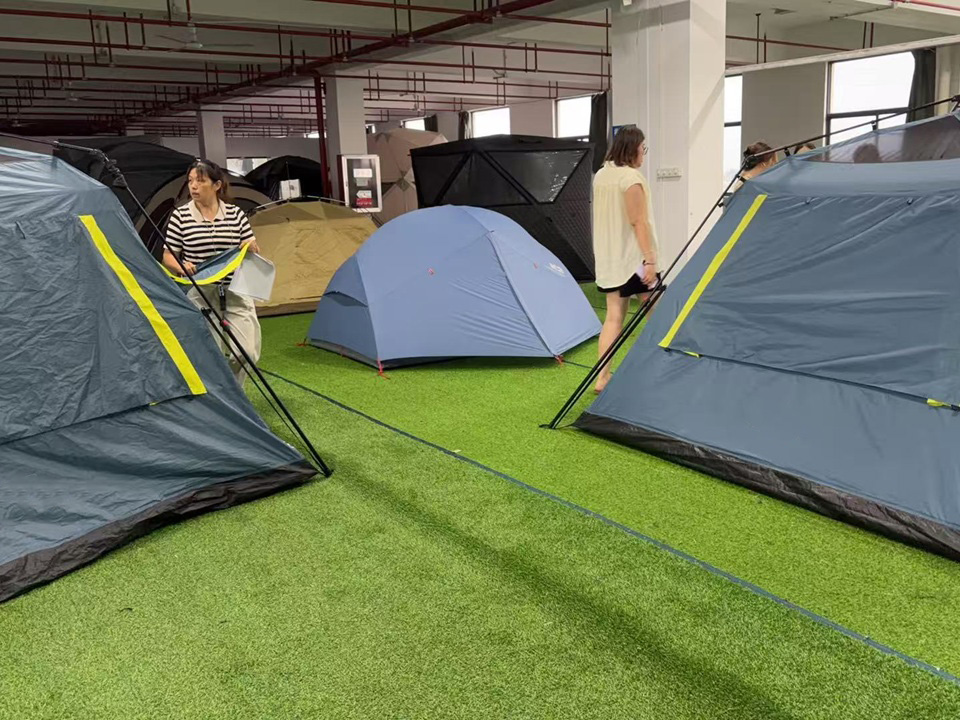
Why a Good Sample Does Not Guarantee Good Mass Production
For an OEM buyer, receiving a good sample is an important milestone.
It confirms that the manufacturer can understand the design, source the required materials and produce a tent that meets the buyer’s expectations.
But there is an important difference between:
Can this factory make this tent?
and:
Can this factory make 500, 2,000 or 5,000 tents to a consistent standard?
A sample helps answer the first question.
Mass-production control determines the second.
This distinction is particularly important when comparing suppliers because sample production and bulk production operate under very different conditions.
A Sample Is Produced Under Different Conditions
A development sample is usually produced in a relatively controlled environment.
The factory may spend additional time on:
- material preparation;
- pattern adjustment;
- sewing;
- assembly;
- inspection;
- correcting details before the sample is sent.
That is appropriate.
The purpose of sampling is to develop and confirm the product before production begins.
However, mass production introduces a different challenge.
Instead of making one or several tents, the factory may need to reproduce the approved product hundreds or thousands of times, involving:
- more material;
- more operators;
- multiple production stages;
- repeated cutting and sewing;
- ongoing inspection.
The challenge therefore changes from:
making the product correctly
to:
making the product correctly and repeatedly.
The Approved Sample Must Become a Production Standard
Once the customer approves the final sample, the factory needs a reliable way to transfer that result into mass production.
The approved sample should not simply disappear into a sample room while the production team works only from a basic specification sheet.
At NastoCamp, the approved product becomes an important reference for production.
Depending on the project, production control may involve:
- confirming the approved sample and materials;
- preparing production references or confirmation samples;
- communicating key construction requirements;
- providing work instructions;
- checking the first units from bulk production;
- conducting inspections during production.
The purpose is straightforward:
Reduce the gap between what the customer approved and what the production line actually makes.
This is one of the areas buyers should understand before placing a large order.
First Bulk Production Can Reveal Problems That a Sample Does Not
The beginning of mass production is particularly important.
At this stage, the factory can see whether the approved construction works consistently under real production conditions.
Questions may emerge such as:
- Are dimensions being maintained?
- Are panels aligning correctly?
- Are workers following the required sewing method?
- Are reinforcement areas being reproduced correctly?
- Is seam taping stable?
- Does the completed tent pitch and function as expected?
Finding a deviation early is very different from discovering it after thousands of units have been completed.
For this reason, NastoCamp pays attention to the first bulk-production units rather than waiting until final inspection to determine whether the production result matches expectations.
In-Process Inspection Matters Because Quality Cannot Be Added at the End
Final inspection is important, but it has limitations.
If a construction problem has already been repeated across a large production quantity, inspecting the finished tents does not make that problem disappear.
Some issues are better controlled at the stage where they occur.
For example:
- material problems should be identified before or during production;
- cutting deviations should be detected before assembly;
- sewing problems should be corrected during sewing;
- seam-taping problems should be identified during the sealing process.
This is why NastoCamp’s production approach includes ongoing inspection rather than relying only on a final check.
The objective is not simply to find defective finished products. It is to prevent the same deviation from being repeated across the order.
Final sampling inspection serves a different purpose. Buyers who need to understand how AQL fits into shipment approval can read our guide to AQL inspection for tents before shipment.
Consistency Is One of the Most Important Differences Between Sample Making and Manufacturing
A sample can demonstrate craftsmanship.
Mass production demonstrates manufacturing capability.
For an outdoor brand, both matter.
A beautiful sample followed by inconsistent bulk production creates obvious commercial risks:
- products may differ from the approved sample;
- performance may vary between units;
- quality complaints may increase;
- rework may delay shipment.
Therefore, when evaluating an OEM supplier, buyers should not stop at:
“The sample looks good.”
They should also ask:
“How will you make sure mass production follows this approved sample?”
The supplier’s answer can reveal much more about its manufacturing system than another line added to the specification sheet.
How OEM Buyers Should Compare Tent Suppliers Before Ordering
Understanding why quality varies is useful.
But for a buyer preparing to place an order, the more important question is:
What can I actually check before committing to a supplier?
It is impossible to eliminate every sourcing risk before production begins.
It is also unrealistic for every buyer to inspect every fabric coating, sewing parameter or production procedure personally.
A more practical approach is to look for evidence that the manufacturer can turn the agreed specification into consistent production.
The following areas can help.
1. Compare the Actual Samples, Not Only the Quotations
When two suppliers provide similar specifications, physical samples become much more useful than another spreadsheet comparison.
Look beyond whether the sample generally “looks good.”
Compare details such as:
- overall fit and shape;
- sewing consistency;
- zipper operation;
- reinforcement areas;
- seam finishing;
- pole fit;
- pitching tension;
- workmanship at corners and connection points.
If waterproof performance is important, confirm how it will be tested rather than relying only on the waterproof number written in the quotation.
A sample allows buyers to evaluate what the supplier actually produces from the specification.
2. Ask Whether the Factory Has Made Similar Products Before
A manufacturer does not need to have produced the exact same tent previously.
But relevant experience can matter.
For example, an inflatable tent, lightweight backpacking tent and large family tent can involve different:
- materials;
- structures;
- production processes;
- quality risks.
A supplier familiar with similar construction may already understand some of the manufacturing challenges involved.
For buyers, useful questions include:
- Have you produced a similar tent structure?
- Which parts of this design are likely to be difficult?
- Are any materials or processes unusual for your factory?
- What should be confirmed before sampling or production?
The quality of the answers can sometimes be as informative as a list of equipment.
3. Ask How Approved Materials Are Controlled for Mass Production
If a sample is approved with one material, buyers should understand what happens next.
Useful questions include:
- Will mass production use the same approved material specification?
- How are incoming materials checked?
- What happens if the original material supplier cannot deliver?
- Will substitutions be communicated before use?
This is particularly important when the appearance of two materials is similar but their actual performance or consistency may differ.
The objective is not to control every purchasing decision made by the factory.
It is to establish that important material changes are not made silently after sample approval.
4. Ask How the Approved Sample Is Transferred to Production
One of the most useful supplier-evaluation questions is surprisingly simple:
“How do you make sure the production line follows my approved sample?”
A manufacturer should be able to explain its process.
Depending on the factory and product, this may involve:
- reference samples;
- production confirmation;
- work instructions;
- key measurement requirements;
- first-piece or first-bulk checks;
- in-process inspection.
There is no need for every factory to use exactly the same documentation system.
What matters is whether there is a clear mechanism for transferring the approved product into repeatable production.
5. Look at the Factory’s Real Production Capability
Websites, catalogs and quotation documents are useful for initial supplier screening.
But they do not show everything.
For an important project—especially a first order with a new supplier—buyers can consider additional verification through:
- factory visits;
- video calls from the production floor;
- third-party factory audits;
- production photos or videos;
- inspection reports;
- references to similar manufacturing experience where confidentiality allows.
The purpose is not to demand unnecessary documentation.
It is to reduce the gap between:
what the supplier says it can do
and
what the manufacturing operation can actually support.
6. Understand How Quality Is Checked During Production
Instead of asking only:
“Do you have QC?”
ask:
“What do you check, and when do you check it?”
The answer should relate to the actual product.
For a tent project, relevant checks may include:
- incoming materials;
- dimensions;
- sewing;
- reinforcement;
- seam sealing;
- assembly;
- appearance;
- functional performance.
Different projects require different priorities.
A lightweight backpacking tent may have different critical control points from a large inflatable structure.
What matters is whether the quality-control plan reflects the product being manufactured.
7. Investigate Large Price Differences Before Making the Decision
Price is always part of sourcing.
There is nothing wrong with choosing the more competitive supplier when the required quality and commercial conditions are satisfied.
However, when two quotations appear technically identical but the price difference is significant, it is worth understanding why.
Ask:
- Are the materials really equivalent?
- Are component specifications complete?
- Are testing requirements included?
- Are packaging requirements identical?
- Are there differences in construction?
- Is one supplier interpreting an unspecified detail differently?
Sometimes the difference may simply come from production efficiency or commercial strategy.
In other cases, the comparison may reveal that the quotations were never truly equivalent.
The purpose of investigating the difference is not to prove that the cheaper quotation is wrong.
It is to make sure the buyer understands what is being compared.
8. Evaluate How the Supplier Responds to Technical Questions
Supplier evaluation is not only about the answers themselves.
It is also about how the manufacturer handles uncertainty.
During product development, there will often be details that need clarification.
A useful manufacturing partner should be willing to:
- identify unclear requirements;
- explain manufacturing constraints;
- raise potential problems;
- confirm changes;
- discuss alternatives when necessary.
A supplier that simply says “yes” to every requirement may appear easy to work with, but complex custom products sometimes require technical discussion before a reliable answer can be given.
For OEM buyers, the ability to discuss problems before production is often more valuable than discovering them after shipment.
A Practical Pre-Order Supplier Evaluation Checklist
Before placing a significant OEM tent order, buyers can use the following questions as a practical starting point:
| What to Check | What the Buyer Is Trying to Learn |
|---|---|
| Does the physical sample match expectations? | Actual workmanship and product execution |
| Has the factory made similar tent structures? | Relevant manufacturing experience |
| How are approved materials controlled? | Material consistency |
| How is the approved sample transferred to production? | Sample-to-bulk consistency |
| What is checked during production? | Quality-control capability |
| How are first bulk units evaluated? | Early detection of production deviations |
| Can the factory show real production capability? | Verification beyond sales materials |
| Can major quotation differences be explained? | Whether the offers are genuinely comparable |
| How does the supplier handle technical questions? | Engineering communication and problem-solving |
No single answer proves that a supplier will perform perfectly.
Taken together, however, these checks give buyers a much more complete picture than specification and price alone.
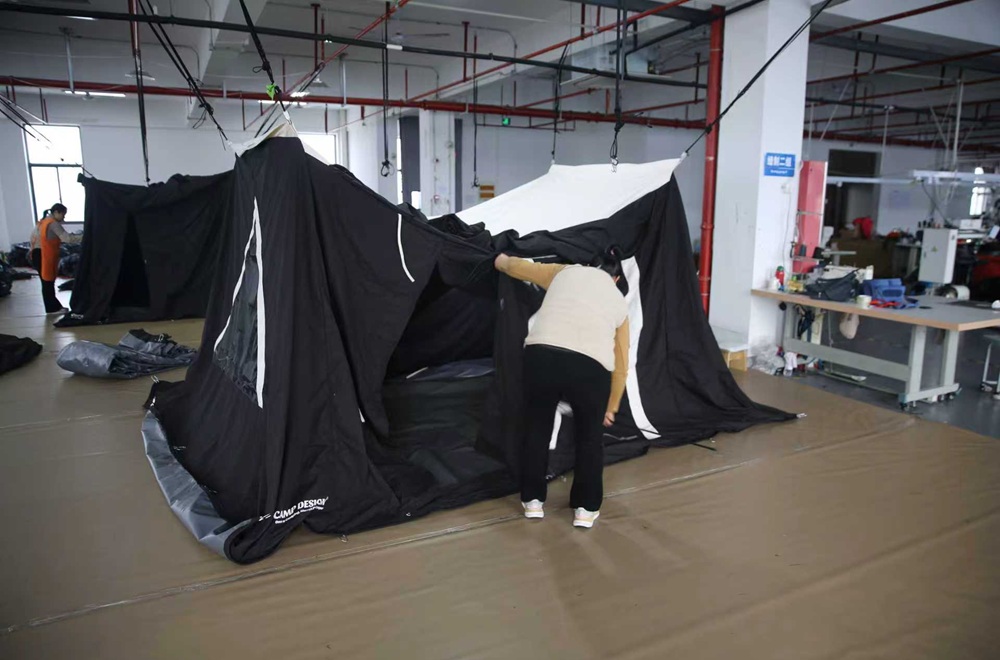
What NastoCamp Checks Before Mass Production
For NastoCamp, quality control does not begin when finished tents reach the final inspection area.
By that point, many decisions have already been made.
The materials have been sourced. Patterns have been confirmed. Components have been selected. Production methods have been established.
The more practical approach is to control important requirements throughout the transition from approved sample to mass production.
Although every tent project has different requirements, several areas are particularly important.
Confirming the Approved Materials and Product
Before production begins, the factory needs a clear reference for what has actually been approved.
Depending on the project, this may include:
- the approved sample;
- confirmed fabrics and components;
- dimensions;
- construction details;
- customer-specific requirements.
This provides a reference point for the production team.
It also helps reduce one of the risks discussed throughout this article: a specification may use the same words while the actual material or construction changes.
For NastoCamp, the objective is to make sure the product entering production reflects what was confirmed during development.
Transferring the Approved Sample Into Production
An approved sample needs to become something the production team can reproduce.
This requires more than simply telling workers:
“Make it like the sample.”
Key requirements need to be communicated to the relevant production stages.
Depending on the product, this may involve:
- production references;
- work instructions;
- construction details;
- key measurements;
- areas requiring particular attention.
For more complex tents, certain details may need additional confirmation before full production proceeds.
The objective is not to create paperwork for its own sake.
It is to reduce dependence on memory and individual interpretation.
Checking Production While There Is Still Time to Correct It
Once bulk production begins, early inspection becomes important.
NastoCamp checks the first production results to determine whether the approved requirements are being reproduced correctly.
If a deviation is identified at this stage, the production process can be reviewed before the same issue is repeated across a much larger quantity.
Inspection then continues during production.
The exact checks depend on the tent, but may involve:
- workmanship;
- dimensions;
- sewing and reinforcement;
- seam sealing;
- assembly;
- functional details.
For relevant products, finished-tent testing may also be used to verify performance.
This approach reflects a simple principle:
It is better to control a process while the product is being made than to rely on finding problems after the entire order is finished.
Using Production Feedback to Solve the Actual Problem
Quality control is not only about identifying whether something passes or fails.
When a problem appears, the more important question is:
Why did it happen?
The cause may be:
- material;
- pattern;
- cutting;
- sewing;
- sealing;
- assembly;
- another component interacting with the structure.
Finding the actual cause matters because correcting the wrong thing does not solve the problem.
This is particularly important with tents, where materials and components work together as a complete system.
For NastoCamp, production feedback therefore also becomes part of product development and process improvement.
Conclusion: Specifications Start the Conversation, Manufacturing Creates the Product
Specifications matter.
A professional OEM project needs clear requirements for:
- materials;
- components;
- dimensions;
- construction;
- performance.
The more clearly these requirements are defined, the easier it becomes for the buyer and manufacturer to work toward the same product.
But a specification sheet cannot capture everything that determines final quality.
Two quotations may both state:
68D Polyester, PU 3000 mm
Two suppliers may both offer:
Aluminum poles and branded zippers.
And both may be able to produce an attractive sample.
The real differences can appear in what happens behind those descriptions:
- how materials are sourced and controlled;
- how patterns are developed;
- how accurately fabric is cut;
- how seams and reinforcement are constructed;
- how waterproof seams are processed;
- how the approved sample is transferred into production;
- how consistently hundreds or thousands of units are manufactured.
That is why OEM buyers should avoid reducing supplier evaluation to:
Specification + Price
A more useful comparison is:
Specification + Sample + Manufacturing Capability + Production Control
The lowest quotation is not automatically the wrong choice.
The highest quotation is not automatically the best choice.
What matters is understanding what each supplier is actually offering and how they intend to manufacture it.
For buyers comparing tent manufacturers, one of the most useful questions is therefore not:
“Can you meet this specification?”
It is:
“How will you make sure the tent I receive in mass production matches the product we approved?”
A reliable answer to that question tells you much more about a manufacturer than another line added to a quotation sheet.
Planning a Custom Tent Project?
If you are comparing suppliers for a custom tent project, send NastoCamp your:
- product concept or existing design;
- target specifications;
- reference sample or drawings, if available;
- expected order quantity;
- key performance requirements.
Our team can review the project from a manufacturing perspective and discuss the materials, construction, sampling and production considerations before mass production.
Frequently Asked Questions
Can two tents with the same specifications have different quality?
Yes. A specification defines important requirements, but it does not describe every aspect of material sourcing, component quality, workmanship, production control and inspection. Two manufacturers working from similar specifications can therefore produce tents with different levels of consistency and finished quality.
Why do tent manufacturers quote different prices for the same specifications?
Price differences can come from material sourcing, components, manufacturing methods, production efficiency, labor, quality-control requirements and other commercial factors. A higher price does not automatically mean higher quality, and a lower price does not automatically mean lower quality. Buyers should first confirm whether the quotations are genuinely equivalent.
How can I compare tent quality before placing a bulk order?
Start by comparing physical samples rather than specification sheets alone. Check workmanship, fit, components, reinforcement and relevant functional performance. Buyers should also understand how approved materials and samples will be controlled during mass production and how the manufacturer checks the first bulk-production units.
Does an approved tent sample guarantee the same quality in mass production?
No. An approved sample confirms that the intended product can be made, but mass production requires the factory to reproduce it consistently across a much larger quantity. Production standards, sample transfer, work instructions and in-process inspection all help reduce differences between the approved sample and bulk production.
Should I always choose the more expensive tent manufacturer?
No. Price alone does not determine quality. The better approach is to compare what each supplier is actually offering, examine samples, understand relevant manufacturing capability and determine how the supplier will maintain the approved requirements during production.
What should I ask a tent manufacturer before ordering?
Useful questions include whether the factory has experience with similar products, how approved materials are controlled, how the approved sample is transferred into production, what is inspected during manufacturing and how the first bulk-production units are evaluated.