When developing camping tents for different outdoor markets, one of the most important structural decisions is the selection of the tent pole system.
Tent poles are not just supporting components.
They directly affect:
- Weight
- Strength
- Wind resistance
- Durability
- User experience
- Product positioning
- Cost structure
In modern OEM tent development, there is no single “best” pole material.
Instead, different materials are selected based on different product applications.
The most commonly used systems include:
- Aluminum poles
- Fiberglass poles
- Steel poles
- TPU inflatable air tubes
- PVC inflatable air tubes
Each system has its own engineering logic and market positioning.
In this article, we will explain how OEM manufacturers evaluate and select tent pole systems based on real product requirements.
Why Tent Pole Material Selection Matters in OEM Development
Many buyers focus heavily on fabric selection, waterproof rating, and tent design.
However, experienced OEM manufacturers know that:
The tent pole system determines the structural identity of a tent.
Even with the same fabric, changing the pole system can completely change:
- Product grade
- User experience
- Market positioning
- Retail price level
- Target customer segment
For example:
- A backpacking tent must prioritize weight
- A family tent must prioritize stability and cost balance
- A glamping tent must prioritize structure and aesthetics
- An inflatable tent must prioritize setup speed and comfort
This is why tent pole selection is not a simple material choice.
It is a product strategy decision.
The Main Tent Pole Systems Used in Modern Camping Tents
In OEM production, tent pole systems can be divided into two categories:
1. Solid Pole Systems
- Aluminum poles
- Fiberglass poles
- Steel poles
2. Inflatable Systems
- TPU air tubes
- PVC air tubes
Each category serves a different type of outdoor product.
Aluminum Tent Poles: The Standard for Performance Tents
Aluminum poles are widely used in professional outdoor tents, especially in higher-performance product categories.
The most commonly used alloy in OEM tent production is:
7001 Aluminum
This material offers an excellent balance between strength, flexibility, and weight.
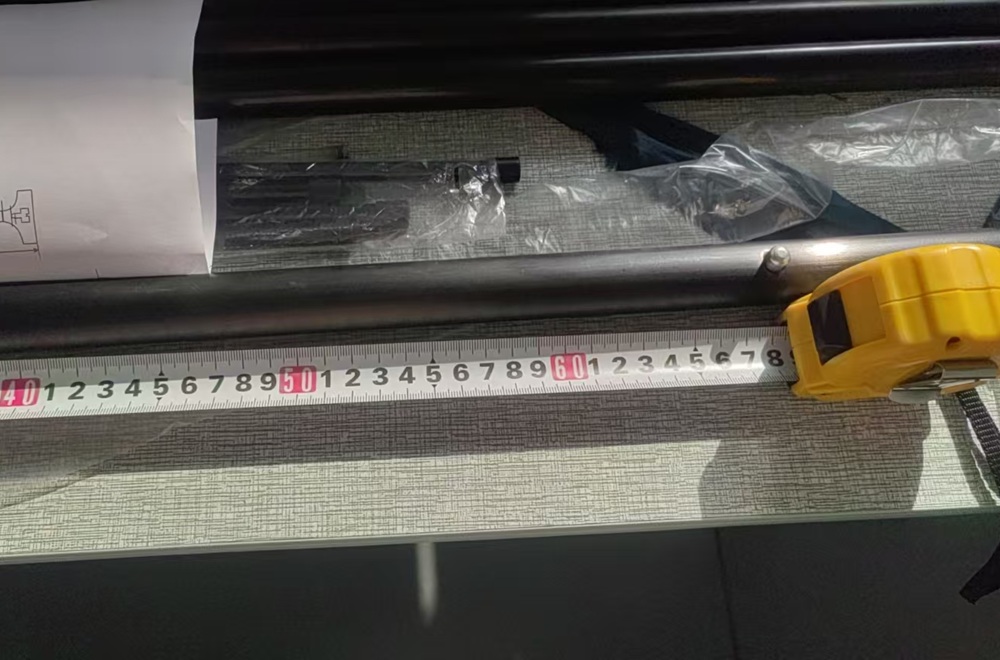
During OEM production, aluminum poles are checked not only for material quality but also for length tolerance, straightness, and assembly consistency before entering mass production.
Key Advantages of Aluminum Poles
- Lightweight
- High strength
- Good flexibility and wind resistance
- Long service life
- No fiber splintering
- Stable performance in outdoor environments
Why OEM Brands Prefer Aluminum
Among all pole materials, aluminum has become the preferred choice for:
- Backpacking tents
- Lightweight tents
- Performance outdoor gear
Because it provides a strong but lightweight structure, which is essential for mobile outdoor users.
Limitations
The main disadvantage of aluminum poles is:
- Higher cost compared to fiberglass
However, in most professional outdoor markets, this cost is justified by performance.
Fiberglass Tent Poles: The Most Cost-Efficient Solution
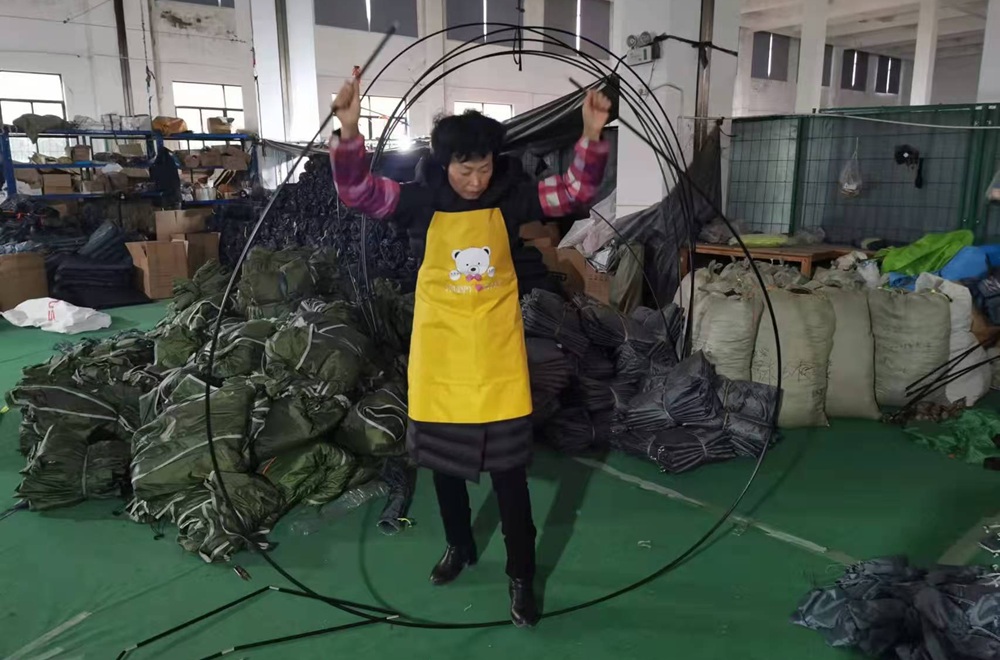
Fiberglass poles are widely used in entry-level and family camping tents.
They have been used in the industry for decades and remain popular due to their cost advantage.
Why Fiberglass Is Still Widely Used
- Very low cost
- Easy mass production
- Suitable for entry-level tents
- Good for occasional use products
Limitations of Fiberglass
Compared with aluminum, fiberglass has:
- Higher risk of breakage
- Fiber splintering issues
- Lower long-term durability
- Aging under UV exposure
However, for budget-friendly tents, it remains a practical solution.
Typical Applications
- Family tents
- Entry-level camping tents
- Promotional tents
- Seasonal outdoor use products
Steel Tent Poles: Heavy-Duty Structural Support
Steel poles are not commonly used in lightweight camping tents.
Instead, they are used in large or structural outdoor systems.
Where Steel Poles Are Used
- Cabin tents
- Glamping structures
- Tipi tents
- Large event shelters
- Center-pole supported tents
Advantages
- Very high strength
- Excellent structural stability
- Suitable for large-span tents
Limitations
- Heavy weight
- Not suitable for backpacking
- Less portable
Inflatable Tent Systems: TPU vs PVC Air Tubes
In addition to traditional solid pole systems, inflatable tent structures have become increasingly popular in modern outdoor products.
Instead of rigid poles, these tents use air beams to create structural support.
The two most commonly used materials are:
- TPU air tubes
- PVC air tubes
Inflatable systems are widely used in:
- Glamping tents
- Family camping tents
- Luxury outdoor shelters
- Fast-setup camping systems
They offer a completely different user experience compared to traditional pole-based tents.
Why Inflatable Tent Systems Are Becoming More Popular
The main advantage of inflatable tents is ease of setup.
Instead of assembling multiple pole segments, users only need to:
Inflate the structure → and the tent takes shape.
This provides several key benefits:
- Very fast setup time
- Reduced assembly complexity
- Better user experience for beginners
- Fewer mechanical breakage points
- Strong structural flexibility under wind
For many family camping and glamping brands, inflatable systems represent a premium product positioning.
However, the performance of inflatable tents depends heavily on the choice of air tube material.
TPU Air Tubes: The Premium Inflatable Solution
TPU (Thermoplastic Polyurethane) is widely regarded as the higher-performance option for inflatable tent systems.
It is commonly used in:
- Premium inflatable tents
- High-end glamping products
- Performance outdoor shelters
Advantages of TPU Air Tubes
- High elasticity and flexibility
- Excellent low-temperature performance
- Strong abrasion resistance
- Better long-term durability
- More environmentally friendly compared to PVC
TPU systems generally provide a more stable and premium user experience, especially in cold or variable environments.
Limitations of TPU
- Higher material cost
- More sensitive production process
- Requires stricter manufacturing control
Because of this, TPU is usually selected for mid-to-high-end outdoor products.
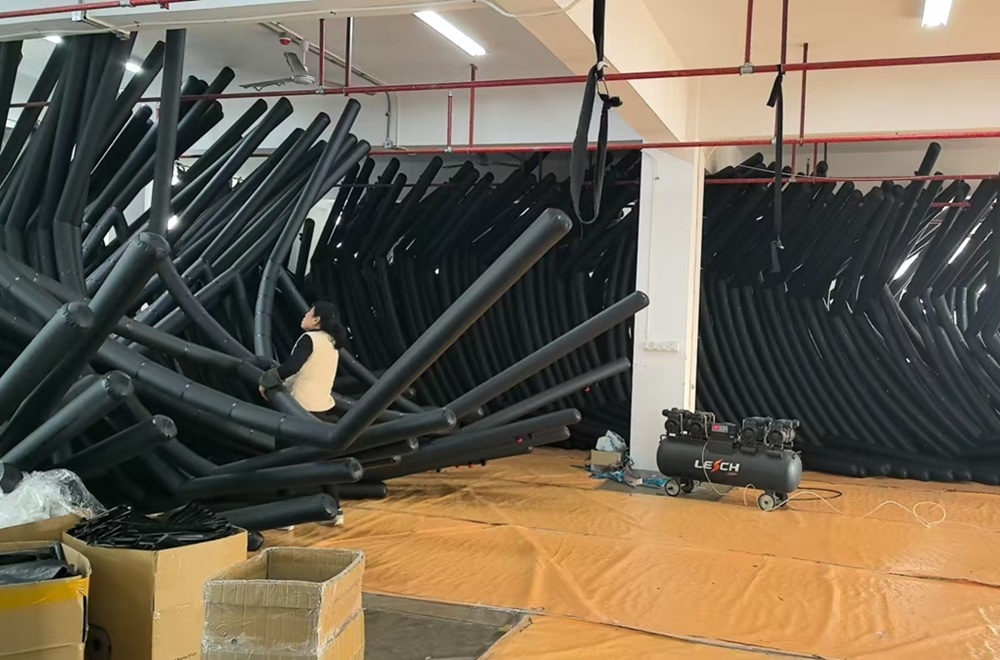
PVC Air Tubes: Cost-Effective Inflatable Structure
PVC air tubes are another commonly used solution in inflatable tent systems.
They are widely used in:
- Entry-level inflatable tents
- Commercial camping products
- Cost-sensitive outdoor projects
Advantages of PVC Air Tubes
- Lower cost
- Easier production process
- Widely available materials
- Suitable for mass-market products
PVC remains a practical solution for brands targeting price-sensitive markets.
Limitations of PVC
Compared with TPU, PVC has several disadvantages:
- Heavier material weight
- Lower flexibility in cold environments
- Faster aging under UV exposure
- Less environmentally friendly
However, for many commercial applications, PVC provides a good balance between cost and functionality.
Solid Pole Systems vs Inflatable Systems
The choice between solid poles and inflatable structures is not about which is better.
It is about product positioning.
| System | Best For | Key Advantage |
|---|---|---|
| Aluminum poles | Backpacking tents | Lightweight + strength |
| Fiberglass poles | Family tents | Low cost |
| Steel poles | Glamping / large tents | Structural stability |
| TPU air tubes | Premium inflatable tents | Performance + flexibility |
| PVC air tubes | Budget inflatable tents | Cost efficiency |
Each system serves a different segment of the outdoor market.
How OEM Manufacturers Choose Tent Pole Systems
At NastoCamp, tent pole selection is never based on material alone.
Instead, we evaluate:
- Target market (Europe / US / Asia)
- Product category (Backpacking / Family / Glamping)
- Price positioning
- Weight requirements
- Setup experience
- Expected usage environment
- Order quantity
For example:
- Backpacking tents almost always require aluminum poles due to weight constraints.
- Family tents may use fiberglass, aluminum, or inflatable systems depending on positioning.
- Glamping tents often use steel structures or inflatable systems for aesthetics and convenience.
In most OEM projects, customers do not start by asking “which pole is best”.
Instead, they already have a product concept, and the pole system is selected to match that concept.
NastoCamp Expert Tip
There is no universal best tent pole system.
There is only the most suitable system for your product strategy.
Why Tent Pole Selection Is a Product Strategy Decision
Many beginners think tent development starts with materials.
Experienced OEM manufacturers know it starts with:
market positioning
Tent pole systems are not just technical components.
They define:
- User experience
- Setup behavior
- Product weight
- Product price
- Market positioning
This is why pole selection should always be made together with overall product design, not as an isolated decision.
How OEM Buyers Actually Choose Tent Pole Systems
In real OEM tent development projects, most buyers do not start by asking:
“Which tent pole material is the best?”
Instead, they usually begin with product-level decisions such as:
- What is the target market?
- What is the expected retail price?
- What is the product category?
- What is the weight requirement?
- What level of durability is required?
Once these questions are clarified, the tent pole system selection becomes much clearer.
In other words:
Tent pole selection is not the starting point of product development.
It is the result of product positioning.
For experienced outdoor brands, the decision is usually already partially made before they contact the manufacturer.
For less experienced buyers, this is where OEM manufacturers play an important advisory role.
Common Mistakes Buyers Make When Choosing Tent Poles
After working on hundreds of OEM tent projects, we have observed several recurring misunderstandings.
Mistake 1: Thinking “Stronger is Always Better”
Many buyers assume that the strongest or thickest pole is always the best option.
However, in tent design, excessive strength often comes with trade-offs such as:
- Increased weight
- Higher cost
- Reduced portability
- Poorer user experience for backpacking applications
For example, a steel pole may be structurally strong, but completely unsuitable for lightweight hiking tents.
Good OEM design is about balance, not maximum strength.
Mistake 2: Ignoring Product Category Requirements
Different tent categories require completely different pole systems:
- Backpacking tents → aluminum (lightweight priority)
- Family tents → fiberglass / aluminum / hybrid systems
- Glamping tents → steel / inflatable systems
- Expedition tents → high-strength aluminum systems
- Commercial shelters → steel or hybrid structures
Choosing a pole system without considering product category often leads to poor market fit.
Mistake 3: Over-Focusing on Material Alone
Some buyers focus only on the material itself and ignore:
- Pole diameter
- Wall thickness
- Joint design
- Elastic cord quality
- Structural geometry
In reality, two aluminum poles can perform very differently depending on engineering design.
Mistake 4: Underestimating Inflatable Systems
Inflatable tents are sometimes perceived as less durable than traditional pole systems.
In reality, modern TPU systems can provide:
- Excellent wind resistance
- Fast setup experience
- Strong structural flexibility
However, they require proper design and material selection to perform reliably.
How NastoCamp Recommends Tent Pole Systems
At NastoCamp, we do not recommend tent pole materials in isolation.
Instead, we evaluate the full product context, including:
- Target market (Europe, North America, Asia, etc.)
- Product positioning (budget / mid-range / premium)
- Intended usage environment
- Weight expectations
- Setup experience requirements
- Structural complexity
- Cost target
- Expected order volume
Based on this information, we then recommend the most suitable pole system.
For example:
- If the goal is ultralight backpacking, aluminum (7001 series) is typically recommended.
- If the goal is family camping at a competitive price point, fiberglass may be considered.
- If the goal is premium glamping experience, steel or inflatable systems are often more appropriate.
The key principle is simple:
We do not select materials first.
We design the product first, then select the system.
NastoCamp Expert Tip
The most successful OEM tent projects are not those with the strongest materials.
They are the ones where:
material selection perfectly matches product positioning.
Final Thoughts
Tent pole systems are often underestimated in product development.
However, they directly influence:
- Structural stability
- User experience
- Setup efficiency
- Product weight
- Market positioning
- Cost structure
There is no universally “best” tent pole system.
Aluminum, fiberglass, steel, TPU, and PVC systems all play important roles in different product categories.
Successful OEM development is not about choosing the strongest or most expensive option.
It is about choosing the most appropriate system for the product’s intended market.
A tent pole does not define the tent.
The product strategy defines the tent pole.
Frequently Asked Questions About Tent Pole Systems
Which tent pole material is the best?
There is no single best material. Each system serves a different purpose depending on product category, market positioning, and usage environment.
Why do backpacking tents mostly use aluminum poles?
Because aluminum offers the best balance between weight, strength, and durability, making it ideal for lightweight outdoor applications.
Are fiberglass poles bad?
No. Fiberglass poles are widely used in family and entry-level tents because of their cost advantage and adequate performance for recreational use.
Are inflatable tents durable enough?
Yes. Modern TPU inflatable systems can provide strong structural performance when properly designed and manufactured.
How do OEM manufacturers choose tent poles?
They evaluate market positioning, product category, price target, usage environment, and user expectations before making a recommendation.