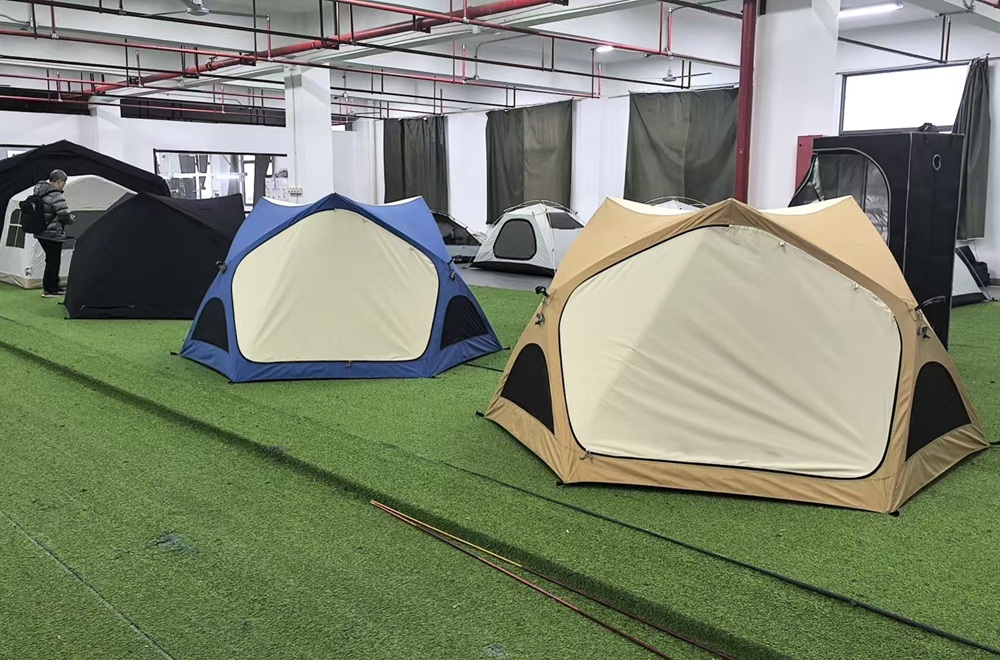
Choosing the right tent manufacturer is one of the most important decisions for outdoor brands.
A reliable manufacturing partner can help transform a product idea into a market-ready tent. However, choosing the wrong supplier may create challenges that are difficult and expensive to solve later, including inconsistent quality, delayed delivery, unexpected costs, and communication problems.
For many outdoor brands, the challenge is not finding a factory that can produce tents.
The challenge is finding a manufacturer whose capabilities match their specific needs.
A brand developing a premium glamping tent, a children’s camping product, or a high-volume outdoor retail product may have completely different requirements when selecting an OEM partner.
For example:
- A high-volume customer may focus more on production efficiency and cost control;
- A glamping brand may prioritize product development capability and customization support;
- A children’s tent brand may pay more attention to safety requirements and certifications;
- A brand replacing an existing supplier may focus on solving previous problems related to quality, delivery, or communication.
Therefore, the “best” tent manufacturer is not necessarily the biggest factory or the supplier offering the lowest price.
The right partner is the one whose manufacturing capability, quality standards, and development experience match the brand’s product goals.
Why Choosing a Tent Manufacturer Requires More Than Comparing Prices
Price is an important factor when evaluating suppliers.
Especially for large-volume products, production cost directly affects market competitiveness.
However, price alone does not determine whether a supplier is suitable.
A lower quotation may come with hidden risks:
- Materials that do not meet expectations;
- Limited development support;
- Weak quality control;
- Poor communication;
- Unstable production consistency.
For outdoor brands, product quality is directly connected to customer experience and brand reputation.
A tent with poor waterproof performance, inconsistent construction, or unreliable durability can create much higher costs than the initial price difference.
The goal of supplier evaluation is not to find the cheapest manufacturer.
It is to find a manufacturing partner that can deliver the expected balance between:
- Product quality;
- Cost;
- Development capability;
- Production reliability.
Professional Tent Manufacturers Are More Than Production Suppliers
Many companies can manufacture basic tents.
However, professional OEM tent manufacturing requires much more than sewing fabric panels together.
A capable tent manufacturer needs experience in:
- Material selection;
- Tent structures;
- Waterproof construction;
- Production processes;
- Quality management;
- Product development.
The difference between a basic supplier and a professional OEM partner is often the ability to provide solutions when challenges appear.
A professional manufacturer does not only ask:
“What product do you want us to make?”
They also consider:
- Is the design practical for production?
- Are the materials suitable?
- Can the product achieve the target cost?
- Can the quality remain consistent during mass production?
This difference becomes especially important when outdoor brands develop customized products rather than simply purchasing existing models.
The Right Supplier Should Solve Your Problems
Before selecting a manufacturer, brands should first understand what they need from a supplier.
A company searching for a tent manufacturer because of:
- High costs from an existing supplier;
may prioritize:
- Cost optimization;
- Supply chain capability.
A company searching because of:
- Quality issues;
may prioritize:
- Quality systems;
- Manufacturing experience.
A company creating a new product line may prioritize:
- Product development;
- Engineering support.
Understanding the reason behind supplier selection helps brands evaluate manufacturers more effectively.
A Practical Framework for Evaluating Tent Manufacturers
In this guide, we will explore 10 important criteria outdoor brands should consider when choosing a tent manufacturer:
- Manufacturing experience in the outdoor industry
- Product development and engineering capability
- Manufacturing system and process management
- Product range and technical coverage
- Ability to handle complex tent projects
- Quality management system and execution
- Communication and project management capability
- Cost, MOQ, and supply chain capability
- Compliance and market requirements
- Long-term partnership capability
These criteria help brands move beyond simple supplier comparison and evaluate whether a manufacturer can become a reliable long-term partner.
01. Manufacturing Experience in the Outdoor Industry
Does the Manufacturer Truly Understand Tent Production?
One of the first things outdoor brands should evaluate is whether a manufacturer has real experience in tent production.
Many suppliers may show similar product images online and claim they can produce camping tents. However, producing a reliable tent requires much more than basic sewing capability.
A professional tent manufacturer needs practical experience with:
- Different tent structures;
- Outdoor materials;
- Waterproof construction;
- Sewing techniques;
- Component integration;
- Complete tent manufacturing process.
A tent is a technical outdoor product.
The final performance depends on many details working together:
- Fabric selection;
- Pattern design;
- Seam construction;
- Reinforcement points;
- Accessories;
- Quality control during production.
Without sufficient experience, a manufacturer may be able to create a sample, but may struggle to maintain consistent quality during mass production.
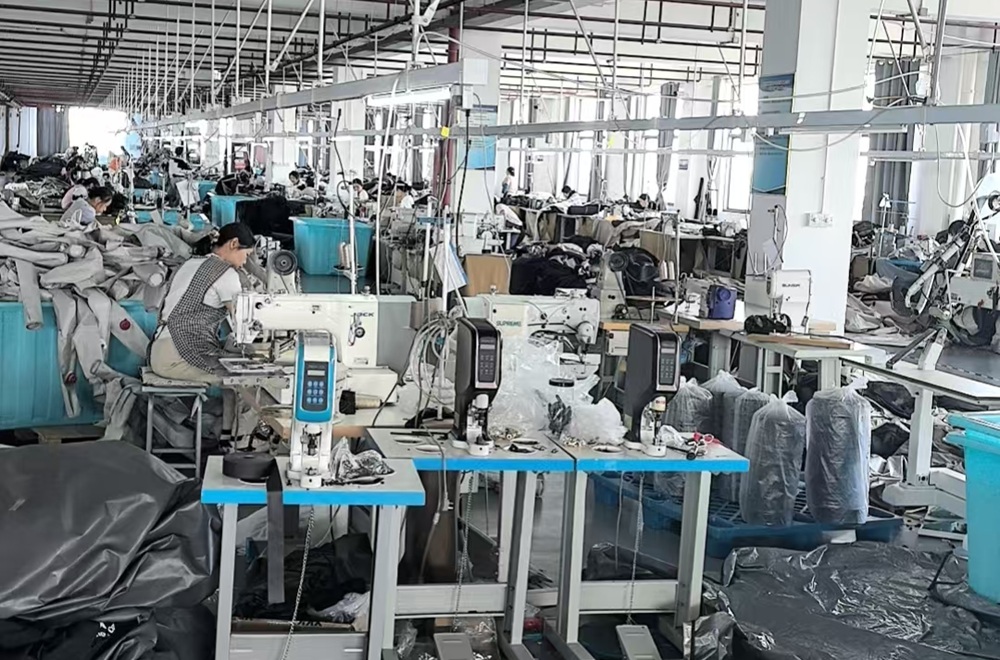
Professional Manufacturers Rely on Systems, Not Individual Experience
A common difference between basic suppliers and professional OEM manufacturers is how they manage production.
A less experienced supplier may depend heavily on:
- A salesperson’s understanding;
- A factory owner’s personal judgment;
- Individual workers’ experience.
This approach can create uncertainty because important decisions may not follow consistent standards.
A professional OEM manufacturer builds systems around the entire production process, including:
- Supplier management;
- Material control;
- Manufacturing standards;
- Quality procedures;
- Packaging requirements;
- Production records.
The purpose of these systems is not only to complete one order successfully.
It is to ensure that products can be reproduced consistently across future orders.
Factory Experience Also Means Broader Product Understanding
Outdoor brands should also consider whether a manufacturer understands the types of products they want to develop.
Different tent categories require different manufacturing knowledge.
For example:
Backpacking Tents
Usually require attention to:
- Lightweight materials;
- Compact structures;
- Weight control.
Family Camping Tents
Often require:
- Larger production space;
- More complex structures;
- Better organization of components.
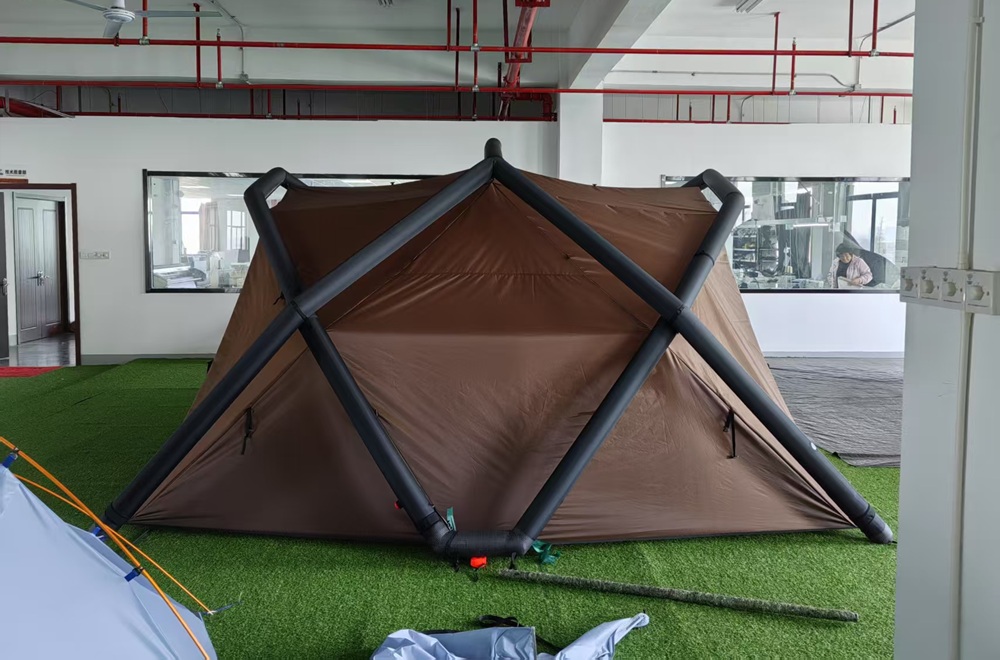
Inflatable Tents
Require experience with:
- Air tube systems;
- Material bonding;
- Structural pressure management.
Glamping Tents
Often involve:
- Larger fabric areas;
- More complex installation requirements;
- Higher expectations for appearance and user experience.
A manufacturer with broader technical experience can better understand these differences and provide more suitable solutions.
What Should Buyers Look For?
When evaluating a tent manufacturer’s experience, outdoor brands should not only ask:
“Have you made tents before?”
They should also ask:
- What types of tents have you produced?
- Can you support customized development?
- How do you manage quality during production?
- Can you provide examples of similar projects?
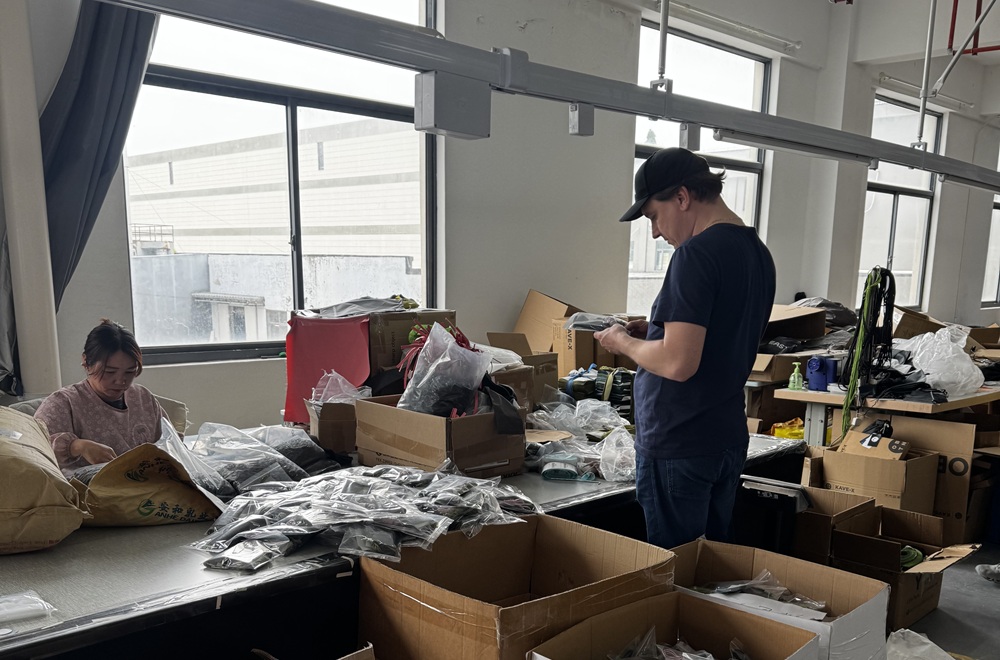
A factory’s product photos alone cannot fully demonstrate manufacturing capability.
Some images may only represent products that were sourced, copied, or produced by other suppliers.
Real manufacturing capability is demonstrated through:
- Development experience;
- Production systems;
- Technical knowledge;
- Consistent execution.
02. Product Development and Engineering Capability
Can the Manufacturer Help Transform Ideas Into Practical Products?
For brands purchasing standard products, manufacturing capability may be the main consideration.
However, for brands seeking differentiation, product development capability becomes much more important.
A manufacturer’s role should not only be:
“Produce the design provided by the customer.”
A strong OEM partner should also be able to discuss:
- Whether the design is practical;
- Whether the structure can be improved;
- Whether materials are suitable;
- Whether costs can be optimized.
This is especially important when brands want to create products that are different from existing market offerings through custom tent development.
Why Engineering Support Matters
Outdoor brands often have valuable market insights.
They understand:
- Their customers;
- Their sales channels;
- Their positioning.
However, they may not always understand the manufacturing limitations behind a product concept.
A professional manufacturer can help connect:
Brand vision
with:
Manufacturing reality
by evaluating:
- Structure;
- Materials;
- Production methods;
- Cost impact.
NastoCamp Example: Improving a Product Concept Through Engineering
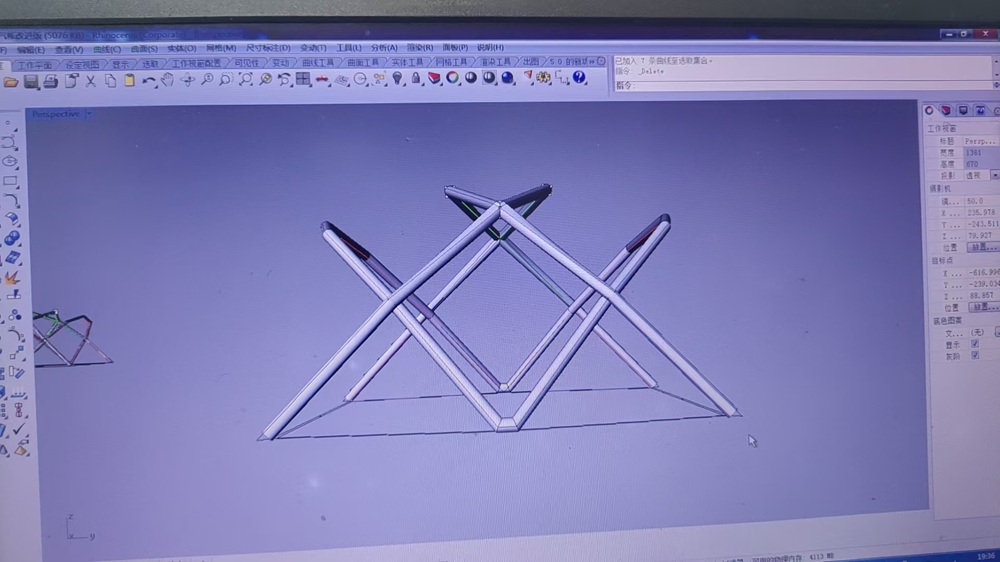
During one product development project, a customer designed a single-layer tent for a lower-income market segment.
The original concept considered cost control, but after testing the design idea, one challenge appeared:
When used together with a large inflatable mattress, the internal space became limited and affected the overall shape of the tent.
Instead of simply producing the original design, NastoCamp reviewed the structure and suggested modifying the bottom pole design.
By adding a slight pre-bending structure to the bottom poles:
- The internal space was increased;
- User comfort was improved;
- The impact on production cost was minimal.
This example shows the value of engineering support.
A professional manufacturer does not only identify problems.
It helps find practical solutions that balance:
- Function;
- Cost;
- Manufacturing feasibility.
Development Capability Is Not Only About Creating New Products
Some buyers assume:
A manufacturer with development capability is only useful for completely new designs.
In reality, development capability also helps with:
- Improving existing products;
- Reducing unnecessary costs;
- Solving production difficulties;
- Adapting products for different markets.
For outdoor brands that want long-term growth, this capability can become a significant competitive advantage.
03. Manufacturing System and Process Management
Is the Factory Managed Through Systems or Individuals?
Another important evaluation criterion is how a manufacturer manages daily operations.
A factory may have:
- Experienced workers;
- Good equipment;
- Competitive prices.
However, without effective systems, consistency can become difficult.
Professional manufacturing depends on repeatable processes.
Why Systems Matter in OEM Manufacturing
A professional tent manufacturer should have structured management in areas such as:
Supplier Management
Ensuring:
- Stable material quality;
- Reliable component suppliers;
- Consistent specifications.
Process Management
Ensuring:
- Standard manufacturing procedures;
- Clear production requirements;
- Reduced variation.
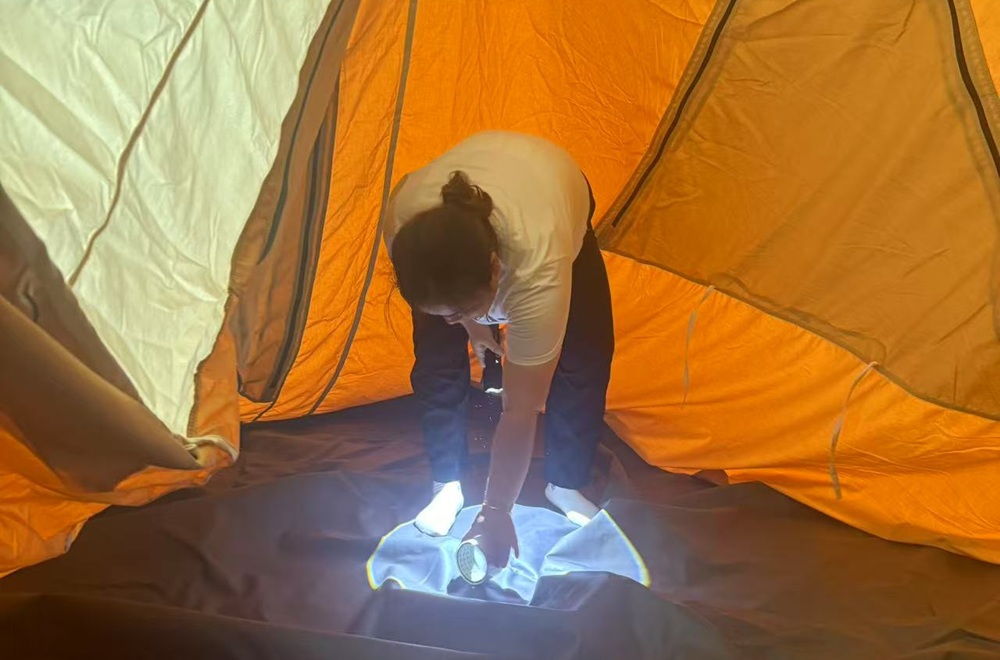
Quality Management
Ensuring:
- Inspection standards;
- Problem identification;
- Corrective actions.
Packaging Management
Ensuring:
- Correct accessories;
- Proper packing methods;
- Shipment consistency.
A Sample Is Not Enough to Judge a Manufacturer
One common mistake for buyers is evaluating a factory only based on one successful sample.
A sample can show that a product can be produced.
However, mass production requires a system that can reproduce the same quality repeatedly.
The question buyers should ask is:
Can this manufacturer produce the same result hundreds or thousands of times?
That depends on:
- Process control;
- Management systems;
- Experienced teams.
04. Product Range and Technical Coverage
Does the Manufacturer Have Experience With Your Product Type?
When selecting a tent manufacturer, many outdoor brands naturally look for suppliers that have produced similar products before.
This is reasonable because experience with similar products can reduce development risks.
However, buyers should avoid evaluating suppliers too narrowly.
A manufacturer does not necessarily need to produce exactly the same product category to be capable of producing a new product successfully.
The more important question is:
Does the manufacturer have the technical capability, production resources, and management experience required for this product?
Product Experience Should Match Product Requirements
Different outdoor products require different manufacturing capabilities.
For example:
A brand developing a lightweight backpacking tent may focus on:
- Weight control;
- Lightweight fabrics;
- Compact structures;
- Material performance.
A brand developing a large glamping tent may focus on:
- Large-scale fabric handling;
- Structural stability;
- Installation requirements;
- Appearance quality.
A brand developing inflatable tents may need a manufacturer with experience in:
- Air tube construction;
- Material bonding;
- Inflation systems;
- Structural testing.
Therefore, when evaluating a manufacturer, brands should understand whether the supplier has experience related to their specific product requirements.
Should Brands Choose a Manufacturer That Produces Everything?
There is no single answer.
Some brands prefer working with specialized suppliers for each product category.
Others prefer a manufacturer that can support multiple product lines.
Working with a broader-capability supplier may provide advantages:
- Fewer supplier relationships to manage;
- Lower communication costs;
- More consistent product standards;
- Easier expansion into new product categories.
For example, if an outdoor brand develops:
- Family tents;
- Inflatable tents;
- Glamping products;
working with one experienced partner may simplify communication and development management.
However, Product Range Alone Does Not Guarantee Capability
A manufacturer showing many products does not automatically mean they can produce all products professionally.
Brands should evaluate:
- Actual production experience;
- Engineering capability;
- Similar project references;
- Manufacturing resources.
The goal is not to find the supplier with the largest catalog.
The goal is to find a supplier whose capabilities fit the product requirements.
05. Ability to Handle Complex Tent Projects
Can the Manufacturer Manage Products With Higher Technical Requirements?
Not all tents have the same level of manufacturing difficulty.
As product complexity increases, the importance of manufacturing management also increases.
Complex tent projects often involve:
- More components;
- Larger structures;
- More detailed processes;
- Higher coordination requirements.
Complex Products Test More Than Production Skills
For simple products, production may depend mainly on:
- Basic equipment;
- Standard processes;
- Worker experience.
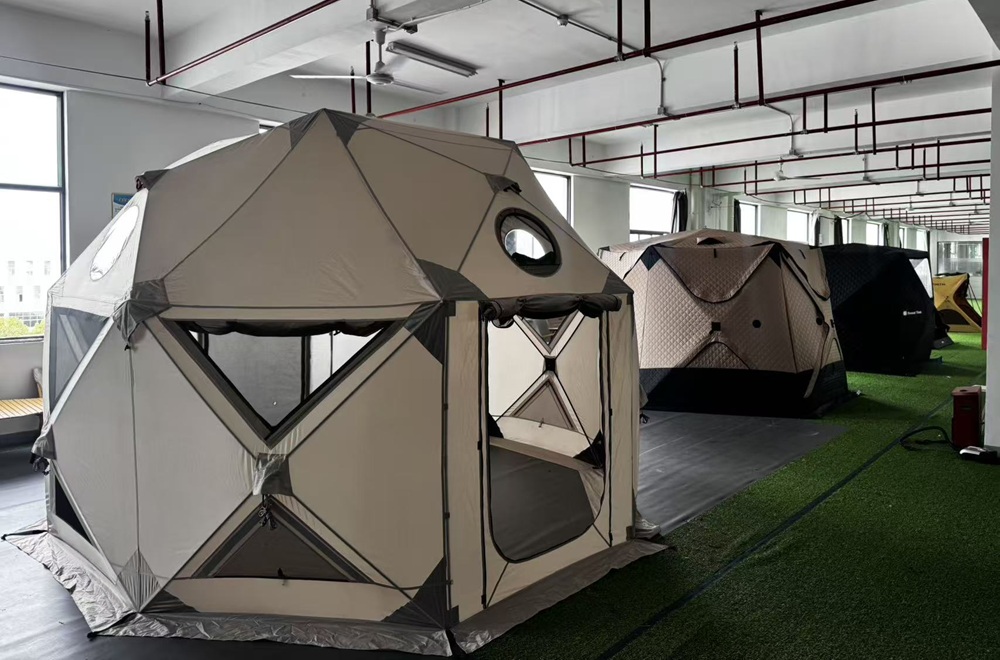
However, complex tents require stronger coordination between different departments.
For example:
A large glamping tent may involve:
- Large fabric cutting areas;
- Structural components;
- Multiple accessory systems;
- Detailed installation requirements.
An inflatable tent may involve:
- Air tube production;
- Material bonding;
- Pressure testing;
- Special quality requirements.
The challenge is not only making one product.
The challenge is ensuring the entire project can be managed consistently.
Factory Size and Management Capability Both Matter
According to NastoCamp’s manufacturing experience, complex projects often require:
- Appropriate production space;
- Experienced workers;
- Strong production organization.
A factory may have skilled workers, but without effective coordination, complex projects can still face problems.
Professional manufacturers need the ability to organize:
- Materials;
- Production schedules;
- Different processes;
- Quality checkpoints.
06. Quality Management System and Execution
Does the Factory Actually Control Quality?
Quality is one of the most important factors when selecting a tent manufacturer.
However, buyers should look beyond statements such as:
- “We have QC.”
- “We have inspection procedures.”
- “We have testing equipment.”
These are important, but they do not automatically prove effective quality control.
The key question is:
Are these systems actually implemented during production?
Quality Management Requires Both Systems and Execution
A professional manufacturer should have:
Quality Personnel
Responsible for:
- Inspection;
- Problem identification;
- Process monitoring.
Testing Equipment
For example:
- Fabric inspection equipment;
- Waterproof testing equipment;
- Measurement tools.
Inspection Records
Records help demonstrate:
- What was inspected;
- When it was inspected;
- What problems were found;
- How issues were handled.
Equipment Alone Does Not Guarantee Quality
A factory may own inspection equipment but fail to use it consistently.
For example:
A manufacturer may have fabric inspection equipment, but if incoming materials are not actually checked according to requirements, the equipment itself does not improve quality.
Therefore, when evaluating suppliers, brands should understand not only:
“What equipment does the factory have?”
but also:
“How does the factory use it?”
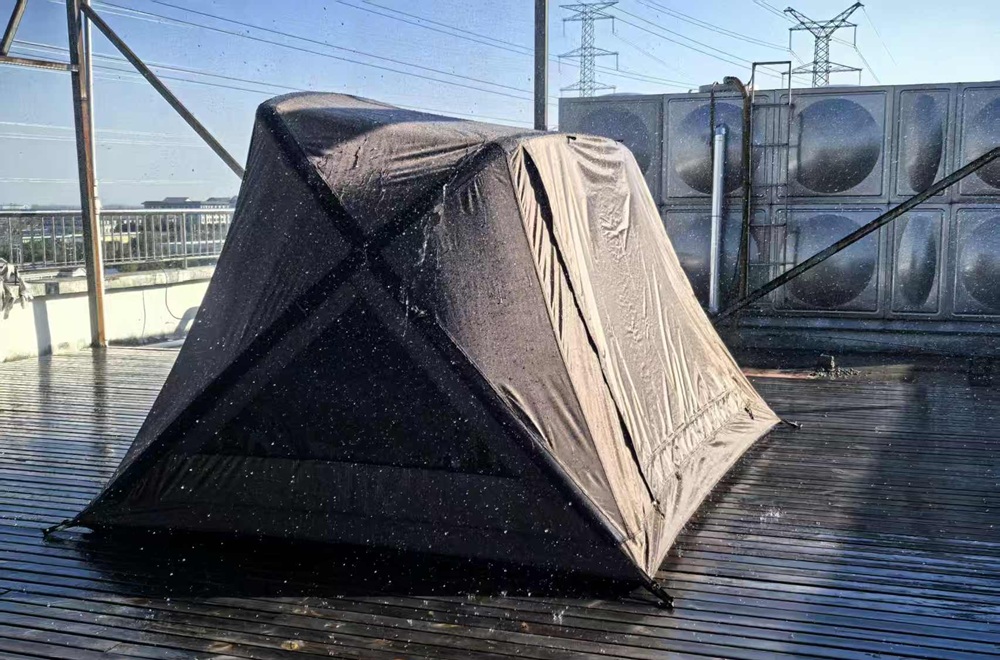
Why Tent Quality Varies Between Manufacturers
Different manufacturers may produce different results even when using similar materials and designs. Understanding why tent quality varies between manufacturers helps buyers evaluate suppliers more effectively.
The reasons may include:
- Worker experience;
- Production management;
- Technical support;
- Quality control execution.
A professional manufacturer builds quality into the entire process instead of relying only on final inspection.
07. Communication and Project Management Capability
Can the Manufacturer Communicate Clearly Throughout Development?
Communication is often underestimated when brands select suppliers.
However, OEM tent development involves many technical details:
- Product requirements;
- Materials;
- Structures;
- Production methods;
- Quality expectations.
Small misunderstandings can create significant problems later.
Communication Problems Can Become Production Problems
During product development, unclear communication may lead to:
- Incorrect material purchasing;
- Wrong production preparation;
- Sample modifications;
- Production delays.
For example, if a technical detail is misunderstood during the early stage, the problem may only be discovered after materials have already been purchased or production has started.
At that point, correcting the issue may require:
- Additional time;
- Additional cost;
- Production adjustments.
What Good OEM Communication Looks Like
A reliable manufacturing partner should:
Understand Customer Requirements
Not only receive instructions, but confirm:
- Product goals;
- Market requirements;
- Technical expectations.
Identify Potential Problems Early
Professional manufacturers should communicate:
- Possible risks;
- Production limitations;
- Alternative solutions.
Maintain Clear Project Coordination
Successful OEM projects require alignment between:
- Customer;
- Engineering team;
- Production team;
- Quality team.
Communication Capability Reflects Professionalism
A professional OEM manufacturer does not simply answer questions.
They help manage the development process.
This is especially important for brands developing new products, where many decisions need to be made before production begins.
Good communication reduces:
- Mistakes;
- Delays;
- Unnecessary costs.
Effective communication is especially important during prototype review and tent samples approval, where clear feedback helps manufacturers improve the final product.
08. Cost, MOQ, and Supply Chain Capability
Can the Manufacturer Support Your Business Model?
Cost is an important factor when choosing a tent manufacturer.
However, professional buyers understand that the lowest price does not always create the best business result.
The right supplier should be able to provide a reasonable balance between:
- Product quality;
- Manufacturing efficiency;
- Material cost;
- Order requirements;
- Long-term value.
Price Should Match Product Positioning
Different outdoor brands have different business models.
For example:
A company selling large volumes of standard products may focus more on:
- Production efficiency;
- Cost control;
- Supply stability.
A premium outdoor brand may focus more on:
- Product quality;
- Material performance;
- Development capability.
A glamping brand may accept a higher cost if the product provides:
- Unique design;
- Better customer experience;
- Higher market value.
Therefore, buyers should evaluate whether the manufacturer’s pricing structure matches their product positioning.
MOQ Is Often Connected to Supply Chain Requirements
Minimum order quantity is another important consideration.
Many buyers assume MOQ is only a factory requirement.
However, MOQ is often influenced by upstream material supply.
For example:
A customer developing cotton canvas tents may request a specific fabric color.
The fabric supplier may require a minimum dyeing quantity, such as several thousand meters.
If the final order quantity is relatively small, additional costs may need to be allocated across fewer products.
For example:
- A fabric dyeing minimum requirement;
- A small-batch production cost;
- Additional material preparation costs.
These factors can significantly affect the final unit cost.
Professional Manufacturers Help Customers Understand Cost Structure
Before starting supplier discussions, brands should also prepare key product information to improve communication efficiency. Read our guide on before requesting a tent quote.
A good OEM partner should not only provide a quotation.
They should help customers understand:
- Where costs come from;
- Which factors affect pricing;
- Where optimization is possible.
This allows brands to make better decisions instead of simply choosing the lowest number.
Supply Chain Capability Also Matters
Manufacturing capability depends not only on the factory itself.
A reliable manufacturer also needs strong supply chain management.
This includes:
- Material suppliers;
- Component suppliers;
- Production scheduling;
- Cost management.
Strong supplier relationships can help manufacturers provide:
- More stable materials;
- Better cost control;
- More reliable delivery.
09. Compliance and Market Requirements
Does the Manufacturer Understand Your Target Market?
Different markets may have different expectations regarding:
- Product safety;
- Materials;
- Environmental requirements;
- Certifications.
Therefore, outdoor brands should evaluate whether a manufacturer understands the requirements of their target market.
Compliance Requirements Depend on Product and Market
Not every product requires the same certifications or testing.
Requirements may vary depending on:
- Product category;
- Target customer;
- Sales market.
For example:
A children’s tent may have different requirements compared with a standard camping tent.
A product sold in Europe or North America may face different material and environmental expectations compared with products sold in other regions.
Understanding Market Trends Is Also Important
Professional manufacturers should not only produce according to existing requirements.
They should also understand industry changes.
For example:
Environmental requirements for outdoor products continue to evolve.
Some European and North American markets increasingly pay attention to:
- Material compliance;
- Chemical restrictions;
- Sustainable production expectations.
A manufacturer familiar with these trends can help brands prepare products more effectively.
Certifications Are Useful, But They Are Not Everything
Certifications can provide useful information about supplier capability.
However, buyers should not evaluate a supplier only through certificates.
A complete supplier evaluation should consider:
- Actual manufacturing experience;
- Production management;
- Quality execution;
- Communication ability.
A certificate can support trust, but it cannot replace real manufacturing capability.
10. Long-Term Partnership Capability
Can This Manufacturer Support Your Future Growth?
A successful OEM relationship is not only about completing one order.
For many outdoor brands, the ideal manufacturing partner is someone who can support:
- New product development;
- Continuous improvement;
- Stable production;
- Future expansion.
Why Long-Term Cooperation Creates Value
When brands and manufacturers work together over time, both sides develop better understanding.
The manufacturer gradually understands:
- Brand expectations;
- Quality standards;
- Product preferences;
- Market requirements.
The brand also gains confidence in:
- Production capability;
- Communication efficiency;
- Manufacturing consistency.
This reduces unnecessary communication costs and improves cooperation efficiency.
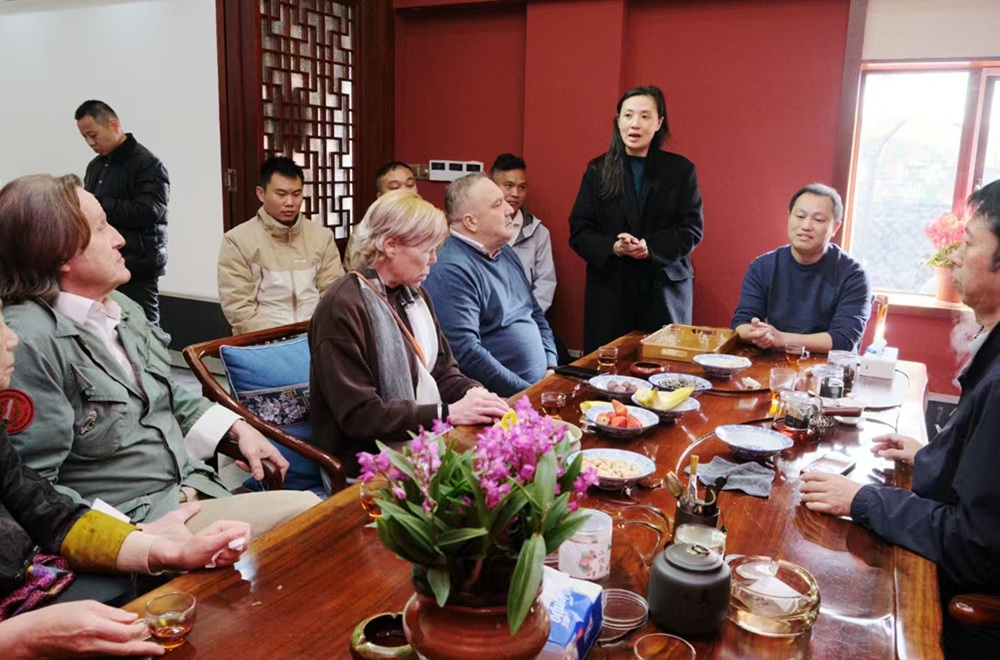
Five Core Capabilities of a Strong OEM Tent Partner
Based on NastoCamp’s manufacturing experience, a strong OEM tent partner should have:
1. Product Development Capability
Ability to transform ideas into practical products.
Effective prototype and tent samples evaluation are important steps in reducing development risks before mass production.
2. Quality Management Capability
Ability to maintain consistent product standards.
3. Production Resource Coordination Capability
Ability to organize:
- Materials;
- Production;
- Delivery.
4. Supplier Management Capability
Ability to manage:
- Material quality;
- Component supply;
- Cost stability.
5. Customer Communication Capability
Ability to understand requirements and provide effective solutions.
Common Mistakes Outdoor Brands Should Avoid
Choosing a manufacturer is a strategic decision.
However, some common mistakes can increase project risks.
Mistake 1: Choosing Only Based on Price
Price matters.
But choosing the lowest quotation without understanding:
- Quality standards;
- Manufacturing capability;
- Product requirements;
may create larger costs later.
Mistake 2: Judging Capability Only Through Website Images
A professional-looking website does not always prove manufacturing capability.
Product images may show:
- Existing products;
- Reference products;
- Products from other sources.
Brands should evaluate deeper evidence:
- Factory capability;
- Production experience;
- Development examples;
- Quality processes.
Mistake 3: Ignoring Communication Ability
OEM development involves many details.
A supplier with weak communication capability may create:
- Misunderstandings;
- Delays;
- Additional costs.
Mistake 4: Choosing a Supplier Without Considering Future Development
Some brands only consider the current order.
However, outdoor markets continue changing.
A supplier that can support:
- New designs;
- Product improvements;
- Market expansion;
can create more long-term value.
How NastoCamp Supports Outdoor Brands
More Than a Tent Factory: A Manufacturing Partner for Outdoor Brands
At NastoCamp, our role is not limited to producing finished tents.
We support outdoor brands throughout the custom tent development journey, including:
- Product concept discussion;
- Engineering improvement;
- Prototype development;
- Manufacturing;
- Quality control;
- Long-term production support.
Our experience allows us to help brands balance:
- Product ideas;
- Manufacturing feasibility;
- Cost expectations;
- Quality requirements.
Building Better Outdoor Products Through Collaboration
A successful OEM partnership requires both sides to contribute.
Outdoor brands bring:
- Market knowledge;
- Customer understanding;
- Product vision.
Manufacturers contribute:
- Engineering experience;
- Production knowledge;
- Manufacturing resources.
When these capabilities work together, brands can create products that are not only manufacturable but also competitive in the market.
Conclusion
Choosing the Right Tent Manufacturer Is About Finding the Right Match
Selecting a tent manufacturer is not simply about finding:
- The lowest price;
- The largest factory;
- The biggest product catalog.
The right OEM partner is the manufacturer whose capabilities match your:
- Product requirements;
- Market expectations;
- Quality standards;
- Business goals.
Before choosing a supplier, outdoor brands should evaluate:
- Manufacturing experience;
- Development capability;
- Quality systems;
- Communication ability;
- Supply chain strength;
- Long-term partnership potential.
A professional tent manufacturer does not only make products.
A professional manufacturing partner helps brands develop better products and build sustainable growth.
Discuss Your Custom Tent Project With NastoCamp
Whether you are launching a new outdoor brand, expanding an existing product range, or developing a specialized tent solution, NastoCamp provides OEM and ODM support from product concept to mass production.
Contact NastoCamp to discuss your next tent development project.