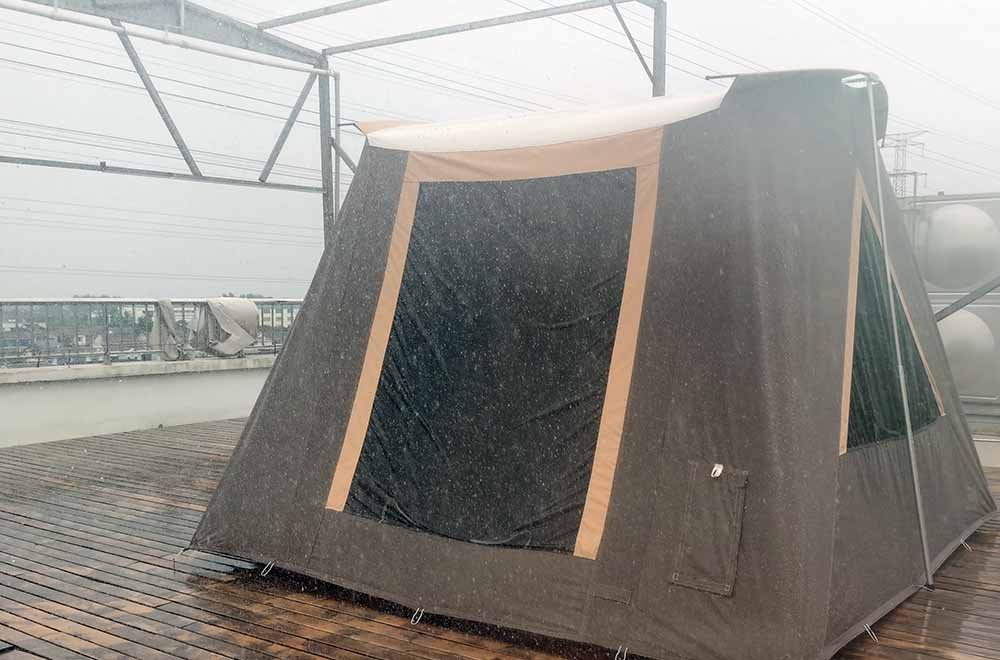
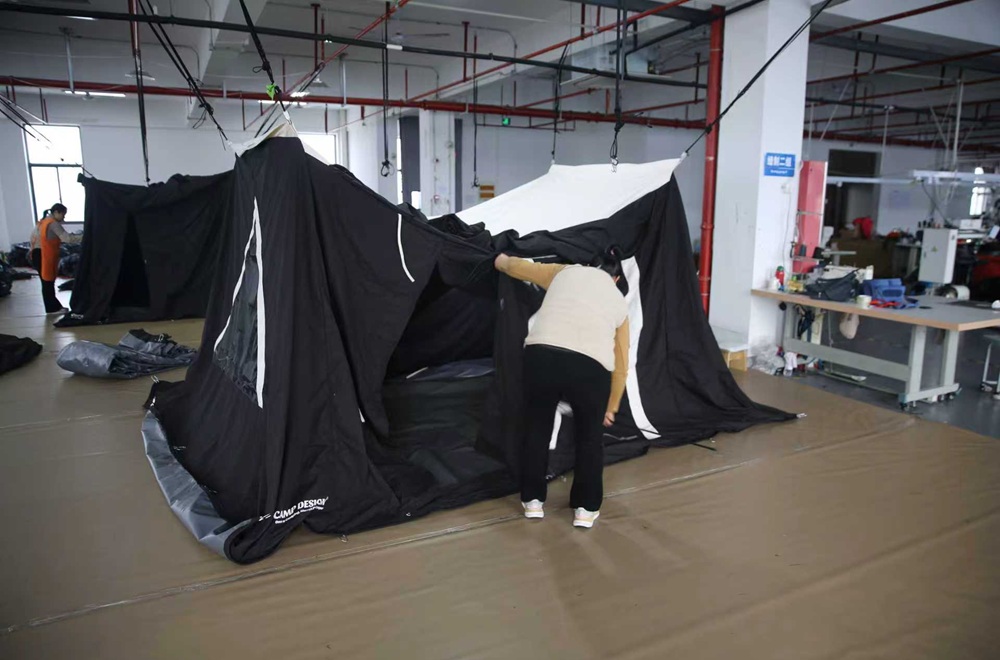
For many outdoor brands, developing a custom tent starts with a simple idea:
A new product concept, a market opportunity, or a vision for creating a better outdoor experience.
However, transforming that idea into a successful commercial product requires much more than finding a factory that can produce tents.
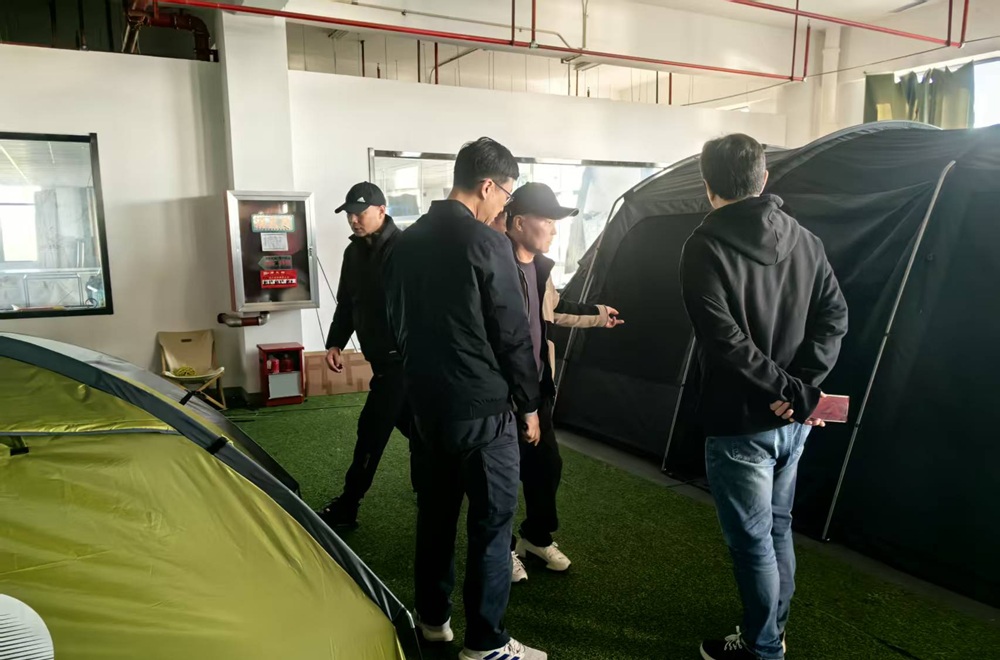
A professional custom tent development process involves multiple stages, including product positioning, technical evaluation, engineering optimization, prototype development, testing, and mass production preparation.
The difference between a basic supplier relationship and a successful OEM partnership is often found in the development process itself.
A reliable OEM tent manufacturer does not simply receive drawings and manufacture products. Instead, an experienced manufacturing partner works with brands to evaluate ideas, identify potential challenges, improve designs, and create products that are both functional and production-ready.
Before starting a custom tent project, outdoor brands should understand an important principle:
A successful tent is not only designed for appearance. It must also meet user needs, manufacturing requirements, cost targets, and long-term quality expectations.
01. Start With a Clear Product Concept and Market Position
Before contacting an OEM tent manufacturer, outdoor brands should first define what they want to achieve with their product.
Many development problems do not happen during production. They often begin earlier, when the product concept is unclear.
A manufacturer can help transform an idea into reality, but the brand still needs to understand the purpose of the product.
Understand Your Target Market and Product Purpose
The first step in custom tent development is answering basic questions:
- Who will use this tent?
- Where will it be used?
- What type of outdoor experience should it provide?
- What price level should the product target?
- Which features are essential for the market?
For example, a lightweight backpacking tent and a family camping tent may both belong to the outdoor category, but they serve completely different users and require different development priorities.
A backpacking tent may focus on:
- Lightweight construction
- Compact packing size
- Easy transportation
A family camping tent may focus on:
- Interior space
- Comfort
- Easy setup
- Multiple living areas
A glamping tent may focus more on:
- Appearance
- Materials
- User experience
- Large interior space
Understanding the market position helps manufacturers recommend more suitable structures, materials, and production solutions.
Prepare the Right Information Before Development
When outdoor brands approach an OEM manufacturer, they may provide different types of information depending on their experience level.
Some professional buyers already have:
- Product specifications
- Technical drawings
- Target market information
- Material requirements
- Cost expectations
Other brands may only have:
- A reference image
- A general product idea
- A market opportunity they want to explore
Both situations are common.
However, the clearer the initial information is, the more efficiently the development process can move forward.
At the early stage, manufacturers need to understand:
- Product application
- Expected functions
- Design expectations
- Target users
- Cost requirements
Without sufficient communication, problems may appear later, such as:
- The sample not matching expectations;
- The product cost exceeding the target;
- Additional modifications increasing development time.
Custom Tent Development Requires Clear Communication
Different brands have different levels of product knowledge.
Some experienced outdoor companies already understand:
- Tent structures;
- Materials;
- Manufacturing limitations;
- Market requirements.
They may come with detailed specifications and clear expectations.
For newer brands, the development process often requires more discussion with the manufacturer to determine the most suitable solution.
This is where an experienced OEM partner can provide value.
A professional manufacturer can help evaluate whether an idea is:
- Technically achievable;
- Suitable for production;
- Reasonable in terms of cost;
- Appropriate for the target market.
The goal is not simply to make a tent that looks good in a concept image.
The goal is to create a product that can succeed in the real market.
Before Requesting a Tent Quote
A common mistake for some buyers is focusing only on price at the beginning of a project.
However, a successful custom tent project usually starts with better preparation.
Before requesting a quote, brands should consider:
- Product positioning;
- Target users;
- Tent application;
- Expected materials;
- Required functions;
- Estimated order quantity.
Preparing this information helps manufacturers provide more accurate recommendations and quotations.
For brands preparing their first custom tent project, understanding the required information before contacting suppliers can significantly improve communication efficiency.
Learn more:
Before requesting a tent quote, outdoor brands should prepare key product information to avoid unnecessary delays during the development process.
02. Choosing the Right Product Direction and Tent Solution
After defining the target market and product purpose, the next important step is choosing the right product direction and technical solution.
One common misunderstanding in custom tent development is that brands can first decide how the tent should look and then ask a manufacturer to make it.
In reality, tent design is a balance between:
- User requirements;
- Product positioning;
- Structural performance;
- Material selection;
- Manufacturing feasibility;
- Target cost.
A tent structure that looks attractive in a concept image may not always be the best solution for real-world use or commercial production.
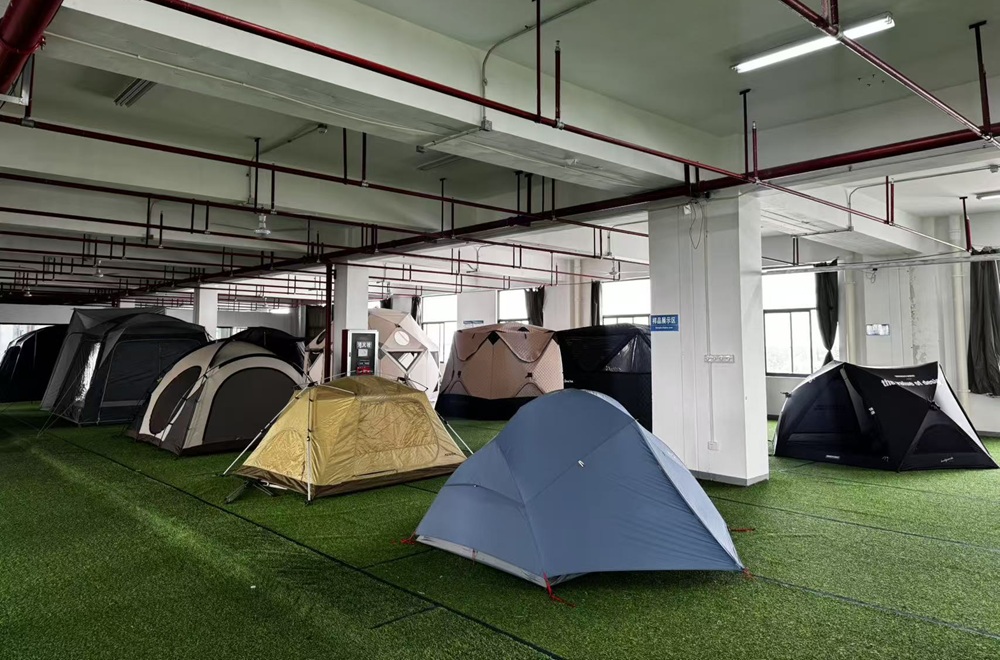
Experienced OEM manufacturers help brands evaluate different options and select solutions that match both market expectations and production requirements.
Different Tent Categories Require Different Development Priorities
There is no single “best” tent design.
The right solution depends on how the product will be used.
A professional outdoor brand should first understand the key priorities of its target users.
Backpacking Tents: Weight and Portability First
Backpacking tents are usually designed for users who carry their equipment over long distances.
Therefore, the main development priorities are often:
- Lightweight construction;
- Compact packed size;
- Easy transportation;
- Sufficient weather protection.
For this category, materials and components must be carefully selected.
For example:
- Aluminum poles are commonly preferred because of their strength-to-weight ratio;
- Lightweight fabrics can reduce overall weight;
- Structural efficiency becomes especially important.
However, reducing weight often requires balancing durability, cost, and manufacturing complexity.
A lighter product is not always a better product if it cannot meet the actual needs of users.
Family Camping Tents: Space and Comfort
Family tents usually focus on a different user experience.
Instead of minimizing weight, brands often prioritize:
- Interior living space;
- Comfortable standing height;
- Storage areas;
- Easy setup;
- Family-friendly layouts.
This means the design may require:
- Larger dimensions;
- More complex structures;
- Additional doors and windows;
- More components.
For family camping products, the challenge is often creating enough space while maintaining:
- Stability;
- Waterproof performance;
- Reasonable production cost.
Glamping Tents: Experience and Visual Appeal
Glamping products are often developed with a stronger focus on:
- Appearance;
- Comfort;
- Premium materials;
- Unique user experience.
Compared with lightweight outdoor tents, glamping tents usually allow more flexibility in:
- Size;
- Structure;
- Interior space;
- Material selection.
However, larger structures also create additional manufacturing challenges.
Factors such as:
- Fabric weight;
- Frame structure;
- Transportation;
- Installation requirements
all need to be considered during development.
Choosing the Right Tent Structure
Tent structure selection is one of the most important decisions during product development.
Different structures provide different advantages.
For example:
Dome Structure
Dome tents are widely used because they provide:
- Good stability;
- Efficient wind resistance;
- Practical construction.
They are commonly selected for products where structural reliability is important.
Tunnel Structure
Tunnel tents can provide:
- Larger usable space;
- Efficient interior layouts;
- Good living comfort.
They are often suitable for:
- Family camping;
- Larger outdoor accommodation products.
However, brands need to consider structural support and weather performance carefully.
Inflatable Tent Structure
Inflatable tents have become increasingly popular because they can offer:
- Fast setup;
- Unique product positioning;
- Different user experiences.
However, inflatable structures require careful consideration of:
- Air tube design;
- Material selection;
- Connection points;
- Durability requirements.
Product Innovation Should Also Consider Market Reality
Some brands hope to create a completely new tent design that is different from existing products.
Innovation can create opportunities, but it also requires careful evaluation.
A new design needs to consider:
- Whether customers understand the product;
- Whether the production process is practical;
- Whether the final cost matches the market;
- Whether the product has clear selling points.
A successful new product is not only different.
It needs to solve a real customer problem.
Balancing Function, Cost, and Manufacturing Feasibility
During custom tent development, brands often need to balance several competing goals.
For example:
A brand may want:
- The lightest possible product;
- The strongest possible structure;
- The lowest possible cost.
However, these goals may conflict with each other.
Professional development requires finding the right balance.
An experienced OEM manufacturer evaluates:
- What features are truly valuable for users;
- Which materials are suitable;
- Which structures can be manufactured consistently;
- Where cost optimization is possible.
The best solution is not always the most expensive or most technically advanced option.
It is the solution that best matches the product strategy.
Working With an OEM Partner During Product Selection
For experienced outdoor brands, the product direction is often already clear.
They may already understand:
- Their customers;
- Their market;
- Their product positioning.
However, for brands entering the outdoor category for the first time, an experienced manufacturer can provide valuable guidance.
The purpose of OEM collaboration is not to replace the brand’s market knowledge.
Instead, it is to combine:
Brand vision + Manufacturing expertise
to create a product that is both marketable and manufacturable.
03. Engineering Review: Turning Ideas Into Manufacturable Designs
After a product concept and tent direction have been defined, the next stage is transforming the idea into a design that can actually be manufactured.
For outdoor brands, a design concept is only the beginning.
A tent may look attractive in a sketch or reference image, but professional OEM development requires engineers to evaluate whether the design can achieve the expected performance while remaining practical for production.
A successful custom tent must satisfy multiple requirements at the same time:
- Functional performance;
- Structural stability;
- Material suitability;
- Production feasibility;
- Target cost;
- Consistent quality during mass production.
This is where engineering experience becomes a critical part of the OEM development process.
Design Ideas Need Engineering Validation
Many brands begin a project with a clear vision:
- A specific appearance;
- A unique structure;
- A special feature;
- A product concept inspired by market trends.
These ideas are valuable because they define the product direction.
However, before moving into prototype development, engineers need to review the design from a manufacturing perspective.
The engineering review process usually considers:
- Is the structure stable enough?
- Are the selected materials suitable?
- Can the product be manufactured consistently?
- Are there potential quality risks?
- Does the design match the target cost?
A professional manufacturer does not simply follow drawings without evaluation.
Instead, the goal is to help transform creative ideas into practical products.
Why Some Designs Need Optimization Before Sampling
During custom tent development, some designs may require adjustments before the first prototype is produced.
This does not mean the original concept is wrong.
Instead, engineering optimization helps improve the balance between design goals and real-world requirements.
Common examples include:
Structural Optimization
A tent structure may look simple or elegant, but reducing support components too much can affect stability.
For example, a design may reduce poles or support points to achieve a cleaner appearance.
However, this may create risks such as:
- Reduced wind resistance;
- Lower structural strength;
- Difficulty maintaining product consistency during production.
Engineers need to evaluate whether the structure can perform reliably in actual use.
Cost Optimization
Some designs are technically possible but may not be suitable for the target market because the production cost becomes too high.
Engineers may recommend:
- Adjusting materials;
- Simplifying unnecessary components;
- Optimizing construction methods;
- Improving production efficiency.
The objective is not simply to reduce cost.
The objective is to achieve the best balance between:
- Product value;
- User experience;
- Manufacturing efficiency.
Manufacturing Optimization
A product designed only from a visual perspective may create difficulties during production.
For example:
- Complex sewing processes;
- Difficult assembly procedures;
- Excessive manual operations;
- Higher quality risks.
Experienced OEM manufacturers consider production requirements early because manufacturing feasibility directly affects:
- Delivery time;
- Production stability;
- Final product quality.
Material and Component Selection During Engineering Development
Materials are another important part of engineering review.
Different applications require different solutions.
Engineers evaluate factors such as:
- Fabric performance;
- Pole materials;
- Waterproof requirements;
- Weight expectations;
- Durability;
- Cost targets.
For example:
A lightweight backpacking tent may prioritize:
- Low weight;
- Compact design;
- Lightweight materials.
A family camping tent may prioritize:
- Space;
- Comfort;
- Structural stability.
A glamping tent may focus more on:
- Appearance;
- Premium materials;
- User experience.
The right material choice depends on the overall product strategy.
Engineering Collaboration Helps Reduce Development Risks
One of the biggest advantages of working with an experienced OEM manufacturer is reducing uncertainty before mass production.
During engineering development, manufacturers can help brands identify:
- Potential design problems;
- Production limitations;
- Cost concerns;
- Performance risks.
This collaborative process helps avoid situations where a product reaches the prototype stage only to discover major problems.
Early engineering communication can save:
- Development time;
- Modification costs;
- Production risks.
The Role of an OEM Manufacturer Is More Than Production
A traditional supplier relationship often looks like:
Brand provides design → Factory produces product
However, successful custom tent development requires a deeper partnership.
A professional OEM manufacturer contributes:
- Manufacturing experience;
- Engineering recommendations;
- Production knowledge;
- Quality improvement suggestions.
The best development process combines:
Brand market understanding + OEM manufacturing expertise
Together, they create products that are not only attractive but also realistic, reliable, and ready for commercial production.
04. Prototype Development: Validating the Product Before Mass Production
After engineering review and design optimization, the next critical stage is prototype development.
For outdoor brands, the prototype is the first opportunity to transform a concept into a physical product.
However, a tent prototype is not simply a sample created for appearance approval.
A professional prototype allows both the brand and manufacturer to evaluate whether the product concept can become a reliable, production-ready tent.
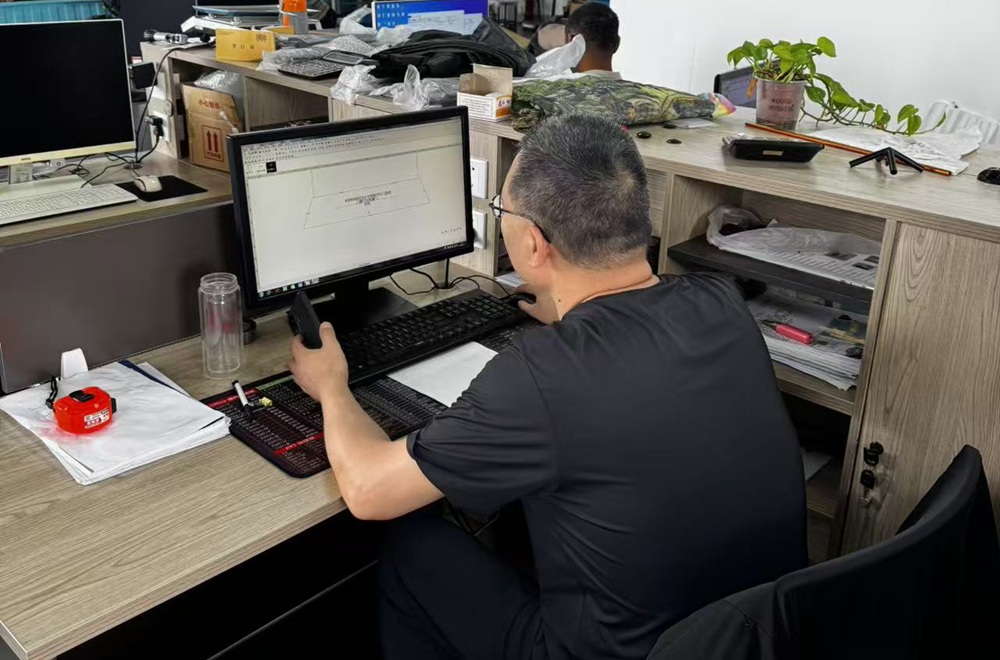
During this stage, engineers and brands work together to verify:
- Structure;
- Materials;
- Function;
- Manufacturing feasibility;
- User experience.
A well-developed prototype helps identify potential problems before mass production begins.
Why Prototype Development Is Essential
Some brands may expect the process to move directly from design drawings to mass production.
However, tents are complex outdoor products involving many factors:
- Fabric performance;
- Structural design;
- Pole systems;
- Waterproof construction;
- Sewing details;
- Functional components.
Even when a design looks correct on paper, practical issues may appear when the first physical sample is produced.
Prototype development provides an important opportunity to discover and solve these problems.
What Is Evaluated During Prototype Development?
A professional OEM manufacturer usually reviews several aspects during sample development.
1. Structure Verification
The first prototype helps confirm whether the tent structure performs as expected.
Engineers evaluate:
- Overall stability;
- Pole positioning;
- Connection points;
- Space utilization;
- Setup experience.
A structure that works in theory may require adjustments after the first physical sample is created.
2. Material Performance
The prototype stage also allows manufacturers and brands to confirm whether selected materials are suitable.
Important considerations include:
- Fabric performance;
- Waterproof requirements;
- Weight;
- Durability;
- Compatibility between different components.
For example, a fabric selected for appearance or weight advantages may require additional evaluation to ensure it performs correctly in the final product.
3. Production Feasibility
A prototype also provides valuable information for future mass production.
Manufacturers evaluate:
- Whether the construction method is practical;
- Whether sewing processes can be standardized;
- Whether assembly steps are efficient;
- Whether quality can remain consistent during large orders.
This step is important because a product that can be made once is not necessarily a product that can be manufactured successfully at commercial scale.
Prototype Development Is a Process of Improvement
The first sample is rarely the final version.
During development, modifications may be required based on:
- Customer feedback;
- Engineering evaluation;
- Functional testing;
- Manufacturing considerations.
Common adjustments include:
- Pattern modifications;
- Structural improvements;
- Detail optimization;
- Component changes.
These improvements are not signs of failure.
They are a normal part of professional product development.
The purpose of prototype development is to reduce risks before production.
Sample Approval Is More Than Appearance Confirmation
For many outdoor brands, the sample approval process focuses mainly on whether the product looks right.
However, experienced brands and manufacturers also evaluate:
Function
Does the tent perform as expected?
Manufacturing
Can the product be produced consistently?
Cost
Does the final construction match the target price?
Quality
Can the product maintain performance during mass production?
A professional sample approval process considers all of these factors together.
Why Experienced OEM Partners Add Value During Sampling
During prototype development, communication between the brand and manufacturer is especially important.
An experienced OEM partner can help identify:
- Design improvements;
- Manufacturing risks;
- Cost optimization opportunities;
- Technical limitations.
This cooperation allows brands to make better decisions before committing to large production quantities.
The goal is not simply to create a sample.
The goal is to create a product that can successfully move from prototype to market.
Prototype Development Reduces Production Risk
A carefully developed prototype helps avoid expensive problems later.
Without sufficient validation, issues may only appear after mass production begins, when changes become more difficult and costly.
By investing time in prototype development, brands can improve:
- Product reliability;
- Production efficiency;
- Market confidence.
For outdoor brands developing custom tents, the prototype stage is one of the most valuable steps in the entire OEM development journey.
05. Testing and Production Preparation Before Mass Manufacturing
After prototype development and sample approval, the project enters another important stage before mass production:
Testing and production preparation.
A prototype may look complete, but outdoor products must perform reliably in real environments.
For tents, performance requirements often include:
- Waterproof protection;
- Structural stability;
- Material durability;
- Functional performance;
- User experience.
Testing helps manufacturers and brands identify potential issues and make final improvements before committing to large-scale production.
Testing Turns a Sample Into a Reliable Product
A prototype confirms that a design can be created.
However, testing verifies whether the product can perform as expected.
During the development process, manufacturers evaluate whether:
- The structure remains stable;
- Materials perform correctly;
- Waterproof systems work effectively;
- Functional details meet requirements.
This stage reduces uncertainty before mass production begins.
Waterproof Testing: Verifying Protection Against Real Conditions
For outdoor tents, waterproof performance is one of the most important product requirements.
A tent is not waterproof simply because it uses waterproof fabric.
The complete waterproof system depends on multiple factors, including:
- Fabric performance;
- Seam sealing;
- Construction details;
- Zipper protection;
- Door and window design.
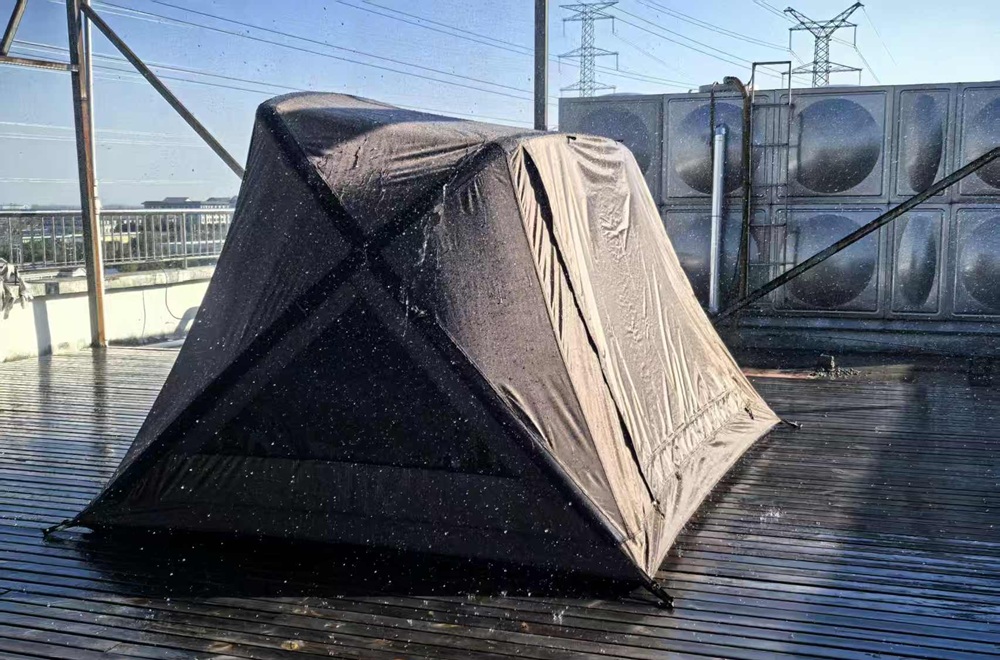
Rain testing allows manufacturers to evaluate the complete tent system and identify potential leakage risks before production.
For example, possible issues may include:
- Water entering through seams;
- Incorrect seam sealing;
- Poorly designed openings;
- Problems caused by component installation.
Testing provides valuable information for further improvement.
Beyond Waterproofing: Testing Product Details
While waterproof performance is important, professional development also considers many smaller details that influence the final product.
Manufacturers may review:
Structural Performance
Including:
- Pole connections;
- Support points;
- Overall stability.
Functional Details
Including:
- Door operation;
- Ventilation;
- Storage solutions;
- Accessories.
Manufacturing Details
Including:
- Sewing quality;
- Component matching;
- Assembly methods.
Many quality problems can be avoided when these details are identified early.
Production Preparation After Sample Approval
Once the prototype is approved, the product moves closer to mass production.
However, approval of one sample does not automatically mean production can begin immediately.
Manufacturers need to prepare several important elements, including:
- Final product specifications;
- Production instructions;
- Material confirmation;
- Manufacturing processes;
- Quality requirements.
The purpose is to ensure that the final production team can reproduce the approved product consistently.
The Role of Production Samples Before Large Orders
For some projects, manufacturers may create an additional production sample before full-scale manufacturing.
This step can provide another opportunity to confirm:
- Production methods;
- Material usage;
- Final details;
- Manufacturing consistency.
However, the use of production samples depends on the project requirements and the manufacturing approach.
For complex products, new designs, or projects with strict requirements, additional confirmation steps can help reduce production risks.
Why Preparation Matters Before Mass Production
Many problems that appear during mass production can often be traced back to insufficient preparation before production begins.
A successful transition from prototype to production requires alignment between:
- Brand expectations;
- Approved samples;
- Factory processes;
- Quality standards.
The objective is to ensure that the first production batch matches the product vision that was confirmed during development.
Maintaining consistent quality during production requires effective manufacturing control and inspection systems.
From Product Development to Manufacturing Success
At this stage, the product has moved through several important milestones:
Product Concept
↓
Engineering Development
↓
Prototype
↓
Testing
↓
Production Preparation
↓
Mass Production
Each stage reduces uncertainty and improves the chance of a successful market launch.
For outdoor brands, working with an experienced OEM manufacturer means having support throughout this entire journey — not only during production.
06. Moving From Approved Sample to Mass Production
After the product design has been finalized, the prototype has been approved, and testing requirements have been confirmed, the project moves into the manufacturing stage.
For outdoor brands, this transition is an important milestone.
However, moving from a single approved sample to commercial production is not simply a matter of making more units.
The challenge is:
How can a manufacturer reproduce the approved design consistently while maintaining quality, performance, and production efficiency?
This is where manufacturing experience and production management become critical.
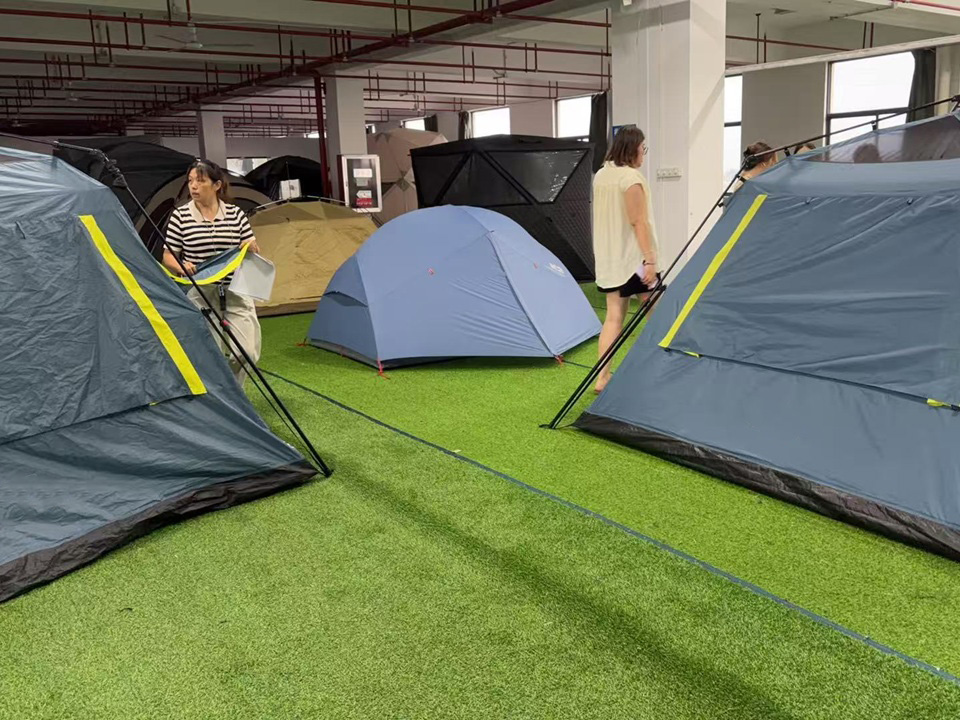
From One Sample to Thousands of Products
A prototype represents the final product concept.
Mass production requires the factory to transform that concept into a repeatable manufacturing process.
Before production begins, manufacturers need to confirm:
- Final product specifications;
- Approved sample details;
- Material requirements;
- Production methods;
- Quality standards;
- Packaging requirements.
Every detail needs to be clearly defined so that production teams can follow the same standards throughout the order.
Key Manufacturing Stages in Custom Tent Production
Although different tent categories have different requirements, most custom tent production includes several major stages.
1. Material Preparation
The first step is preparing all required materials and components.
This may include:
- Tent fabrics;
- Inner tents;
- Floor materials;
- Tent poles;
- Air tubes;
- Zippers;
- Buckles;
- Webbing;
- Other accessories.
Material selection and preparation directly influence production consistency.
Any differences in:
- Fabric batches;
- Component specifications;
- Material performance
can affect the final product.
2. Cutting and Component Preparation
After materials are confirmed, fabric components are cut according to approved patterns.
This stage requires accuracy because tent structures usually consist of multiple fabric panels that need to fit together precisely.
Cutting accuracy affects:
- Final appearance;
- Assembly efficiency;
- Structural performance;
- Waterproof construction.
3. Sewing and Assembly
The sewing stage transforms individual components into complete tent structures.
Compared with simple textile products, tents often require more complex construction because they include:
- Multiple panels;
- Reinforcement areas;
- Zippers;
- Mesh windows;
- Connection points;
- Structural details.
Skilled workers and standardized production methods are important for maintaining quality during large-volume orders.
4. Quality Inspection and Packing
Before shipment, finished products need to be inspected according to approved requirements.
Inspection may include:
- Appearance checking;
- Sewing quality;
- Component installation;
- Function verification;
- Packaging confirmation.
The goal is to ensure that mass-produced tents remain consistent with the approved sample.
Different Tent Categories Bring Different Manufacturing Challenges
Not all tents have the same production difficulty.
Different product categories require different manufacturing expertise.
Backpacking Tents
Backpacking tents usually focus on:
- Lightweight construction;
- Compact design;
- Performance efficiency.
One manufacturing challenge is working with lightweight materials.
For example, silicone-coated fabrics can provide excellent performance but often require more experienced sewing techniques because the material characteristics can make processing more challenging.
Family Camping Tents
Family tents usually involve:
- Larger dimensions;
- More living space;
- More functional areas.
Compared with smaller tents, they may require:
- More fabric panels;
- More structural components;
- More complex assembly processes.
Maintaining consistency becomes more challenging as product size increases.
Inflatable Tents
Inflatable tents have different manufacturing requirements compared with traditional pole tents.
Important considerations include:
- Air tube construction;
- Connection points;
- Material bonding;
- Structural design.
Because inflatable systems involve different production techniques, manufacturers need experience with these specific product requirements.
Glamping Tents
Glamping tents often emphasize:
- Large interior space;
- Premium appearance;
- Unique user experience.
However, larger structures also bring additional challenges:
- Larger fabric areas;
- More complex structures;
- Higher transportation considerations;
- More detailed assembly requirements.
Why Manufacturing Experience Matters
A successful custom tent project does not end when the sample is approved.
The real challenge is ensuring that the same product quality can be achieved during commercial production.
An experienced OEM manufacturer understands how to balance:
- Product design;
- Manufacturing efficiency;
- Quality requirements;
- Production cost.
This experience helps brands move from:
A successful prototype
to:
A successful market product.
07. Choosing the Right OEM Tent Manufacturing Partner
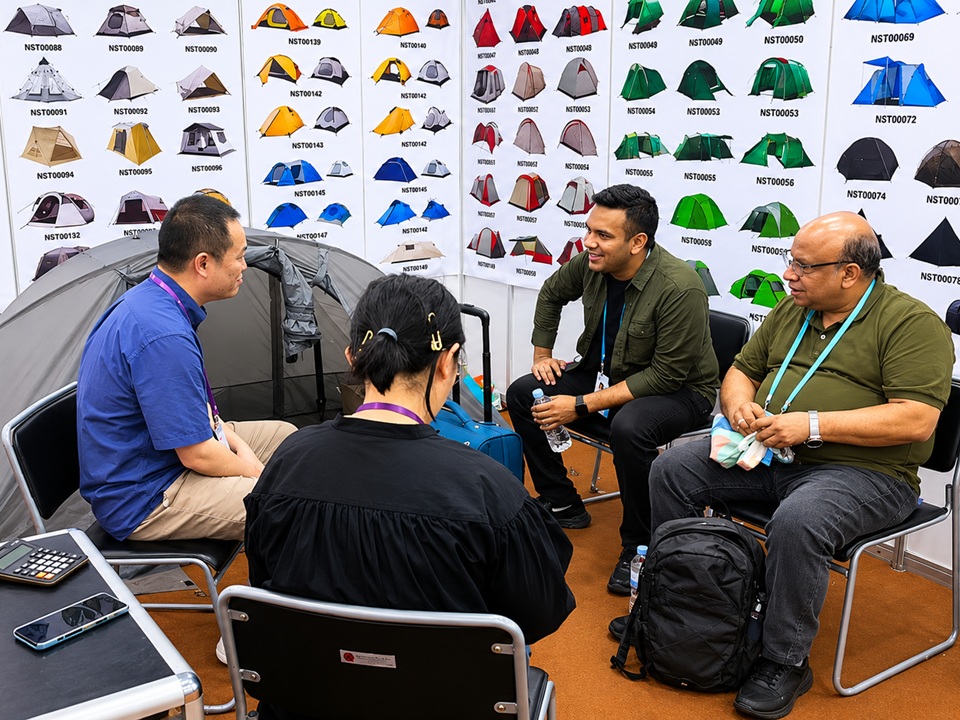
Developing a custom tent is a long-term process.
From the first product idea to final production, outdoor brands need to work closely with a manufacturing partner that understands both product goals and manufacturing realities.
Choosing the right OEM manufacturer is therefore not only about finding a factory with production capacity.
It is about finding a partner that can support:
- Product development;
- Engineering decisions;
- Manufacturing execution;
- Quality management;
- Long-term improvement.
Beyond Production Capacity: What Should Brands Look For?
Many buyers initially compare manufacturers based on:
- Unit price;
- Minimum order quantity;
- Production lead time.
These factors are important.
However, successful custom tent development usually depends on more than price.
A capable OEM partner should also have:
1. Technical and Engineering Capability
Custom tent projects often require adjustments during development.
A manufacturer with experienced engineers can help evaluate:
- Product feasibility;
- Structural solutions;
- Material selection;
- Production challenges.
This support helps brands avoid problems before they become expensive production issues.
2. Manufacturing Experience
Tent production involves many details that influence the final product:
- Fabric handling;
- Sewing techniques;
- Structural assembly;
- Waterproof construction;
- Component integration.
Experience allows manufacturers to identify potential risks and provide practical solutions.
3. Communication and Reliability
Successful product development depends heavily on communication.
Brands and manufacturers need to maintain clear discussions about:
- Product requirements;
- Design changes;
- Sample feedback;
- Production expectations.
A reliable manufacturing partner should provide transparent communication throughout the development process.
What Makes a Successful Custom Tent Development Project?
Based on years of OEM manufacturing experience, successful projects usually share several common characteristics.
Clear Product Understanding
The brand understands:
- Target customers;
- Market positioning;
- Product purpose;
- Key selling points.
A clear product direction helps the manufacturer provide better recommendations.
Realistic Expectations
A successful project requires balancing:
- Product ideas;
- Technical possibilities;
- Cost expectations;
- Production requirements.
The best products are not always the most complicated designs.
They are products where function, market needs, and manufacturing capability are properly balanced.
Active Collaboration
The strongest OEM relationships are based on cooperation.
Brands provide:
- Market knowledge;
- Customer insights;
- Product vision.
Manufacturers provide:
- Engineering experience;
- Production knowledge;
- Quality control capability.
Together, both sides can create a product that is ready for the market.
How NastoCamp Supports Custom Tent Development
At NastoCamp, our role is not limited to manufacturing finished products.
We support outdoor brands throughout the development journey, including:
- Product concept evaluation;
- Engineering discussion;
- Prototype development;
- Testing support;
- Mass production;
- Quality management.
Our goal is to help brands transform ideas into reliable outdoor products.
Conclusion
Developing a Custom Tent Is a Partnership Process
A successful custom tent project is built step by step.
The journey begins with:
- A clear product concept;
and continues through:
- Market positioning;
- Technical evaluation;
- Engineering development;
- Prototype validation;
- Testing;
- Production preparation;
- Mass manufacturing.
For outdoor brands, choosing the right OEM partner can significantly influence the final product quality, development efficiency, and market success.
A professional manufacturer does not only produce tents.
A professional manufacturer helps brands develop better products.
Develop Your Next Custom Tent Project With NastoCamp
Whether you are launching a new outdoor brand, expanding an existing product line, or developing a specialized tent solution, NastoCamp provides OEM and ODM support from concept development to mass production.
Discuss your next custom tent development project with our team.