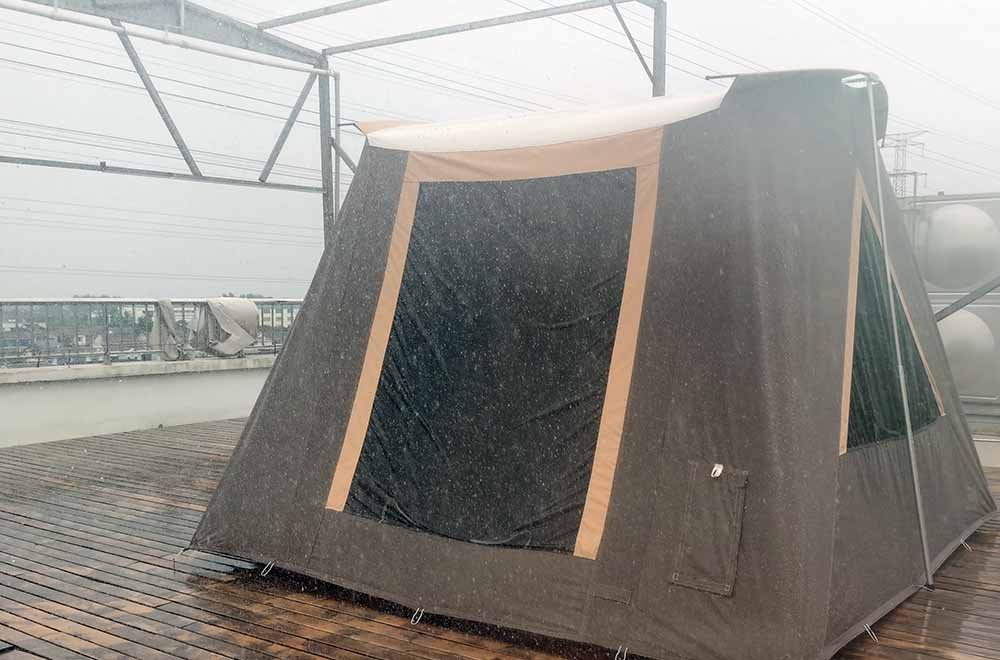
From Product Ideas to Production-Ready Outdoor Products
When outdoor brands decide to develop a new tent product, the process is often misunderstood.
Many buyers imagine OEM manufacturing as a simple workflow:
Send a design → Receive a sample → Start production.
However, professional tent manufacturing involves much more than reproducing drawings.
A reliable OEM tent manufacturer supports the complete product development journey, including requirement analysis, engineering development, prototype validation, testing, production preparation, and quality control.
A successful tent project requires close cooperation between the brand and the manufacturer to transform an initial concept into a product that is practical, manufacturable, and ready for the market.
At NastoCamp, we believe OEM manufacturing is not only about producing tents. It is about helping outdoor brands reduce development risks and create products that meet real-world requirements.
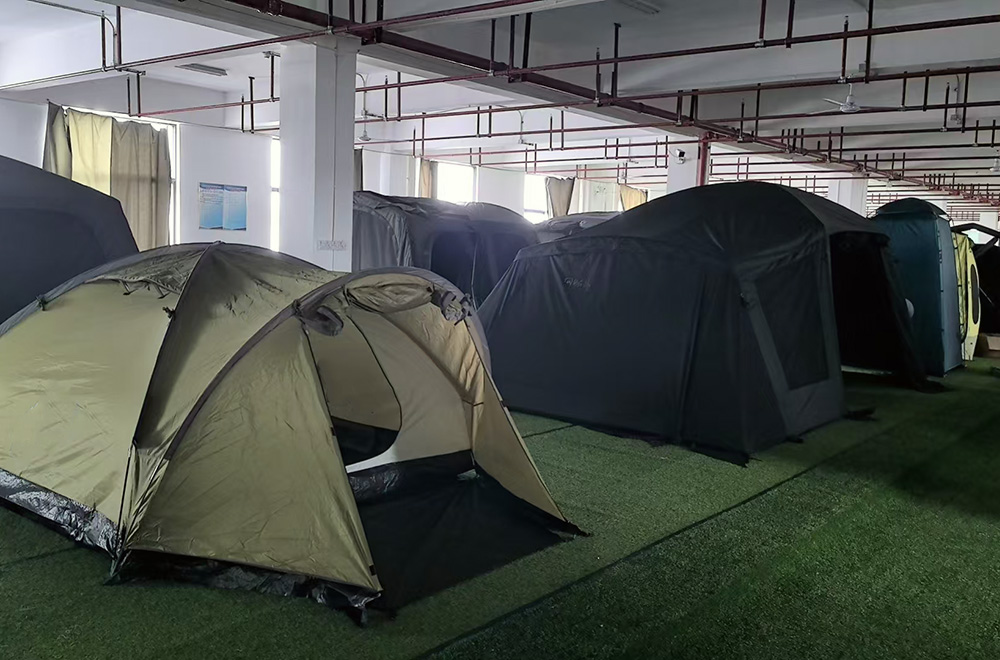
From Product Idea to Manufacturing Requirements
Before manufacturing begins, the first step is understanding the product itself.
A tent is not only a physical product. It is a solution designed for a specific market, environment, and user group.
A professional manufacturer needs to understand:
- Where will the tent be used?
- Who are the target customers?
- What functions are required?
- What price positioning should the product achieve?
- What materials and structures are suitable?
What Information Should Brands Prepare Before Developing a Tent?
When a brand approaches a manufacturer for a new tent project, preparing the right information before requesting a tent quote can greatly influence development efficiency.
Common information includes:
- Product application
- Target market
- Reference products
- Product images
- Existing samples
- Design drawings
- Functional requirements
- Cost expectations
For example, a family camping tent, a backpacking tent, and a glamping tent may all be called “tents,” but their design priorities are very different.
A backpacking tent may focus on:
- lightweight construction
- compact packing size
- durability in outdoor conditions
while a family camping tent may prioritize:
- interior space
- easy setup
- comfort
- cost efficiency
Therefore, defining the product purpose is the first step in successful tent development.
Why Requirement Understanding Matters in OEM Tent Development
One of the biggest differences between professional OEM development and simple production is communication at the beginning of the project.
A manufacturer needs to understand not only what the customer wants to make, but also why the product is being developed.
For example:
A customer may request:
“We need a three-person camping tent.”
However, this information alone is not enough.
A professional manufacturer will consider:
- Is this for retail or project use?
- Is the target market Europe, North America, or another region?
- Is the customer looking for an entry-level product or premium positioning?
- Is the priority price, durability, weight, or user experience?
These decisions directly influence:
- fabric selection
- tent structure
- pole system
- waterproof solution
- production method
NastoCamp Manufacturing Insight
In real OEM projects, customers often provide an initial idea rather than a complete product specification.
The role of an experienced manufacturer is to help transform this idea into a practical product requirement.
This early communication stage helps prevent problems later during:
- engineering development
- sampling
- testing
- mass production
Engineering Development: Turning Ideas Into Production-Ready Designs
Many buyers assume that once they provide a drawing or reference product, the manufacturer’s role is simply to produce exactly what has been requested.
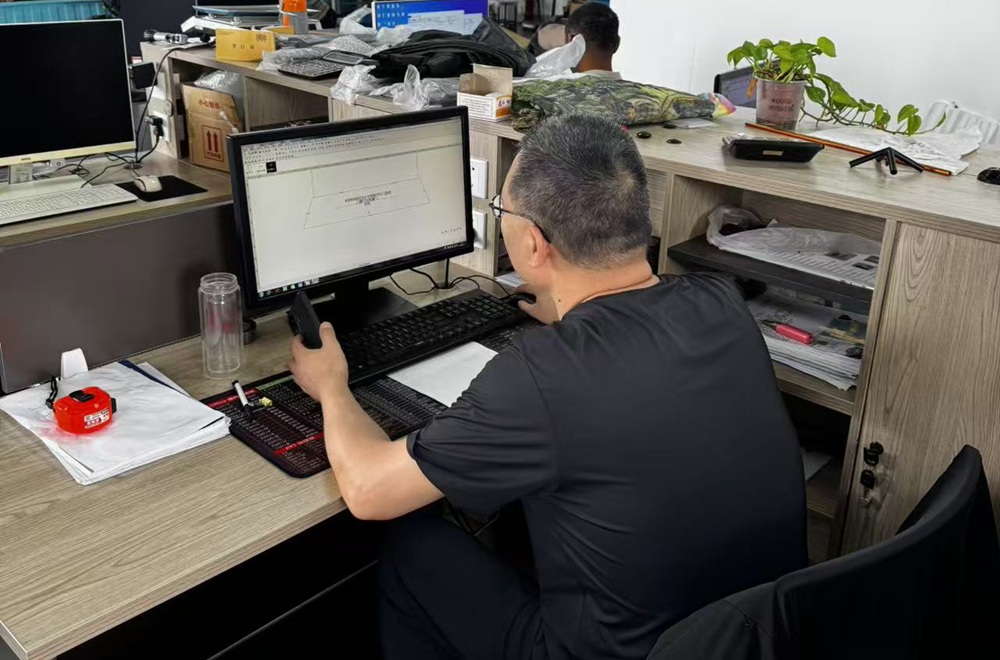
However, professional OEM tent development requires much more than copying an existing design. A reliable OEM tent manufacturer needs to evaluate whether a concept can be transformed into a practical product through engineering analysis, material selection, structural optimization, and production planning.
A reliable OEM tent manufacturer needs to evaluate whether a concept can be transformed into a practical product through engineering analysis, material selection, structural optimization, and production planning.
A design that looks good on paper does not always guarantee a successful final product.
Does an OEM Tent Manufacturer Only Follow Customer Drawings?
A professional manufacturer does not only ask:
“Can we make this product?”
They also need to consider:
- Is the structure suitable for manufacturing?
- Are the materials appropriate for the intended application?
- Can the design achieve the expected performance?
- Is the production process stable?
- Can the product be manufactured efficiently at scale?
These considerations are important because a tent is a combination of many systems:
- Fabric construction
- Tent pole structure
- Sewing methods
- Waterproof solutions
- Hardware components
- Assembly processes
A small design decision can influence:
- product durability
- production efficiency
- final cost
- user experience
From Concept Design to Manufacturing Solution
During the engineering stage, manufacturers typically work on several key areas:
1. Structural Feasibility
The engineering team evaluates:
- overall tent structure
- load distribution
- stability
- connection points
- support systems
For example, a design that looks attractive may create problems if:
- the structure is unstable;
- the frame system is difficult to assemble;
- the fabric tension is not properly controlled.
2. Material and Component Selection
The chosen materials need to match the product positioning.
Different applications may require different solutions, including appropriate tent structure, materials, and component selection.
Examples:
- Lightweight backpacking tents may prioritize weight reduction.
- Family tents may prioritize space and durability.
- Glamping tents may prioritize appearance, comfort, and premium materials.
Therefore, material selection cannot be separated from the overall product strategy.
3. Production Feasibility
A design may be technically possible but difficult to manufacture efficiently.
Engineering teams need to consider:
- sewing complexity;
- assembly sequence;
- production time;
- worker operation difficulty;
- quality consistency during mass production.
A good OEM solution balances:
Design intention + Product performance + Manufacturing feasibility
NastoCamp Manufacturing Insight
In real OEM development projects, engineering optimization is often necessary after reviewing the customer’s initial design.
One example from NastoCamp’s experience involved a seam construction method.
The original design used an inner seam structure.
After engineering evaluation, the team suggested changing it to an inner binding structure.
The improvement achieved several benefits:
- Better visual appearance
- More suitable production process
- Improved manufacturing efficiency
- More reasonable overall cost control
This example shows that an experienced OEM manufacturer does not simply reproduce drawings. The manufacturer also contributes engineering knowledge to improve the final product.
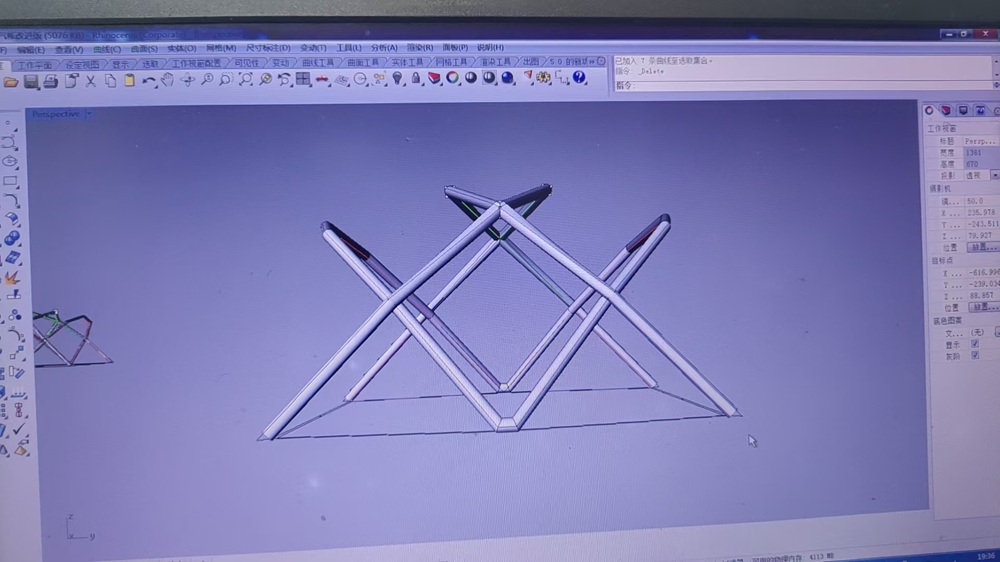
Why Engineering Experience Matters in Tent Development
A successful tent product requires cooperation between:
- Brand vision
- Market requirements
- Engineering capability
- Manufacturing experience
A brand may understand its customers and market positioning, while a manufacturer understands:
- how materials behave;
- how structures perform;
- how production challenges appear;
- how designs translate into real products.
Combining these two perspectives helps create products that are not only attractive but also practical for commercial production.
Sample Development: Why Prototypes Matter Before Mass Production
For many outdoor brands, the first physical sample is an exciting milestone.
It represents the moment when an idea moves from drawings and discussions into a real product.
However, professional OEM manufacturers do not consider a sample as simply a product for approval.
A prototype is a critical validation stage used to evaluate:
- Design feasibility
- Product structure
- Material selection
- Manufacturing methods
- User experience
- Potential production risks
A successful sample helps both the brand and manufacturer identify problems before mass production begins.
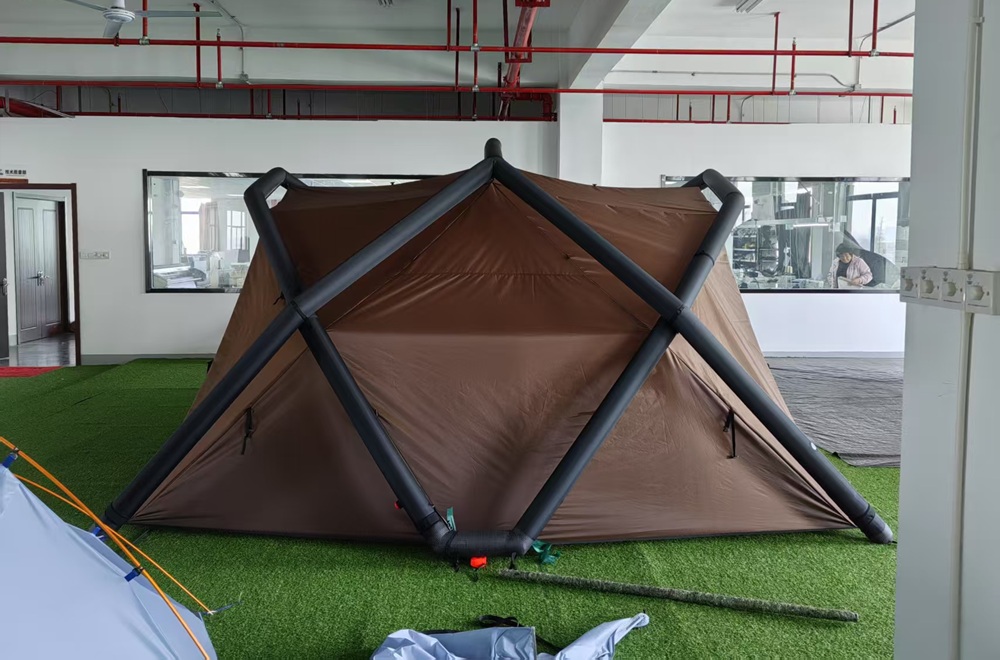
Why Is a Tent Sample Necessary Before Production?
A tent design may look complete on paper, but real manufacturing often reveals details that cannot be fully evaluated through drawings alone.
During sample development, manufacturers can verify:
- Whether the structure works as expected
- Whether the dimensions are practical
- Whether materials match the product requirements
- Whether assembly is convenient
- Whether production methods are suitable
This is especially important for customized tents because every new product may involve different combinations of:
- Fabric materials
- Pole systems
- Waterproof solutions
- Functional components
- Structural designs
A Sample Is More Than a Product Approval Step
Many buyers view samples as:
“The factory makes one piece, and the customer checks whether they like it.”
However, professional OEM development treats sampling as a problem-solving process.
During this stage, the manufacturer and brand work together to answer important questions:
- Does the design achieve the intended function?
- Are the details practical for users?
- Can the product be manufactured consistently?
- Are there opportunities for improvement?
The goal is not only to create a sample that looks correct.
The goal is to create a product that can be successfully produced at scale.
How Long Does Tent Sample Development Take?
The development timeline depends on product complexity.
Based on NastoCamp’s production experience:
Standard Tent Projects
Usually:
7–14 days
These projects normally involve:
- Existing structures
- Standard materials
- Limited customization
Complex Tent Projects
Usually:
15–30 days or longer
Examples include:
- Large family tents
- Glamping tents
- Inflatable tents
- Products with unique structures or functions
These projects may require more time because they involve additional engineering evaluation and adjustments.
Why Do Tent Samples Often Need Modifications?
A common misunderstanding is that if the design is complete, the first sample should be perfect.
In reality, modifications are a normal part of professional product development.
During sample evaluation, manufacturers may discover issues related to:
- Pattern design
- Dimensions
- Structural details
- Door and window layout
- Material selection
- Manufacturing efficiency
These adjustments help improve the final product before production begins.
Design Drawings and Real Products Are Not Always the Same
A 2D drawing or concept design provides important direction.
However, a physical product must also consider:
- Material behavior
- Fabric tension
- Sewing limitations
- Assembly methods
- Real-world usability
For example, a design may appear ideal visually but create challenges when converted into an actual tent.
The sample stage provides an opportunity to identify these differences and improve the design.
NastoCamp Manufacturing Insight
During OEM tent development, sample revision is often where engineering experience creates real value.
A customer may have a clear product idea, but the manufacturer can help identify improvements based on:
- Production experience
- Material characteristics
- Manufacturing efficiency
- Final product performance
The sample process is therefore not simply about confirming a design.
It is about reducing uncertainty before investing in mass production.
What Happens After Sample Feedback?
When a sample is reviewed, the improvement process usually follows:
Sample Evaluation
↓
Problem Identification
↓
Engineering Analysis
↓
Design / Process Adjustment
↓
Updated Sample
↓
Final Approval
This process allows manufacturers and brands to solve issues at a stage where changes are still manageable.
Making improvements during sampling is much more efficient than discovering problems after thousands of products have already been produced.
Why Professional Buyers Should Value Sample Development
For outdoor brands, the sample stage is not an additional cost or delay.
It is a risk-control process.
A carefully developed sample helps prevent:
- Production mistakes
- Unexpected quality problems
- Incorrect specifications
- Customer complaints after launch
For brands entering a new product category, working closely with an experienced OEM partner during sampling can significantly improve the probability of commercial success.
Testing and Improvement Before Production Approval
Creating a tent sample is only one stage of OEM development.
Before moving into mass production, the product needs to be evaluated to confirm whether it meets the expected requirements.
A professional manufacturer does not only check whether a sample looks correct.
The testing stage focuses on a more important question:
Can this product perform reliably in real-world conditions?
Testing helps identify potential problems before large-scale production begins and provides an opportunity to improve the product.
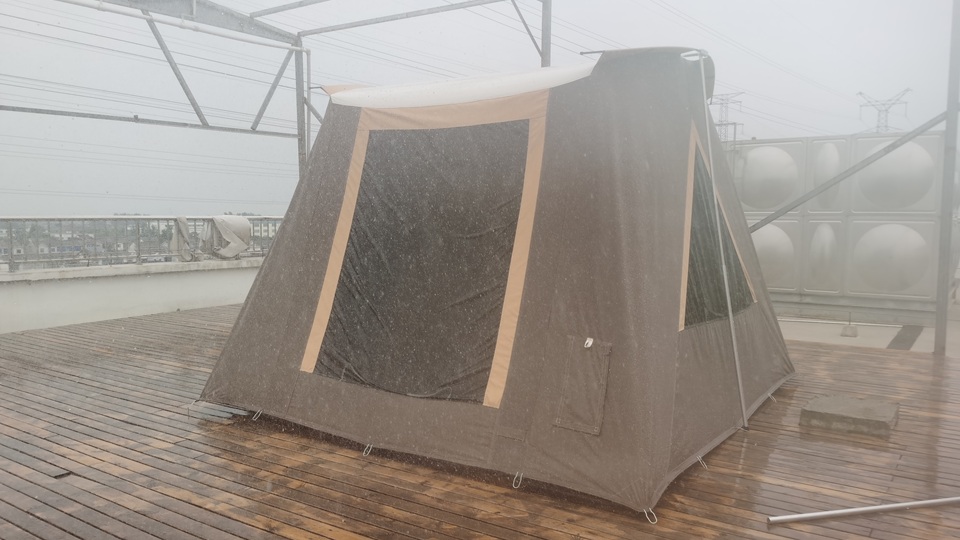
Why Testing Is Important Before Mass Production
A tent combines many different systems:
- Fabric performance
- Sewing construction
- Seam sealing
- Tent structure
- Zippers and accessories
- Assembly methods
A problem in any one area may affect the final user experience.
For example:
- A waterproof fabric may still leak if seams are not properly sealed.
- A strong frame may not perform well if the structure design is unsuitable.
- A good design may become difficult to produce consistently if manufacturing details are not optimized.
Therefore, testing is not only a quality check.
It is also a product improvement process.
What Tests Are Commonly Used During Tent Development?
The exact testing process depends on the product type and application.
During OEM tent development, manufacturers may evaluate:
Waterproof Performance
Including:
- Rain testing
- Seam inspection
- Leakage analysis
Waterproof testing helps identify whether water enters through:
- Fabric areas
- Stitching points
- Zippers
- Connection areas
Structural Performance
Manufacturers may evaluate:
- Tent stability
- Frame connection points
- Setup process
- Overall usability
This is especially important for:
- Large family tents
- Glamping tents
- Event tents
- Inflatable tents
Functional Details
Testing may also focus on:
- Door operation
- Window design
- Ventilation
- Accessories
- User convenience
A product must not only function technically but also provide a good user experience.
Rain Testing: A Critical Step for Waterproof Validation
For outdoor tents, waterproof performance is one of the most important product requirements.
However, waterproof performance is not determined by one specification alone.
A tent can have:
- High waterproof fabric rating
- Quality materials
- Proper coating
but still experience leakage if other details are not handled correctly.
Rain testing allows manufacturers to evaluate the complete waterproof system and identify potential leakage risks before mass production.
Common Problems Found During Testing
During sample testing, manufacturers may discover issues such as:
1. Seam Leakage
Possible causes include:
- Poor seam sealing
- Incorrect tape positioning
- Incomplete waterproof treatment
2. Water Entering Through Zippers or Accessories
Some leakage problems are not caused by fabric.
They may come from:
- Zipper construction
- Webbing attachment points
- Connection areas
3. Structural Problems
Testing may reveal:
- Water accumulation areas
- Unstable structures
- Difficult assembly processes
These issues are easier to solve during sample development than after mass production.
From Problem Discovery to Product Improvement
Finding a problem during testing does not mean the product has failed.
In professional OEM development, testing is part of the improvement cycle.
The typical process is:
Sample Testing
↓
Problem Identification
↓
Cause Analysis
↓
Design / Process Improvement
↓
New Sample Validation
↓
Production Approval
NastoCamp Manufacturing Insight
During tent development, testing results help engineers understand whether improvements are needed in:
- Materials
- Structure
- Sewing methods
- Waterproof solutions
- Production processes
The purpose of testing is not only to find problems.
The purpose is to solve problems before they become production risks.
Why Experienced Manufacturers Add Value During Testing
An inexperienced supplier may only report:
“The sample has a problem.”
An experienced OEM partner should go further:
- Identify the cause
- Suggest improvements
- Evaluate production impact
- Confirm the solution
This engineering feedback helps brands avoid costly mistakes after mass production begins.
Testing Reduces Risk for Outdoor Brands
For brands developing new tents, the testing stage provides confidence before investment in large quantities.
A properly validated product helps reduce:
- Manufacturing risks
- Quality complaints
- Product returns
- Market launch problems
This is why professional OEM development includes testing and improvement before production approval.
From Approved Sample to Mass Production
After a tent sample is approved, many buyers assume the project immediately moves into production.
However, professional OEM manufacturing requires another important preparation stage before bulk production begins.
The purpose of this stage is to ensure that:
- The approved design can be reproduced consistently;
- Materials and components are prepared correctly;
- Production teams understand the final requirements;
- The first mass production units match the approved sample.
A successful transition from sample approval to mass production is one of the key factors that determines final product quality.
What Happens After Sample Approval?
Once the sample is confirmed, the manufacturer begins preparing for production.
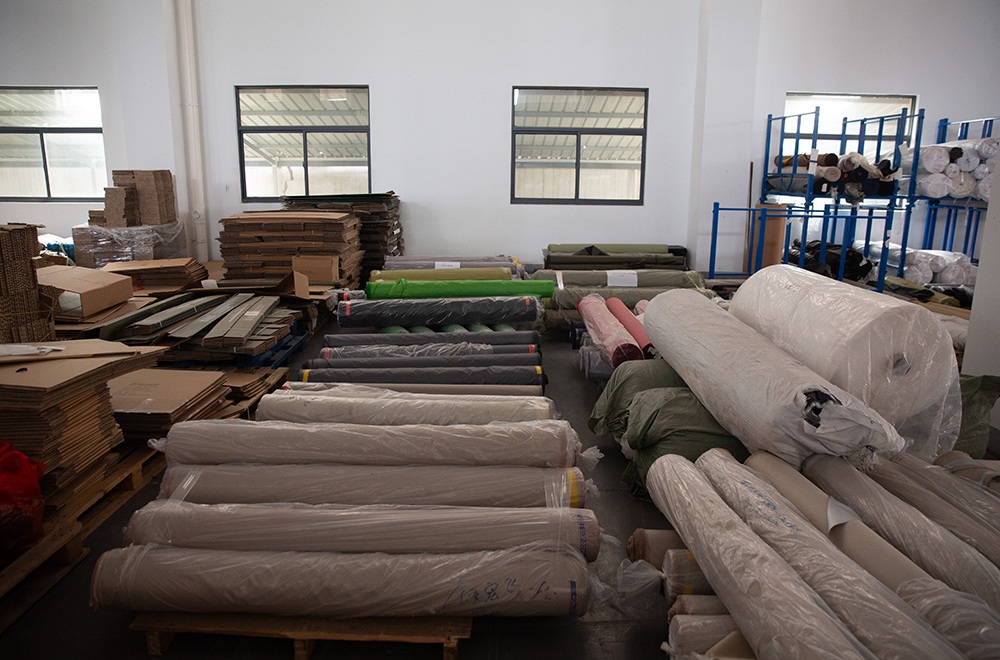
This stage usually includes:
- Finalizing production documents
- Confirming material requirements
- Preparing raw materials
- Arranging production schedules
- Communicating production details with the manufacturing team
The approved sample becomes the reference standard for the following production process.
It defines important details such as:
- Product structure
- Fabric selection
- Color requirements
- Sewing details
- Accessories
- Packaging requirements
Why Production Preparation Matters
A tent contains many individual components.
Even a relatively simple camping tent may include:
- Multiple fabric panels
- Zippers
- Webbing
- Buckles
- Tent poles
- Carry bags
- Labels and packaging materials
Before production starts, these materials need to be prepared and checked to avoid problems during manufacturing.
For customized OEM products, production preparation is especially important because every project may have different requirements.
Material Preparation Before Production
Material preparation is one of the first steps before mass manufacturing.
Manufacturers need to confirm:
- Fabric specifications
- Colors
- Coating requirements
- Accessories
- Hardware components
The selected materials must match the approved sample.
Even small differences in:
- Fabric batches
- Colors
- Component specifications
may affect the final product appearance and performance.
Pre-Production Sample: The Final Check Before Bulk Manufacturing
One important step that many new buyers may not be familiar with is the pre-production sample.
After the development sample is approved, manufacturers may create a production reference sample before starting full-scale production.
This sample helps confirm that:
- Production methods are ready;
- Workers understand the requirements;
- Materials are correctly prepared;
- The product can be reproduced according to the approved standard.
It acts as the connection between:
Approved Sample
↓
Production Preparation
↓
Pre-Production Sample
↓
Mass Production
NastoCamp Manufacturing Insight
In NastoCamp’s OEM projects, the sample approval stage does not mean the development work simply ends.
Before mass production, the production team still needs to ensure that the manufacturing process can consistently reproduce the approved product.
This is especially important for customized tents because small details can influence:
- Appearance
- Function
- Waterproof performance
- User experience
A well-controlled transition from sample to production helps reduce unexpected issues during large-volume manufacturing.
How Manufacturers Maintain Consistency Between Sample and Bulk Production
One of the biggest concerns for OEM buyers is:
Will the mass-produced tents be the same as the approved sample?
To maintain consistency, manufacturers need to control:
Product Documentation
Clear production information helps teams understand:
- Final specifications
- Construction details
- Material requirements
Production Communication
Before production starts, manufacturing teams need to understand:
- Product requirements
- Special processes
- Quality expectations
Production Inspection
Quality checks during production help identify issues before products reach final packaging.
Why Sample Approval Alone Is Not Enough
A good sample does not automatically guarantee good mass production.
The challenge of OEM manufacturing is not making one excellent product. The challenge is making thousands of products with consistent quality during mass production.
This requires:
- Stable production processes
- Experienced workers
- Clear standards
- Effective quality control
Inside Tent Mass Production: Key Manufacturing Steps That Affect Quality
Once the production sample is approved and all preparation work is completed, the project enters the mass production stage.
For many buyers, manufacturing may appear simple:
Fabric goes in, finished tents come out.
However, producing consistent, high-quality tents requires coordination across multiple production stages.
Every step can influence the final product, including:
- Material preparation
- Cutting accuracy
- Sewing quality
- Component assembly
- Waterproof treatment
- Final inspection
- Packaging
A professional tent manufacturer must control the entire production process, because quality is created through many small details working together.
The Main Steps of Tent Manufacturing
Although production methods may vary depending on the tent type, most tent manufacturing follows a general workflow:
Material Inspection
↓
Cutting
↓
Sewing
↓
Assembly
↓
Quality Inspection
↓
Packing
Each stage has its own requirements and potential risks.
1. Material Inspection: Quality Starts Before Production
Before production begins, materials and components need to be checked.
Common inspection items include:
- Fabric specifications
- Color consistency
- Coating condition
- Zippers
- Webbing
- Buckles
- Other accessories
This step is important because manufacturing problems often originate from incorrect or inconsistent materials.
For example:
- Fabric differences may affect appearance and performance;
- Incorrect accessories may affect product function;
- Material defects may become difficult to correct after production begins.
A reliable production process starts with controlling the quality of incoming materials.
2. Cutting: Accuracy Determines the Foundation
Cutting is the first step where materials begin to take the shape of the final product.
Cutting accuracy affects:
- Product dimensions
- Fabric matching
- Sewing efficiency
- Final appearance
For tents, this process can be more complex because a single product may contain many different fabric panels.
If cutting accuracy is not controlled, it may lead to:
- Incorrect dimensions
- Difficult assembly
- Poor fitting between components
3. Sewing: Turning Fabric Pieces Into a Tent Structure
Sewing is one of the most important stages in tent manufacturing.
During sewing, separate fabric pieces become a complete tent structure.
Sewing quality influences:
- Strength
- Appearance
- Waterproof performance
- Durability
Important factors include:
- Stitch accuracy
- Seam alignment
- Thread selection
- Worker experience
For waterproof tents, sewing also creates areas that require additional treatment because needle holes are introduced during the process. Proper seam sealing helps protect these areas from potential water leakage.
This is why sewing quality and waterproof construction must be considered together.
4. Assembly: Combining All Components Into a Finished Tent
After sewing, different components are assembled into the final product.
Depending on the tent type, assembly may include:
- Installing tent poles
- Attaching accessories
- Installing doors and windows
- Checking functional components
- Completing structural connections
Different tent categories may create different manufacturing challenges.
For example:
Large Family Tents
May require attention to:
- Larger fabric areas
- More structural connections
- More doors and windows
Glamping Tents
May require:
- Appearance control
- Larger components
- More detailed finishing
Inflatable Tents
Require additional attention to:
- Airtube construction
- Air leakage prevention
- Pressure testing
According to NastoCamp production experience, inflatable tents may require extended air retention testing, such as 48-hour leakage checks, to verify reliability.
Manufacturing Complexity Increases With Product Requirements
Not all tents have the same production difficulty.
A simple camping tent and a large customized tent may follow similar basic processes, but the complexity can be very different.
Factors that increase manufacturing difficulty include:
- Larger size
- More panels
- More doors and windows
- More functional components
- Special materials
- Unique structures
The challenge is not only making one product.
The challenge is producing the same quality repeatedly at commercial scale.
NastoCamp Manufacturing Insight
In OEM production, manufacturing experience becomes especially important when handling complex products.
A product may look straightforward from the outside, but production teams must consider many hidden details:
- How materials are cut;
- How components are connected;
- How workers can assemble efficiently;
- How quality can remain consistent.
This is why manufacturing capability is not only about factory size.
It is also about understanding how products are developed and produced.
5. Final Inspection and Packing
Before shipment, finished products need to be inspected.
Inspection may include:
- Appearance checking
- Functional checking
- Component verification
- Packaging confirmation
Additional checks may include:
- Logo inspection
- Accessory counting
- Packaging accuracy
After passing inspection, products are prepared for shipment.
Why Manufacturing Details Create Quality Differences
Two manufacturers may use similar fabrics, similar structures, and similar specifications, but produce different results. Understanding why tent quality varies between manufacturers helps brands choose the right OEM partner.
The difference often comes from:
- Process control
- Worker experience
- Production management
- Quality inspection standards
This is why evaluating an OEM partner requires more than comparing prices or specifications.
Quality Control Throughout Tent Manufacturing
Quality control systems help organizations establish consistent processes and improve product reliability.¹
For outdoor brands, product quality is one of the most important factors when selecting an OEM manufacturing partner.
However, quality is not created at the final inspection stage alone.
A professional tent manufacturer needs to control quality throughout the entire production process:
- Before production begins
- During manufacturing
- After assembly
- Before shipment
This approach helps identify potential problems earlier and reduces the risk of quality issues after delivery.
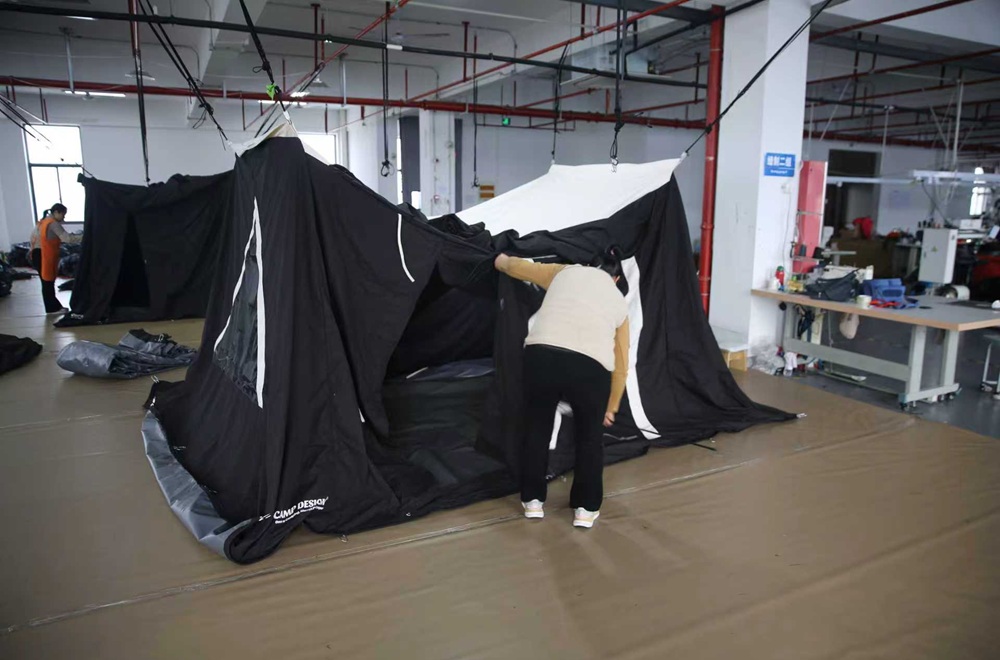
Quality Control Is a Process, Not a Final Check
Many buyers think quality inspection means:
“Checking finished products before shipment.”
While final inspection is important, it is only one part of quality management.
A reliable manufacturing process includes multiple checkpoints:
Material Inspection
↓
Cutting Inspection
↓
Sewing Inspection
↓
Assembly Inspection
↓
Functional Inspection
↓
Final Inspection
↓
Packing Check
Each stage helps prevent different types of problems.
1. Material Inspection
Quality control begins before production starts.
Before materials enter production, manufacturers need to confirm:
- Fabric specifications
- Color consistency
- Coating condition
- Accessories
- Hardware components
For tents, material quality directly affects:
- Appearance
- Durability
- Waterproof performance
- User experience
For example:
A fabric may meet the required specification, but problems such as:
- Color differences
- Surface defects
- Incorrect coating
can still affect the final product.
2. Cutting and Sewing Inspection
After materials are prepared, production accuracy becomes critical.
During cutting, manufacturers check:
- Pattern accuracy
- Dimensions
- Fabric matching
During sewing, inspection focuses on:
- Stitch quality
- Seam alignment
- Construction details
- Sewing consistency
These steps directly influence the final tent structure.
Small mistakes during early production stages can become much more difficult to correct later.
3. Functional and Detail Inspection
A tent contains many components beyond the main fabric structure.
Quality control may also include checking:
- Zippers
- Webbing
- Buckles
- Labels
- Accessories
- Logo placement
These details may appear small, but they directly affect the customer’s perception of product quality.
For OEM brands, consistency in these details is especially important because products represent their own brand image in the market.
NastoCamp Manufacturing Insight
In NastoCamp’s production process, quality control includes not only major manufacturing steps but also detailed checks.
For example, inspection may include:
- Logo checking
- Accessory counting
- Packaging confirmation
These details help ensure that the final products match customer expectations before shipment.
4. Final Inspection Before Shipment
Before products leave the factory, final inspection verifies whether finished tents meet the approved requirements.
Common checks include:
- Overall appearance
- Product dimensions
- Functional operation
- Accessories completeness
- Packaging condition
For customized OEM projects, final inspection is especially important because different customers may have different requirements.
How OEM Buyers Can Evaluate Manufacturing Quality
When evaluating a potential tent supplier, buyers should look beyond:
- Factory price
- Product photos
- Basic specifications
A more complete evaluation should consider why tent quality varies between manufacturers, including:
Manufacturing Process
Does the manufacturer have clear production procedures?
Quality Control System
Are there inspection points throughout production?
Problem-Solving Ability
Can the manufacturer identify problems and suggest solutions?
Production Experience
Has the manufacturer produced similar products before?
Quality Control and Customer Inspection
For many professional buyers, factory quality control is combined with additional verification methods.
Depending on project requirements, customers may arrange:
- Sample approval
- Factory visits
- Third-party inspections
- Pre-shipment inspections
These approaches help ensure the delivered products match the agreed requirements.
Why Quality Control Matters More for OEM Products
For standard products, buyers may compare existing items from different suppliers.
However, OEM products are different.
Each customized project may involve:
- Unique designs
- Specific materials
- Special functions
- Brand requirements
Therefore, the manufacturer needs the ability to consistently reproduce the approved product.
The real challenge is not producing one perfect sample.
The challenge is producing hundreds or thousands of products with the same quality standard.
NastoCamp Manufacturing Insight
At NastoCamp, quality control is integrated into the complete OEM development process.
From:
- Material preparation
- Product development
- Sample approval
- Production
- Final inspection
each stage contributes to the final product quality.
A reliable OEM partner should not only provide manufacturing capacity, but also demonstrate the ability to control quality throughout the entire process.
Common Mistakes Outdoor Brands Should Avoid When Developing Tents
Developing a new tent product is an exciting opportunity for outdoor brands.
However, based on real OEM manufacturing experience, many product development problems do not come from manufacturing itself.
They often come from:
- unclear requirements;
- unrealistic expectations;
- insufficient communication;
- choosing specifications without considering the actual application.
Understanding these common mistakes can help brands reduce development risks and build stronger products.
Mistake 1|Focusing Only on Price
One of the most common mistakes is evaluating manufacturers mainly by quotation price.
Price is certainly an important factor.
However, the lowest initial quotation does not always represent the lowest overall cost.
A cheaper solution may create additional risks:
- More sample revisions
- Manufacturing problems
- Quality issues
- Higher correction costs
A professional OEM partner helps brands balance:
- Product requirements
- Material selection
- Manufacturing feasibility
- Target cost
The goal is not simply to make the cheapest product.
The goal is to create a product that can succeed in the market.
Mistake 2|Ignoring Product Positioning Before Development
A tent should be developed for a specific market and user group.
Before production begins, brands should clearly define:
- Who will use the tent?
- Where will it be used?
- What price level is expected?
- What features are truly important?
For example:
A premium glamping tent and an entry-level camping tent may both provide shelter, but they require completely different decisions regarding:
- Materials
- Structure
- Appearance
- Manufacturing methods
Without clear product positioning, it becomes difficult to select the right solution.
Mistake 3|Expecting the First Design to Be Perfect
Another common misunderstanding is expecting the first sample to become the final production version.
In reality, professional product development is an iterative process.
A strong OEM collaboration allows:
- Testing
- Feedback
- Engineering improvements
- Sample optimization
before mass production begins.
The purpose of development is not to avoid all changes.
The purpose is to make improvements at the right stage.
Mistake 4|Not Sharing Enough Product Information
The more information a manufacturer understands at the beginning, the better the development process can be.
Brands should communicate:
- Target market
- Product application
- Expected functions
- Design references
- Budget expectations
- Quality requirements
Clear communication helps manufacturers provide better recommendations and avoid unsuitable solutions.
NastoCamp Manufacturing Insight
From NastoCamp’s experience, successful OEM projects usually share one common characteristic:
The brand and manufacturer work together as development partners.
The most successful projects are not simply:
Customer gives order → Factory produces product.
Instead, they involve:
Brand understanding the market → Manufacturer applying engineering experience → Both sides improving the product together.
This cooperation helps transform ideas into products that are practical, reliable, and ready for commercial production.
Final Thoughts
A successful tent is not created by one single factor.
It requires the combination of:
- Clear product requirements
- Engineering development
- Sample validation
- Performance testing
- Manufacturing control
- Quality management
For outdoor brands, choosing an OEM partner is not only about finding a factory that can produce tents.
It is about finding a manufacturing partner that understands how to develop products, solve problems, and maintain quality throughout the entire process.
At NastoCamp, we believe professional OEM manufacturing is a collaborative journey — from the first product concept to the final production shipment.
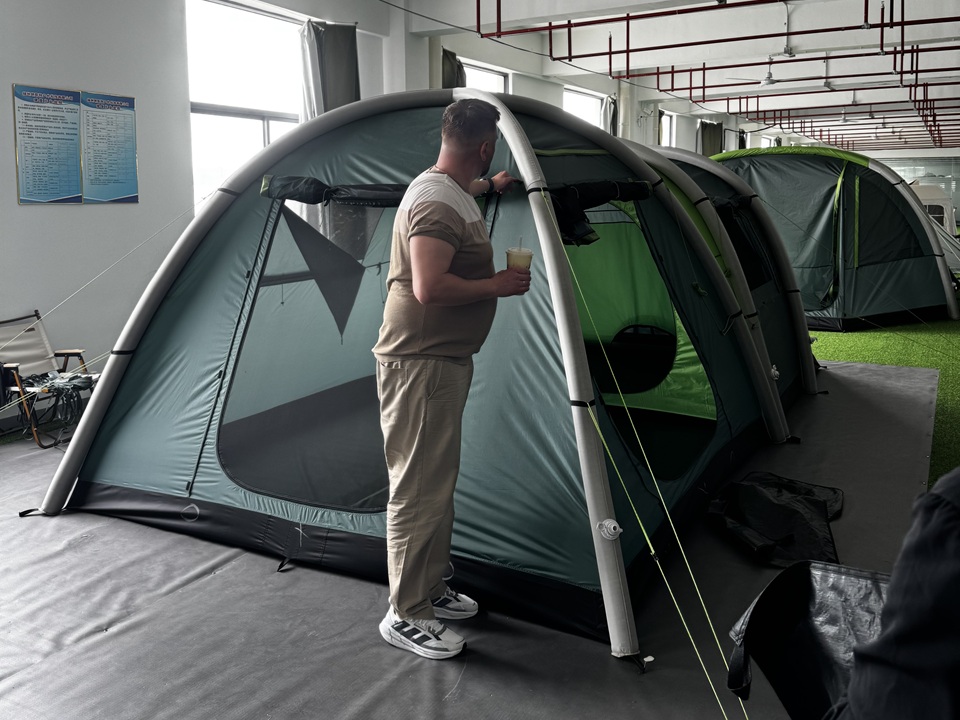
Developing a New Tent Product?
Whether you are launching a new outdoor brand, expanding your existing product line, or looking for an experienced OEM tent manufacturer, NastoCamp can support your project through:
- Product development
- Engineering optimization
- Sample production
- Testing
- Mass manufacturing
- Quality control
Contact NastoCamp to discuss your next tent project.
Start your OEM tent development journey with NastoCamp.
Frequently Asked Questions About OEM Tent Manufacturing
Q1: How long does it take to develop a custom tent?
The development timeline depends on product complexity.
Standard tent projects may take around 7–14 days for initial sample development, while more complex products may require 15–30 days or longer due to additional engineering and testing requirements.
Q2: What information should I provide before developing a new tent?
Brands should provide information including:
- Product application
- Target market
- Tent size
- Required functions
- Reference products
- Material expectations
- Cost objectives
Clear requirements help manufacturers provide more suitable solutions.
Q3: Does an OEM tent manufacturer only produce according to customer drawings?
No.
Professional OEM manufacturers evaluate whether designs are practical for production.
They may suggest improvements related to:
- Structure
- Materials
- Manufacturing methods
- Cost efficiency
Q4: Why are tent samples important before mass production?
Samples allow manufacturers and brands to validate:
- Design feasibility
- Product structure
- Materials
- Functionality
- Manufacturing process
before investing in large-scale production.
Q5: Can a manufacturer help improve my tent design?
Yes.
Experienced manufacturers can provide engineering suggestions based on:
- Production experience
- Material knowledge
- Manufacturing feasibility
The goal is to improve product performance and production efficiency.
Q6: What are the main steps in tent manufacturing?
A typical tent production process includes:
- Material inspection
- Cutting
- Sewing
- Assembly
- Quality inspection
- Packing
Different products may require additional processes such as waterproof testing or inflatable system testing.
Q7: How do manufacturers control tent quality?
Professional manufacturers control quality through multiple stages:
- Material inspection
- Production inspection
- Sewing inspection
- Functional checking
- Final inspection
Quality is managed throughout the manufacturing process, not only before shipment.
Related Reading
Continue exploring NastoCamp OEM Tent Knowledge Center:
Before Requesting a Tent Quote
Learn what information outdoor brands should prepare before contacting a tent manufacturer.
Why Tent Samples Are Important
Understand why prototype development is a critical step before mass production.
How Waterproof Is a Tent? What Rain Testing Reveals About Tent Quality
Learn how professional manufacturers verify waterproof performance.
Why Tent Seams Leak: Understanding Seam Sealing
Understand how seam construction affects waterproof tent performance.
Why Tent Quality Varies Between Manufacturers
Learn how manufacturing processes influence final product quality.
References
¹ ISO. ISO 9001 Quality Management Systems — Requirements.
https://www.iso.org/standard/62085.html