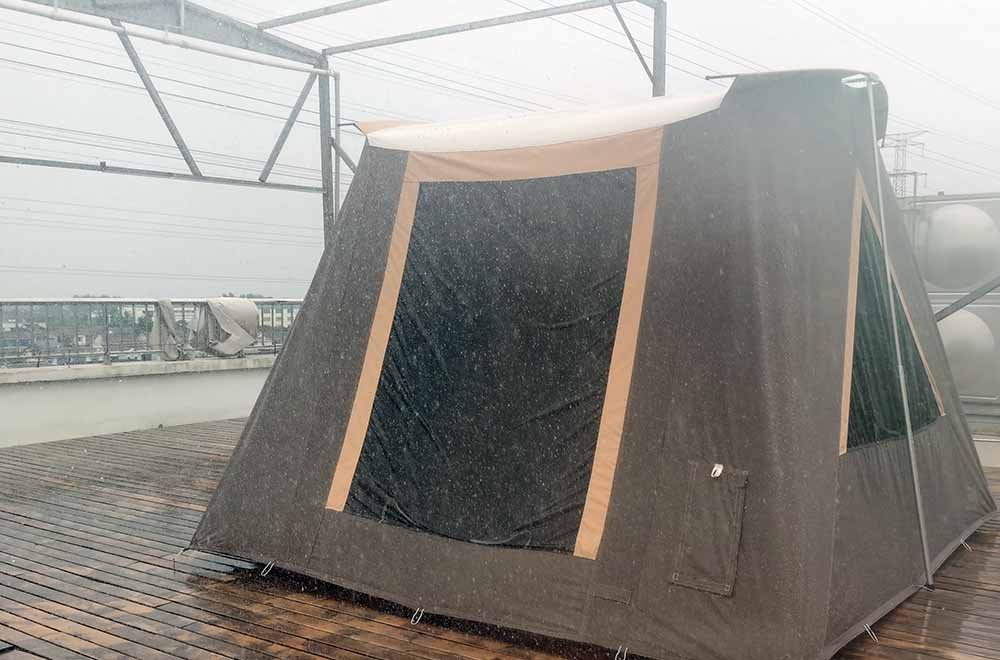
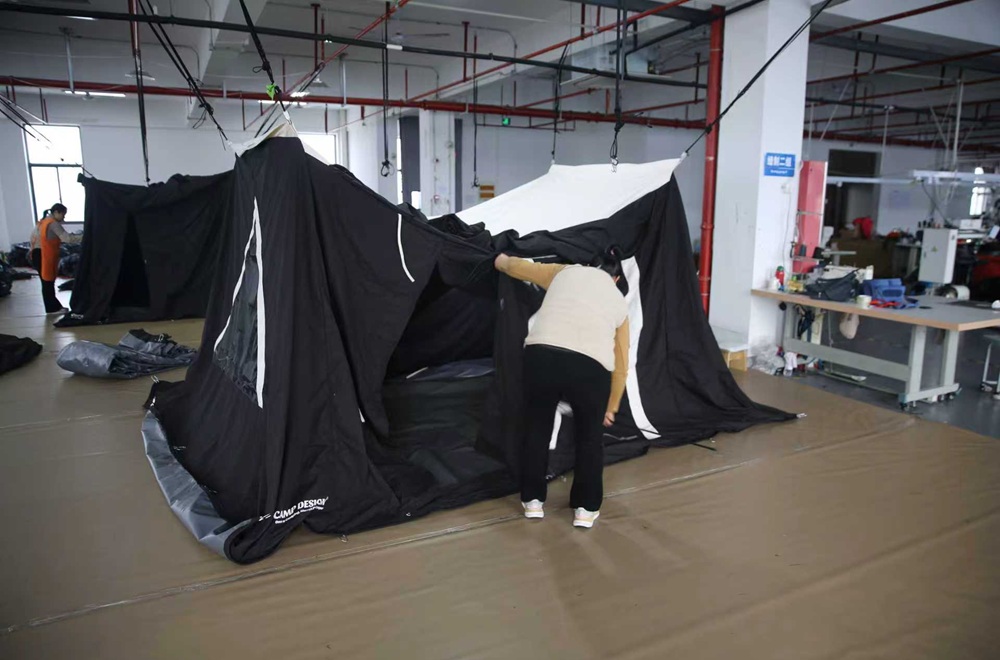
A Manufacturer’s Guide to Stitching, Seam Tape, and Waterproof Performance.
When buyers evaluate a waterproof tent, the first specification they usually check is the waterproof rating of the fabric.
A number such as:
- 2000mm
- 3000mm
- 5000mm
often becomes the main purchasing reference.
However, experienced tent manufacturers know that waterproof performance is not determined by fabric alone.
A tent can use high-performance waterproof material and still leak if the seam construction is not properly designed and manufactured.
The reason is simple:
Every stitch creates tiny needle holes.
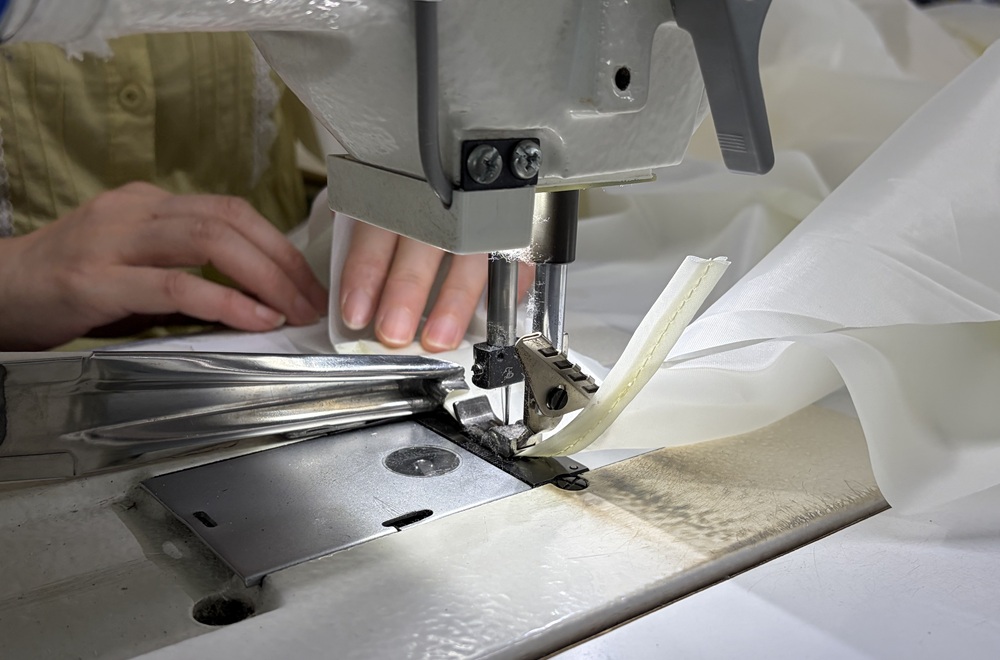
During sewing, the needle must pass through the fabric layers to connect different panels together.
These small openings can become potential water entry points if they are not properly treated.
A reliable waterproof tent requires a complete system that includes:
- Suitable waterproof fabric
- Correct sewing techniques
- Proper seam sealing
- Appropriate waterproof accessories
- Quality inspection and testing
In this guide, we explain why tent seams leak, how seam sealing works, and how professional OEM manufacturers ensure waterproof performance during production.
Why Do Tent Seams Leak?
The seams are one of the most critical areas affecting tent waterproof performance.
Unlike the main fabric surface, seams are created by joining multiple pieces of material together.
This creates several potential risks:
- Needle holes from sewing
- Uneven seam sealing
- Incorrect tape application
- Water absorption through accessories
- Poor structural design causing water accumulation
In actual production, most waterproof problems are not caused by the waterproof fabric itself.
They are often related to details around:
- Seam construction
- Seam sealing quality
- Component connection points
Needle Holes Created During Sewing
Sewing is essential in tent manufacturing.
Without stitching, different fabric panels cannot be assembled into a complete structure.
However, every sewing needle creates small holes in the material.
Under normal conditions, these holes may not cause immediate problems.
But when a tent is exposed to:
- Heavy rain
- Water pressure
- Water accumulation
- External pressure on the fabric
water can gradually penetrate through these tiny openings.
This is why professional tent manufacturers need additional waterproof treatment after sewing.
Water Pressure Is Not the Only Factor
Many buyers focus on waterproof ratings and assume:
Higher waterproof rating = no leakage
However, water leakage can happen even when the fabric itself has sufficient waterproof performance.
For example:
- A seam without proper sealing
- A poorly designed roof area where water accumulates
- Water entering through accessories
- Improper zipper construction
can all affect real waterproof performance.
This is why waterproof construction must be evaluated as a complete system.
What Is Seam Sealing?
Seam sealing, also known as seam taping, is a process used to cover sewing lines and prevent water from entering through needle holes.
During production, a waterproof tape is applied over the stitched seam.
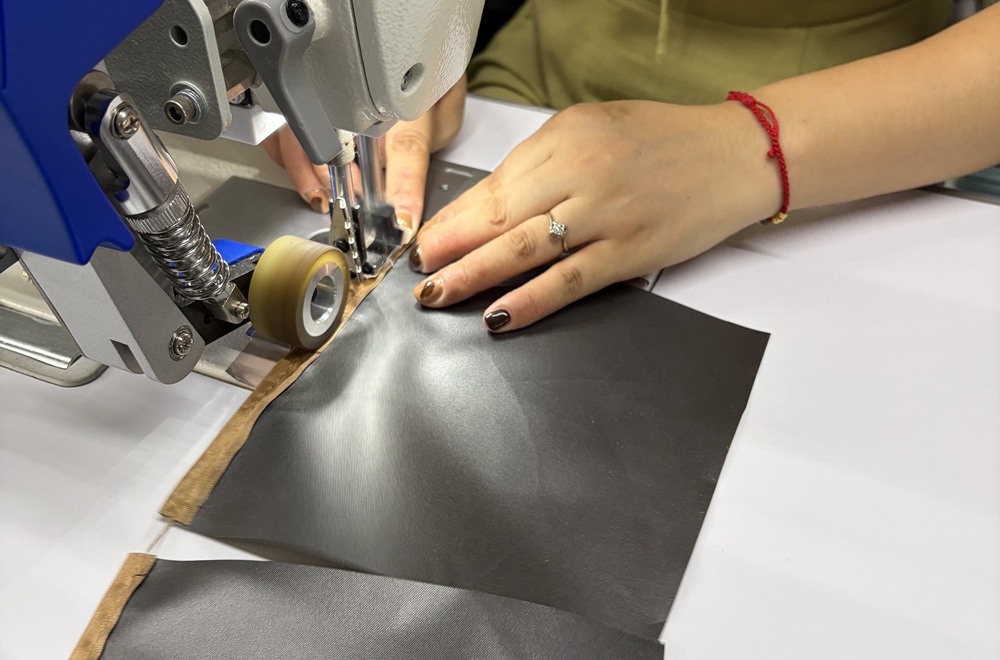
The basic process includes:
- Positioning the seam tape over the stitching line
- Heating the tape using a seam sealing machine
- Allowing the adhesive layer to bond with the fabric coating
- Creating a continuous waterproof barrier
The goal is not simply to cover the stitching.
The goal is to create a stable waterproof connection between the tape and the fabric.
How Does Seam Tape Bond With Tent Fabric?
Most tent seam tapes use a heat-activated adhesive layer.
During the process:
- The heating nozzle increases the temperature
- The adhesive layer becomes active
- The tape bonds with the PU coating on the fabric surface
The correct combination of:
- Temperature
- Pressure
- Machine adjustment
- Operator experience
directly affects the final waterproof performance.
Poor settings can result in:
- Weak bonding
- Air bubbles
- Tape lifting
- Water leakage
Which Tent Parts Need Seam Sealing?
Not every part of a tent requires the same waterproof treatment.
The correct seam construction depends on:
- Fabric type
- Tent structure
- Exposure to rain
- Water pressure
- Expected usage environment
For most synthetic fabric tents, the areas directly exposed to rain require careful seam sealing.
The most important areas include:
- Flysheet seams
- Tent floor seams
- Floor corners
- Zipper areas
- Webbing attachment points
Flysheet Seams: The First Line of Protection
The outer flysheet is the first barrier protecting users from rain.
Because it is directly exposed to weather conditions, sewing lines on the flysheet usually require seam sealing.
Without proper treatment, rainwater can penetrate through needle holes along the stitching line.
This is especially important for:
- Polyester tents
- Nylon tents
- Family camping tents
- Backpacking tents
Tent Floor Seams: Why They Require Extra Attention
The tent floor is one of the most challenging waterproof areas.
Unlike the flysheet, the tent floor experiences additional pressure from:
- User weight
- Ground moisture
- Water accumulation underneath the tent
For example, when someone sleeps inside the tent, body weight increases pressure between the floor fabric and the ground.
If the floor seams are not properly sealed, water can enter even when the main fabric has sufficient waterproof performance.
For this reason:
- Floor seams require seam sealing
- Floor corners require special attention
- Connection areas between walls and floor need careful inspection
Webbing and Accessory Attachment Points
Many buyers focus only on fabric panels and stitching.
However, water can also travel through accessories.
Common risk areas include:
- Guy line attachment points
- Buckle connections
- Webbing loops
- Door tie points
Because woven materials can absorb and transfer moisture, manufacturers need specific solutions depending on the design.
Some areas may require:
- Additional sealing layers
- Waterproof thread
- Special construction methods
Which Tent Areas Usually Do Not Need Seam Tape?
Although seam sealing is important, applying tape everywhere is not always the best solution.
Overusing seam tape can:
- Increase production cost
- Add unnecessary weight
- Affect breathability
- Reduce product flexibility
For example, many inner tent areas protected by the outer flysheet do not require the same waterproof treatment.
Inner Tent Construction
For many double-layer tents:
The outer flysheet handles rain protection.
The inner tent mainly provides:
- Ventilation
- Bug protection
- Sleeping comfort
Therefore, areas of the inner tent that are fully protected by the flysheet usually do not require seam tape.
The exception is the inner tent floor.
Because the floor directly contacts the ground, waterproof treatment is still important.
Different Fabrics Require Different Seam Waterproof Solutions
One of the most important aspects of OEM tent manufacturing is understanding that different fabrics require different waterproof construction methods.
There is no single seam treatment method suitable for every material.
Polyester and Nylon Fabrics
Polyester and nylon are among the most commonly used tent materials.
For these fabrics:
- PU coatings are commonly used
- Seam tape can bond effectively
- Waterproof construction is relatively standardized
Typical applications include:
- Backpacking tents
- Family tents
- Outdoor recreational tents
For these products, seam sealing is one of the key steps to achieving reliable waterproof performance.
Why TC and Cotton Canvas Tents Are Different
Cotton and TC (polyester-cotton blend) tents are often selected because users value:
- Breathability
- Natural appearance
- Premium outdoor experience
However, their waterproof construction is different from synthetic tents.
Many cotton and TC tents do not rely on PU coating and seam tape as the primary waterproof solution.
Instead, manufacturers focus on:
- Waterproof thread
- Proper seam design
- Fabric swelling characteristics
- Overall tent structure
Because these materials are chosen for their breathable properties, adding a waterproof coating layer can reduce some of the advantages customers expect from cotton-based tents.
Silicone-Coated Fabrics Need Special Treatment
Silicone-coated fabrics are popular in lightweight and high-performance tents because they offer:
- Lower weight
- Excellent tear resistance
- Long-term durability
However, silicone creates challenges during seam sealing.
Traditional PU seam tape does not bond well with pure silicone-coated surfaces.
Therefore, manufacturers may use different solutions, such as:
- PU treatment on one side of the fabric
- Silicone-compatible adhesives
- Manual seam sealing methods
This is one reason silicone tents require more specialized manufacturing knowledge.
Why Seam Construction Must Match Product Positioning
A common mistake in product development is choosing materials or waterproof solutions without considering the final application.
For example:
A lightweight backpacking tent and a family camping tent may both need waterproof performance.
However, their priorities are different.
A backpacking tent may prioritize:
- Low weight
- Packability
- Durability
A family tent may prioritize:
- Space
- Comfort
- Easy maintenance
Therefore, seam construction should always match:
- Target market
- Product positioning
- User expectations
NastoCamp OEM Insight
Experienced outdoor brands usually do not simply ask:
“Can you make this tent waterproof?”
They discuss:
- Where will the tent be used?
- Who is the target customer?
- What materials are suitable?
- What waterproof construction is appropriate?
The right solution is not always the most expensive one.
It is the one that best matches the product purpose.
Common Seam Sealing Problems in Tent Manufacturing
Seam sealing may look like a simple process, but achieving consistent waterproof performance requires experience, equipment control, and careful inspection.
During production, small details can affect the final result.
Common seam sealing problems include:
- Incorrect seam tape alignment
- Poor bonding between tape and fabric
- Air bubbles under the tape
- Damaged tape edges
- Inconsistent operation
These problems may not always be visible immediately, but they can become potential leakage points during real outdoor use.
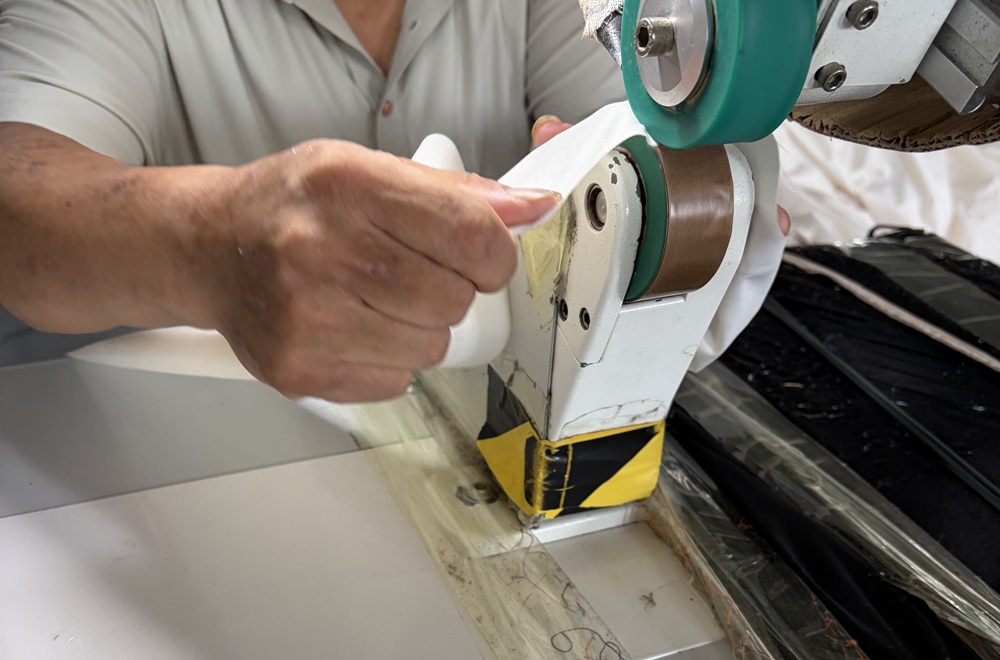
1. Seam Tape Misalignment
One of the most common seam sealing problems is incorrect tape positioning.
The seam tape must cover the stitching line accurately.
If the tape moves too far to one side:
- Some needle holes may remain exposed
- Waterproof performance can decrease
- Leakage may occur during heavy rain
A small deviation may only affect appearance.
However, a larger deviation can directly affect waterproof performance.
2. Air Bubbles Under the Seam Tape
Another common issue is air trapped between the tape and fabric.
When the bonding process is not properly controlled, air pockets may appear underneath the tape.
This can happen because of:
- Incorrect temperature settings
- Uneven pressure
- Material surface problems
- Improper operation
Over time, these areas may become weak points where the tape can lift or peel.
3. Poor Tape Adhesion
A properly applied seam tape should create a strong connection with the fabric coating.
However, bonding quality can be affected by:
- Fabric surface condition
- Coating characteristics
- Machine settings
- Operator experience
If the adhesive does not fully bond with the fabric, the tape may gradually separate.
This is why professional manufacturers carefully control:
- Heating temperature
- Machine pressure
- Processing speed
during seam sealing.
4. Incorrect Handling of Tape Ends
Small details can create large problems.
For example, if the end of the seam tape is not properly finished:
- The edge may lift
- The tape can be pulled away during use
- Water may enter through the exposed area
Experienced workers pay attention not only to long seam lines but also to small finishing details.
Why Seam Quality Depends on Manufacturing Experience
Many buyers assume waterproof performance is mainly determined by:
- Fabric specification
- Waterproof rating
- Coating technology
However, production experience plays an equally important role.
Two factories may use:
- The same fabric
- The same waterproof rating
- The same seam tape
but achieve different results because of differences in:
- Production control
- Worker experience
- Equipment adjustment
- Inspection standards
This is one reason why OEM buyers should evaluate not only materials but also manufacturing capability.
How Manufacturers Inspect Seam Waterproof Quality
A professional waterproof construction process does not end after seam sealing.
Manufacturers need to inspect whether the sealing process actually achieves the intended result.
Quality checks usually focus on:
- Tape alignment
- Bonding quality
- Air bubbles
- Missing sections
- Damaged tape
- Potential leakage points
Visual Inspection During Production
The first step is visual inspection.
Workers check:
- Whether the tape fully covers the stitching line
- Whether the tape is straight
- Whether there are bubbles or wrinkles
- Whether the tape edges are properly finished
Although visual inspection sounds simple, experienced workers can identify many potential issues before the product moves forward.
Rain Testing and Leakage Analysis
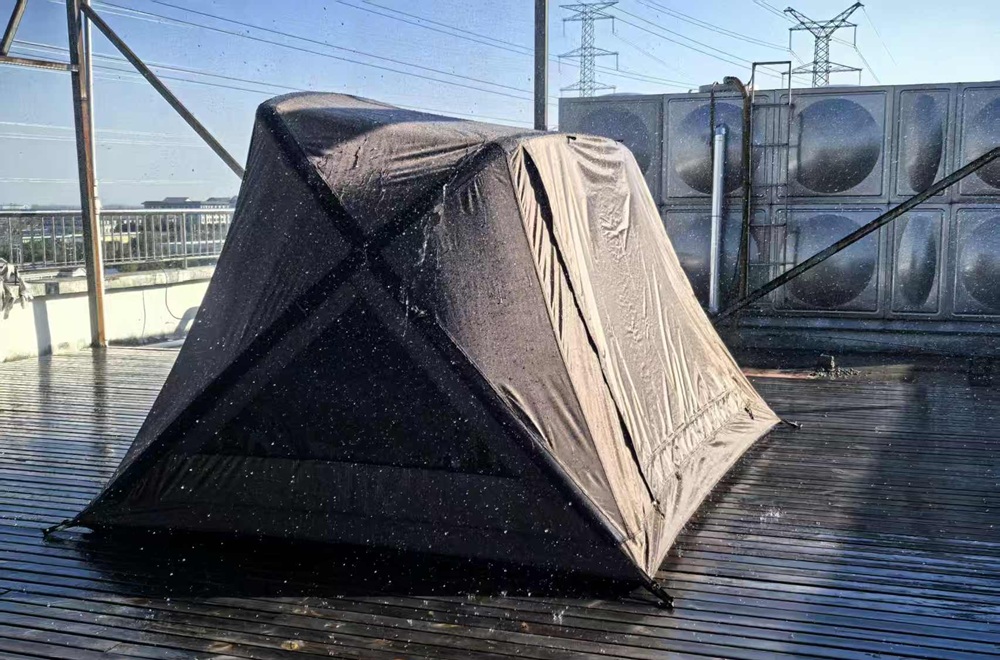
Rain testing is one of the most important methods for verifying waterproof performance.
During testing, manufacturers pay particular attention to areas that commonly fail:
1. Top Seams
The highest points of the tent often receive direct rainfall.
If water remains on the surface for a long time, pressure increases on the seam area.
2. Zipper Areas
Zippers contain complex structures and are common areas where water can enter if not properly designed.
3. Webbing Attachment Points
Webbing and attachment points can absorb and transfer moisture if not properly treated.
4. Floor Corners
The tent floor experiences pressure from users and contact with wet ground.
These areas require careful waterproof construction.
Real Manufacturing Challenges: Why Waterproof Problems Still Happen
Even with proper processes, manufacturing involves many variables.
For example:
- Material differences between batches
- Machine adjustment changes
- Human operation differences
- Complex tent structures
Large or complicated tents often require more attention because they contain:
- More panels
- More seams
- More zippers
- More connection points
The more complex the structure, the more opportunities exist for potential waterproof issues.
How OEM Buyers Can Evaluate Seam Quality Before Mass Production
Before placing a large production order, professional buyers should not only check:
“What waterproof rating does this tent have?”
They should also ask:
- How are the seams sealed?
- Which areas receive seam tape?
- How are floor seams treated?
- Has the tent passed rain testing?
- How does the manufacturer inspect waterproof quality?
A reliable OEM partner should be able to explain not only the specifications but also the manufacturing process behind them.
NastoCamp Manufacturing Insight
At NastoCamp, waterproof performance is evaluated through the entire production process:
From:
- Material selection
- Pattern development
- Sewing
- Seam sealing
- Inspection
- Rain testing
Each step contributes to the final performance of the finished tent.
A waterproof tent is not created by one specification.
It is created by hundreds of manufacturing details working together.
How to Choose the Right Waterproof Seam Construction for Your Tent Project
For outdoor brands developing a new tent product, waterproof performance should never be evaluated by one specification alone.
A high waterproof rating is important, but it is only one part of the entire system.
A reliable waterproof tent depends on the combination of:
- Suitable fabric selection
- Correct seam construction
- Proper seam sealing methods
- Quality manufacturing processes
- Real-world testing
Different products also require different solutions.
A lightweight backpacking tent may prioritize:
- Low weight
- Compact packing size
- Durability
A family camping tent may prioritize:
- Space
- Comfort
- Easy maintenance
A premium glamping tent may focus on:
- Appearance
- Breathability
- User experience
Therefore, the best waterproof construction is not always the most expensive option.
It is the solution that matches the product’s intended market.
Final Thoughts
Many buyers evaluate tents by looking at visible specifications:
- Fabric type
- Waterproof rating
- Pole materials
- Price
However, the details that determine long-term performance are often hidden inside the construction process.
Tent seams are a perfect example.
The fabric may provide excellent waterproof protection, but without proper seam sealing, stitching control, and quality inspection, water can still find a way inside.
For OEM tent manufacturing, waterproof performance is not created by a single material.
It is created through the combination of:
- Engineering decisions
- Manufacturing skills
- Quality control
- Testing experience
A reliable tent is the result of thousands of small details being handled correctly.
For outdoor brands, choosing an experienced OEM partner means gaining not only production capacity, but also the knowledge required to develop products that perform successfully in real-world conditions.
Developing a New Tent Product?
Whether you are creating a new outdoor brand, expanding your existing product line, or looking for an experienced OEM tent manufacturer, NastoCamp can help you evaluate:
- Tent materials
- Waterproof construction
- Seam sealing solutions
- Product development options
Contact our team to discuss your next tent project.
Get in touch with NastoCamp today.
Frequently Asked Questions About Tent Seam Sealing
Q1: Why do tent seams leak even when the fabric is waterproof?
Because sewing creates needle holes in the fabric.
Without proper seam sealing, water can enter through these small openings even if the main fabric has good waterproof performance.
Q2: What is seam sealing on a tent?
Seam sealing is the process of applying waterproof tape or other treatments over stitched seams to prevent water from entering through needle holes.
Q3: Do all tent seams need seam tape?
Not necessarily.
Most exposed outer tent seams require waterproof treatment, while some protected inner tent areas may not need seam tape.
The correct method depends on:
- Tent design
- Fabric type
- Intended usage
Q4: Why do some tents use seam tape while others use waterproof thread?
Different materials require different solutions.
Synthetic tents such as polyester and nylon commonly use seam tape.
Cotton and TC tents often rely more on waterproof thread, fabric characteristics, and structural design.
Q5: Can silicone-coated tent fabric be seam taped?
Pure silicone-coated fabrics are difficult to bond with traditional seam tape.
Manufacturers may use:
- PU treatment on one side
- Silicone-compatible adhesives
- Alternative seam sealing methods
Q6: What are the most common seam sealing problems?
Common issues include:
- Misaligned seam tape
- Air bubbles
- Poor bonding
- Tape lifting
- Incomplete coverage of stitching lines
Q7: Which areas of a tent are most likely to leak?
Common risk areas include:
- Roof seams
- Zipper areas
- Webbing attachment points
- Floor corners
These areas require careful construction and inspection.
Q8: Is a higher waterproof rating enough to prevent leaks?
No.
Waterproof performance also depends on:
- Seam construction
- Manufacturing quality
- Tent design
- Testing procedures
Q9: How do manufacturers test tent seam waterproof performance?
Manufacturers typically combine:
- Visual inspection
- Seam checking
- Rain testing
- Leakage analysis
to verify waterproof performance.
Q10: What should OEM buyers ask before ordering tents?
Professional buyers should ask about:
- Seam sealing methods
- Fabric construction
- Waterproof testing
- Quality inspection procedures
- Previous production experience
Related Reading
Continue exploring the NastoCamp OEM Tent Knowledge Center:
How Waterproof Is a Tent? What Rain Testing Reveals About Tent Quality
Understand how professional manufacturers test waterproof performance and identify potential leakage problems.
Are Higher Waterproof Ratings Always Better?
Learn why waterproof ratings are only one part of real outdoor performance.
How to Choose the Right Tent Fabric for Your Outdoor Brand
Discover how polyester, nylon, Oxford, TC, and cotton fabrics affect product performance.
Tent Pole Materials Explained: Aluminum vs Fiberglass vs Steel vs Inflatable
Understand how different support systems affect tent design and product positioning.
Why Tent Quality Varies Between Manufacturers
Learn how manufacturing processes influence the final performance of OEM tents.