When an OEM tent order reaches final inspection, buyers may hear several terms at the same time: 100% inspection, AQL 2.5, pre-shipment inspection, third-party inspection and final random inspection.
They do not mean the same thing.
A factory may inspect every finished tent internally and a buyer may still arrange an AQL-based inspection before shipment. A tent can also pass a final sampling inspection without every performance characteristic of every unit having been tested.
For an OEM buyer, the useful question is therefore not simply what AQL means. It is how AQL fits into the decision about whether a bulk tent order is ready to ship.
AQL Is an Acceptance-Sampling Tool, Not a Defect Allowance
One common misunderstanding is that “AQL 2.5” means 2.5% defective products are allowed in an order.
That is not how it should be interpreted.
ISO 2859-1:2026 covers sampling schemes indexed by Acceptance Quality Limit (AQL) for lot-by-lot inspection. Instead of inspecting every unit for the purpose of deciding whether to accept a lot, a defined sample is selected and inspected against agreed criteria.
AQL 2.5 should not be read as permission for 2.5% of the tents in a particular shipment to be defective. It is a quality-level parameter used within an acceptance-sampling scheme.
The AQL value alone also does not fully define an inspection. The lot size and selected inspection level are used within the sampling scheme to determine the applicable sample. The selected AQL then works with the sampling plan’s acceptance number (Ac) and rejection number (Re) to determine whether the inspection result meets the agreed acceptance criteria.
For buyers, the practical point is simple: putting only “AQL 2.5” on a purchase order may not fully define how the final inspection should be conducted.
Why 100% Finished-Product Inspection and AQL Sampling Can Both Exist
At NastoCamp, every finished tent goes through an internal finished-product inspection. When required by the customer, an AQL-based inspection may then be carried out by the customer or a third-party inspection company.
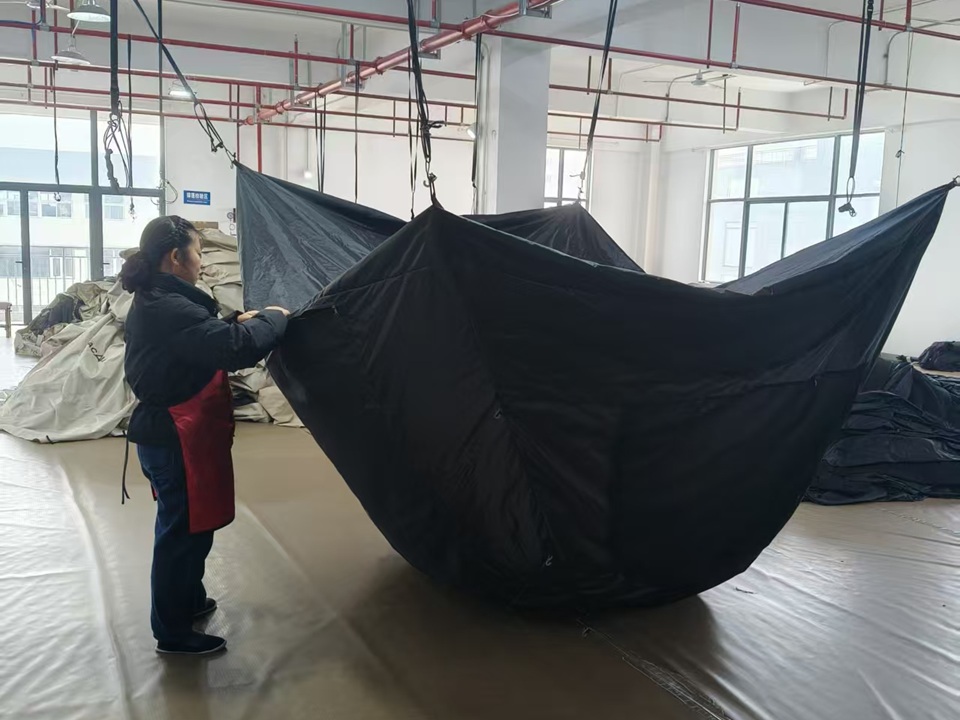
There is an important detail behind the phrase “100% finished-product inspection”: it does not mean that every tent is fully erected.
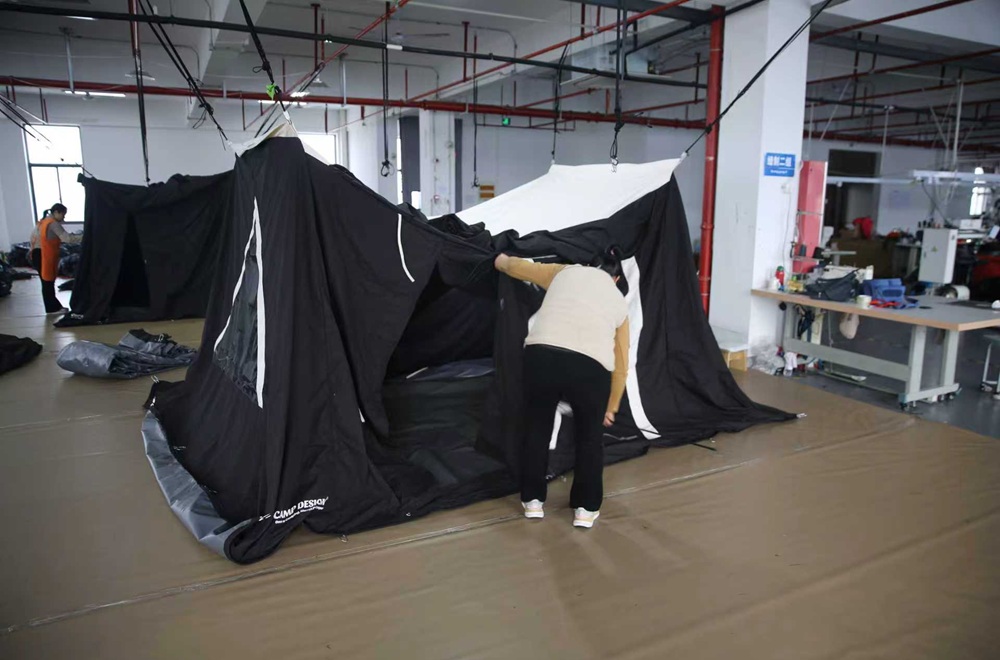
For routine finished-product inspection, NastoCamp commonly uses a hanging inspection method. This allows inspectors to check issues such as missing components, sewing workmanship, loose threads, fabric stains or color differences, zipper operation and buckles without fully pitching every tent. Full setup may be used for particular tent types or where the customer has specific inspection requirements.
The internal inspection is intended to find and correct problems in individual finished products. A customer or third-party AQL inspection uses a sample from the production lot to support an acceptance decision about the lot.
This is why internal 100% finished-product checks and AQL sampling can both exist in the same OEM project.
What a Final Tent Inspection Actually Checks
A final inspection involves more than counting defects in a sample.
The exact checklist depends on the product specification, approved sample, buyer requirements and inspection instructions. Depending on the project, a tent inspection may cover:
- quantity and assortment;
- packaging, labels and shipping marks;
- dimensions and color;
- specified fabrics and components;
- sewing and general workmanship;
- zippers, buckles, poles or frames and accessories;
- logos and printing;
- setup and selected functional checks where required.
The distinction is between how products are sampled for the acceptance decision and what the inspector checks on the sampled products.
An AQL sampling scheme does not by itself define every product requirement. Those requirements need to come from the confirmed specifications, approved sample, inspection criteria and other agreed documents.
Critical, Major and Minor Defects Need Clear Definitions
A broken structural component, a zipper that does not function, poor seam taping and a loose thread clearly do not have the same consequence for a finished tent.
This is why inspection programs commonly separate defects by severity. But the classification needs to be agreed for the actual product rather than assumed from a generic list.
For example, depending on the buyer’s criteria and the tent’s intended use, a wrong material that prevents the required performance from being met or a structural component that prevents proper setup could be treated much more seriously than a small removable stain or a loose thread. Missing assembly components, zipper failure, significant fabric defects or poor seam taping may also affect normal use and require a different classification from minor cosmetic workmanship issues.
These are practical tent examples, not a universal Critical/Major/Minor classification for every order. The agreed inspection criteria, product requirements and any applicable safety or regulatory considerations should determine how a particular defect is classified.
Defect classification is therefore something to settle before production, not something the buyer and manufacturer should have to negotiate after the inspector finds a problem.
What AQL Can Miss in Tent Production
Final sampling inspection is useful, but it cannot recreate all the quality controls that should have taken place earlier in manufacturing.
Consider fabric. Appearance and some specified details can be checked on a finished tent, but incoming material inspection and fabric testing are better stages for verifying properties such as fabric weight or hydrostatic-pressure performance.
Some sewing and seam-taping problems are also easier to identify while the tent is being produced than after the order has been completed and packed.
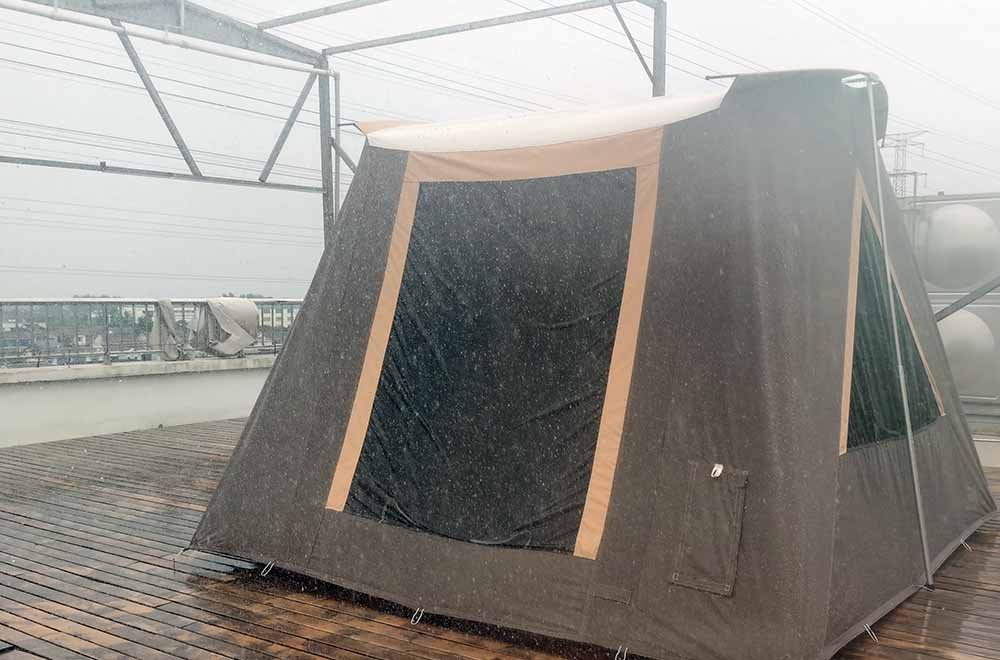
Water leakage illustrates another limitation. A tent can look normal during a routine visual inspection while a small needle hole or local seam-tape bonding problem may only become apparent during an appropriate rain or waterproof-performance test. NastoCamp uses rain testing selectively according to product risk and customer requirements rather than treating it as a test performed on every finished tent.
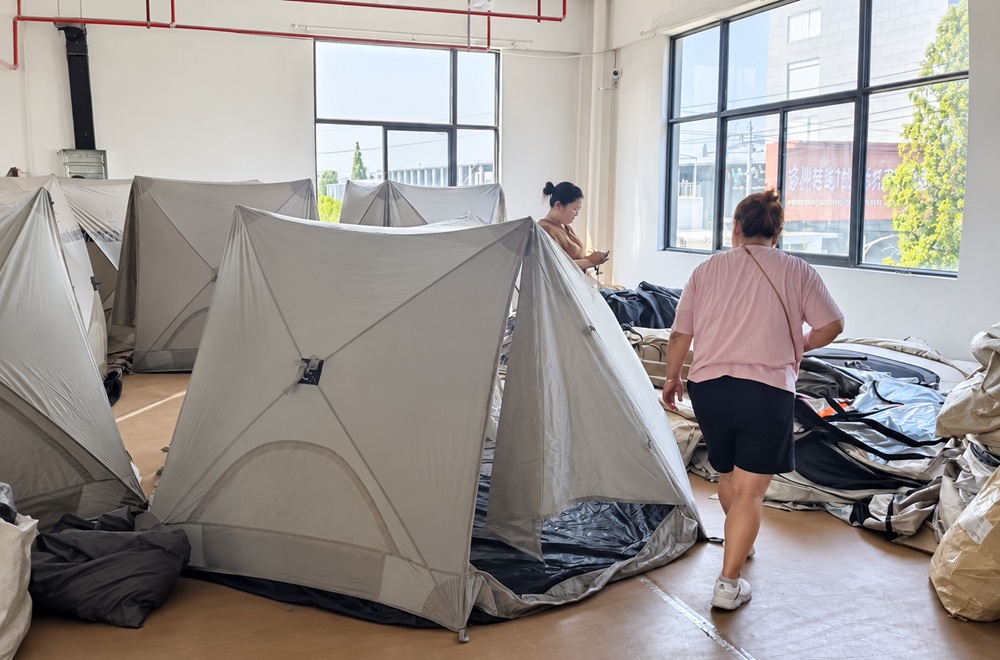
Full setup can reveal other issues. Tent shape, structural interaction, pole fit or certain assembly problems may become easier to judge when the product is erected. This is another reason why a 100% finished-product check should not be confused with 100% full setup testing.
Sampling itself has a limitation as well: an issue present in only a small number of units may not appear in the selected sample.
Final sampling inspection should therefore remain one quality-control layer rather than being treated as a substitute for material inspection, production QC, appropriate functional checks or product-specific testing.
A Good Final Inspection Plan Starts Before Final Inspection
One of the easiest ways to create a dispute at final inspection is to leave important quality requirements undefined until the bulk order is already finished.
Before production, the buyer and manufacturer should confirm the product specifications and decide how important defects will be judged. Where an AQL inspection is required, the applicable inspection standard, defect classifications and acceptance criteria should also be agreed rather than assumed.
The approved sample then provides a physical reference for details that are difficult to communicate through a specification sheet alone. The same written tent specifications can still produce different quality when materials, workmanship and production control differ.
During production, material inspection, first-piece checks and in-process inspection can identify problems while they are still easier to correct.
Final inspection comes after these controls. It should compare finished goods with requirements that are already understood, rather than establishing for the first time what an acceptable tent is supposed to be.
Some projects also require separate testing. Waterproof performance, material properties or other technical requirements should be tested using an appropriate method rather than automatically being pushed into a routine visual final inspection.
In practice, a good final inspection starts with decisions made long before the inspector opens the first carton.
What Should Happen If the Sampled Tents Show Problems?
When a defect appears in a sample, the factory and buyer may need to consider more than the number recorded on the inspection sheet:
Is this an isolated problem, or does it suggest a wider problem in the production lot?
In NastoCamp’s internal quality work, a small isolated issue such as a removable stain or loose thread may only require local correction. Repeated zipper problems or missing accessories can justify checking more products. A systematic packing or labeling error may make a much broader re-check necessary. If a manufacturing problem appears systematic, the affected batch may require further investigation or rework.
This factory judgment should not be confused with the formal acceptance and rejection rules of the agreed AQL sampling plan. It addresses a different question: whether the defect found in one or several pieces may indicate a wider production problem.
For that reason, a repeated or systemic defect can justify further investigation even before a formal rejection threshold becomes the only consideration.
If a final inspection does not meet the agreed acceptance criteria, what happens next depends on the defect, its extent, the inspection agreement and the buyer’s decision. The shipment may need to be held while goods are sorted, corrected, reworked or re-inspected.
How OEM Buyers Should Use AQL Before Approving Shipment
Before releasing an OEM tent order for shipment, five questions are worth checking:
- Were the inspection standard, defect classifications and acceptance criteria agreed before production?
- Is the final inspection comparing the finished goods with the approved sample and confirmed specifications?
- Have requirements that need separate testing, such as relevant waterproof or functional performance, been checked at the appropriate stage?
- If repeated defects appear in the sample, is there a process for investigating whether the problem extends beyond the sampled units?
- Is it clear who reviews the inspection result and has authority to release the shipment?
AQL is most useful when it sits inside this broader quality plan. A correctly selected sample cannot resolve a disagreement if the buyer and manufacturer never clearly defined what an acceptable product was in the first place.
For OEM tent buyers, final inspection should therefore be viewed as the last decision layer rather than the entire quality system. Material control, production inspection, appropriate testing and finished-product checks all contribute information that a final sample alone cannot provide.
Buyers evaluating how these controls work together can also review NastoCamp’s tent quality control process before defining inspection requirements for a project.