A fabric tear-strength test measures how a material resists tearing under specified conditions. For an OEM tent buyer, the result can help assess a proposed fabric, provided the test method, material specification and reporting conditions are clear.
The number alone is not enough. Buyers also need to know what requirement the result is being compared against and whether the fabric is appropriate for the tent being developed. A material can meet a specified tear-strength requirement without necessarily being suitable for every tent design.
What Does a Fabric Tear Strength Test Actually Measure?
Tear-strength testing evaluates a fabric’s resistance to tearing under a defined procedure. Many methods examine how an existing cut or tear continues through the material.
This differs from tensile-strength testing, which evaluates how a specimen behaves when pulled and measures properties such as breaking force.
Both tear strength and tensile strength may be reported in newtons (N). They are different properties, however, and one result cannot be substituted for the other.
Why the Test Method Matters
Recognized tear-testing standards use different procedures.
For example, ASTM D2261 uses a tongue-tear specimen and a constant-rate-of-extension testing machine. ASTM D1424 uses an Elmendorf pendulum apparatus to evaluate tear propagation.
The ISO 13937 series includes several methods for determining fabric tear properties. ISO 4674-1 addresses tear resistance in rubber- or plastics-coated fabrics.
These methods differ in specimen preparation, loading and result determination. Their numerical results should not automatically be treated as equivalent.
When comparing two fabrics, first establish whether the tests used comparable methods, specimen directions and reporting conditions. A higher number obtained using a different method does not necessarily establish better tear resistance under the same conditions.
How Should OEM Buyers Read a Tear Strength Test Report?
Start by identifying the tested fabric. A report is only useful for a purchasing decision if the tested sample can be related to the material being proposed for production.
Then check the following information.
| Report Item | What to Verify |
|---|---|
| Fabric specification | Material identification, construction and relevant coating details |
| Test method | The standard or procedure used to obtain the result |
| Test direction | The direction or orientation reported, where applicable |
| Result and unit | The measured value and how it is expressed |
| Acceptance criteria | Any requirement used to determine whether the result is acceptable |
| Testing laboratory | Who performed the test and issued the report |
The exact information and terminology depend on the test method and report format.
Test direction deserves attention. Where a test method and fabric construction call for results in different directions, buyers should review the relevant directional results and confirm how those directions are defined in the report.
The same applies to comparisons between suppliers. Two reports showing results in newtons are not necessarily comparable if the specimens, methods or reporting procedures differ.
Some test reports provide measured values without a PASS or FAIL judgment. Where a PASS result is stated, buyers should identify the specification or acceptance criteria used to make that determination.
If a report does not clearly identify its method or acceptance criteria where applicable, ask the supplier or testing laboratory for clarification before using it to approve a material.
Does a PASS Result Mean the Fabric Is Suitable for a Tent?
A PASS result needs context.
A testing standard describes how a property is measured. An acceptance requirement establishes what result is considered satisfactory. These are separate matters, even when they are referenced together in a laboratory report.
For example, identifying ASTM D2261 as the test method does not establish a universal minimum tear-strength requirement for every camping tent.
A buyer needs to make three decisions.
1. Is the result interpretable?
The tested material, method, relevant direction and reported value must be clear enough to understand what was measured.
2. Does the fabric meet the applicable requirement?
Check the specification or acceptance criterion used to judge the result. A PASS statement should be traceable to a defined requirement.
3. Is the fabric suitable for the intended tent?
This is a broader engineering and product-development decision. It depends on the tent’s dimensions, construction, intended use and other material requirements.
At NastoCamp, we distinguish between a fabric meeting a test requirement and that fabric being appropriate for a particular tent. The first provides evidence for the second, but does not settle the decision by itself.
What Has NastoCamp Learned from Fabric Testing?
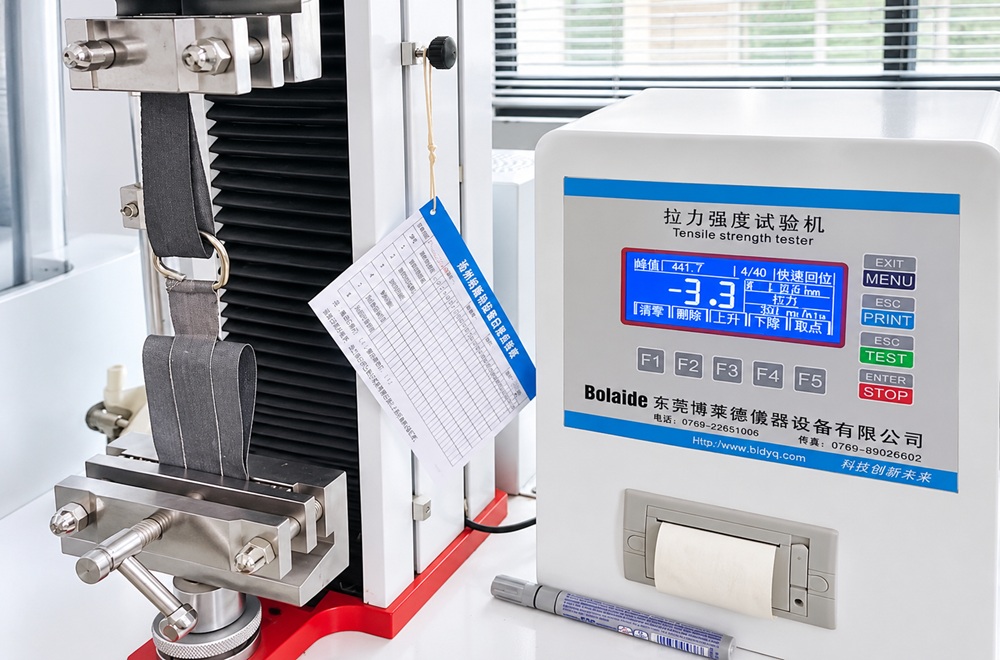
NastoCamp has its own equipment for testing fabric tensile strength and tear strength. We also send fabric samples to external testing laboratories when customers require independent test reports.
Our experience with tent materials highlights two practical considerations.
Similar Fabric Weights Can Produce Different Tear Results
Fabric weight is useful when reviewing a specification, but it is not a direct measurement of tear strength.
We have seen fabrics with the same nominal weight produce different tear-strength results. The base fabric and its construction are relevant considerations, as are coating characteristics.
That does not mean a thicker coating will always reduce tear strength. The relationship depends on the particular material system and the testing conditions.
When two proposed fabrics have similar weights, buyers should compare their actual specifications and relevant test results rather than assuming their mechanical performance will be the same.
The same principle applies to material selection more broadly. Weight, construction, coating and the intended application need to be considered together. Our article on choosing the right tent fabric covers that wider selection process.
When Is Third-Party Testing Needed?
In our experience, customers do not normally require a formal third-party report for every routine tent project. Some projects, however, require independent testing as part of the buyer’s verification process.
NastoCamp can conduct in-house tensile-strength and tear-strength tests. When a customer requires a formal independent report, we can arrange for samples to be submitted to an external laboratory.
Before arranging testing, the buyer and manufacturer should agree on the relevant test method, fabric identification, required reporting information and any laboratory accreditation requirements.
An independent report identifies results obtained by an external testing organization. Its specific evidential value depends on the reported procedure, tested sample and laboratory credentials; independent testing alone does not establish that every applicable accreditation requirement has been met.
Why Fabric Tear Strength Alone Cannot Validate a Finished Tent
A finished tent contains more than fabric panels. Seams, reinforced corners, attachment points, supporting components and the overall structure all affect how the product behaves in use.
A fabric tear test measures a material property under specified conditions. It does not directly measure the strength of a sewn connection or the performance of an assembled tent.
This distinction matters when choosing materials for different tent designs.
A lightweight backpacking tent and a large family tent may require different balances of weight, tear resistance, construction strength and other performance characteristics. A fabric that meets a stated material specification still needs to be evaluated for the intended design.
Local load-bearing areas deserve separate attention. The performance of a corner, guyline attachment or other connection depends on more than the tear strength of the fabric alone. Our article on tent stress-point reinforcement examines these construction considerations.
Product-level requirements also need to be considered. ISO 5912, for example, addresses requirements and test methods for camping tents. It is not interchangeable with a fabric tear-testing standard.
Which additional checks are appropriate depends on the tent, its intended use and the applicable project requirements. These may involve other material properties, construction details or finished-sample evaluation.
For a broader discussion of how different forms of evidence support manufacturing decisions, see tent quality control evidence.
What Should Buyers Confirm Before Approving a Tent Fabric?
Before approving a proposed fabric for an OEM tent project, confirm five points.
1. The tested material matches the proposed specification.
Check that the report identifies the relevant fabric, including its construction and coating where applicable. If the production material differs, determine whether the original test evidence still applies.
2. The test results can be interpreted and compared correctly.
Confirm the test method, direction, units and reporting conditions. Avoid comparing numbers obtained under materially different procedures.
3. The acceptance requirement is clear.
If the report provides a PASS judgment, confirm the specification or acceptance criterion behind it. If only measured values are reported, determine what requirements apply to the project.
4. The fabric suits the intended tent.
Review the design, size, application and relevant material properties. Tear strength is one consideration among several.
5. Any additional verification has been identified.
Determine whether the project calls for further material testing, an independent laboratory report, construction checks or finished-sample evaluation.
The purpose is not to require every possible test for every tent. It is to establish what evidence is needed for the actual product and purchasing decision.
Fabric approval should also fit into the wider development process. See our guide to tent sample approval for related considerations before production.
Discuss Fabric Requirements for Your OEM Tent Project
If you are developing a tent or reviewing a proposed fabric specification, NastoCamp can discuss the material requirements and testing needs in the context of your design.
Share your intended application, fabric specification and any required verification documents with our team.
Learn more about NastoCamp OEM Tent Manufacturing
Technical References
The following standards provide technical context. Their inclusion does not mean that NastoCamp uses every listed method internally or that all methods are required for every tent project.