An OEM buyer may already have a proposed tent pole specification before contacting a manufacturer. The material, diameter and wall thickness may all be listed in the product requirements.
But having a specification does not necessarily mean that it is the right specification for the finished tent. The more useful question is whether the pole is appropriate for the tent’s size, structure, intended use and expected environment.
A Pole Diameter Is Not a Tent Specification by Itself
Pole diameter matters, but it should not be evaluated in isolation.
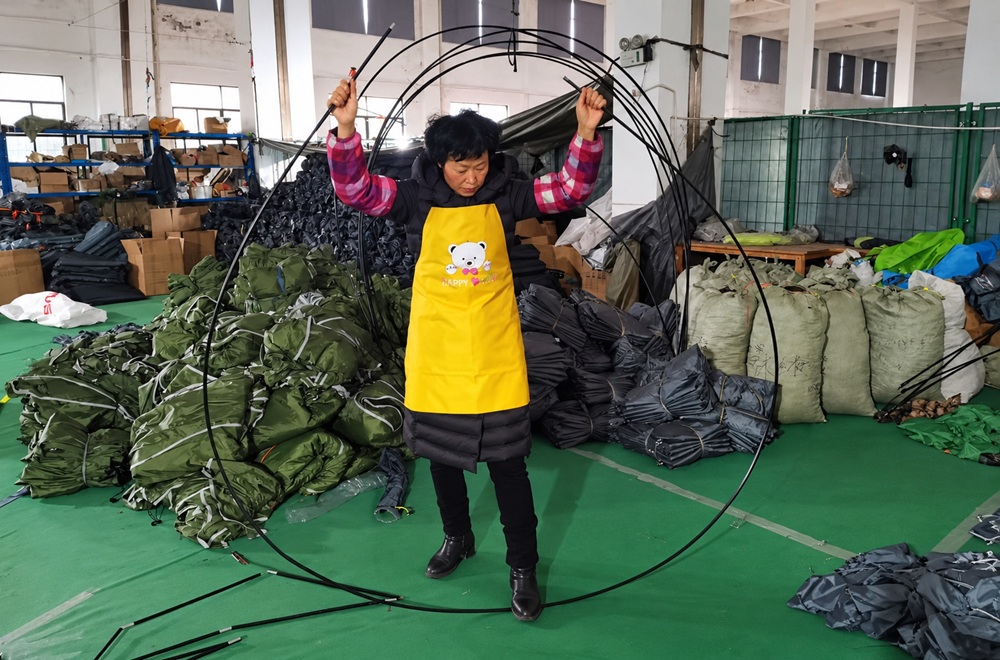
A diameter such as 8.5 mm, 11 mm, 22 mm or 25 mm describes one part of the pole specification. Wall thickness and material also matter, and two poles with a similar outside diameter are not necessarily the same tube specification.
More importantly, even a fully defined pole still has to work as part of a finished tent. The pole has to work within a particular tent size, structure and pole arrangement, under the conditions for which the finished product is intended.
This is also why pole material selection and pole specification are not quite the same decision. A buyer deciding between aluminum, fiberglass, steel or an inflatable support system is making a broader pole-material or support-system choice. Once that direction is established, there is still another question: what specification is appropriate for the actual tent?
The Same Tent Capacity Does Not Always Need the Same Pole Diameter
Tent capacity is useful product information, but it is not a pole-sizing rule.
In NastoCamp’s product-development experience, even tents described as four-person tents can use different pole specifications. Depending on the product and application, NastoCamp has encountered four-person tents using 8.5 mm, 9.5 mm or 11 mm poles. Some designs may also combine different diameters within the same tent.
The intended use matters. A relatively conventional tent intended for ordinary retail use does not necessarily have the same requirements as a tent intended for more demanding mountain conditions. In the latter case, a different pole arrangement or specification may be considered.
These diameter examples are based on NastoCamp’s practical product experience. They are not universal diameter recommendations for four-person tents.
The point is that “four-person tent” alone does not contain enough information to determine the pole diameter. Tents with similar nominal capacity can still differ in structure, intended environment and product positioning.
What Should a Manufacturer Evaluate Before Changing the Pole Specification?
When NastoCamp reviews a buyer’s proposed pole specification, the judgment normally starts with several practical questions.
How large is the tent? What structure does it use? Where and how is the product expected to be used? Has the factory produced similar tents before?
These questions are connected. Tent size alone does not determine the pole specification because tents of similar capacity can use different structures and pole arrangements. Intended use can also change what is appropriate for the product.
Previous experience with similar tents gives the manufacturer another reference point. It can support an initial judgment, but it is not a fixed sizing formula, especially when the proposed structure or application is unfamiliar.
When Is Experience Enough, and When Should You Make a Sample?
For a familiar tent structure, previous manufacturing experience combined with the buyer’s intended use may provide a useful basis for selecting or reviewing the pole specification.
An unfamiliar design is different.
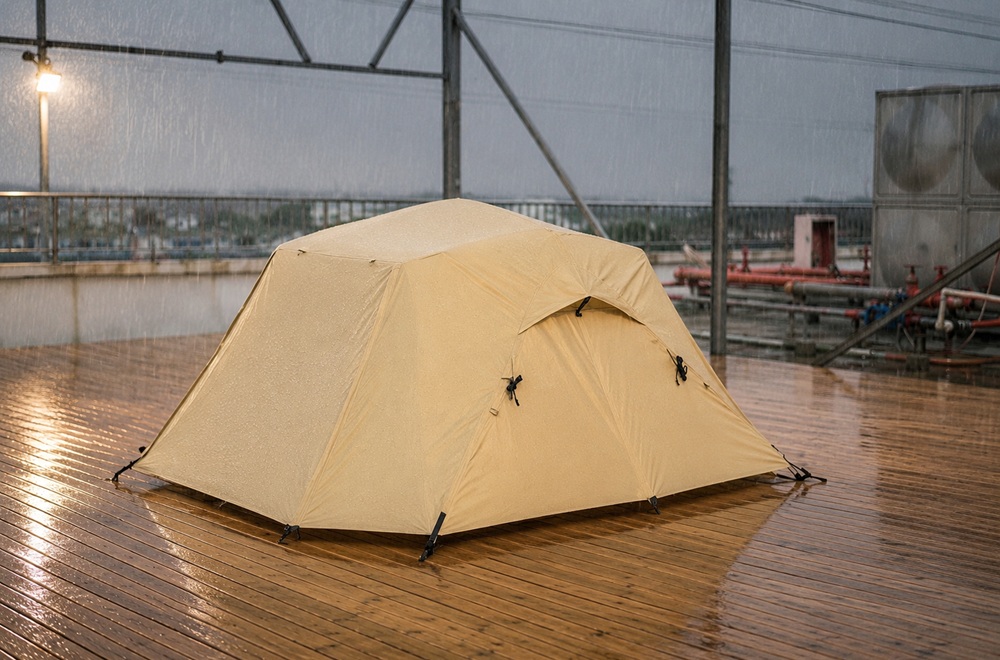
When NastoCamp has not previously produced a sufficiently similar tent, an actual sample may be needed before the proposed specification can be treated as confirmed. The sample can be assembled and pitched outdoors so that the complete tent can be observed under real outdoor conditions.
One reason for doing this outdoors is simple: there is wind.
This is not the same as assigning a standardized wind rating to the tent, nor does it mean that every new tent goes through the same test procedure. When previous experience is insufficient, evaluating an actual assembled sample can provide information that a component specification on paper cannot.
Experience with similar products can reduce uncertainty, but it should not be used to assume that an unfamiliar structure is already understood.
For an OEM buyer, this means a sample may sometimes do more than confirm appearance, workmanship or branding. It can also help determine whether a proposed structural specification is appropriate for the intended product.
Can a Tent Pole Be Bigger Than Necessary?
Yes, but “too big” only makes sense in relation to what the particular tent actually requires.
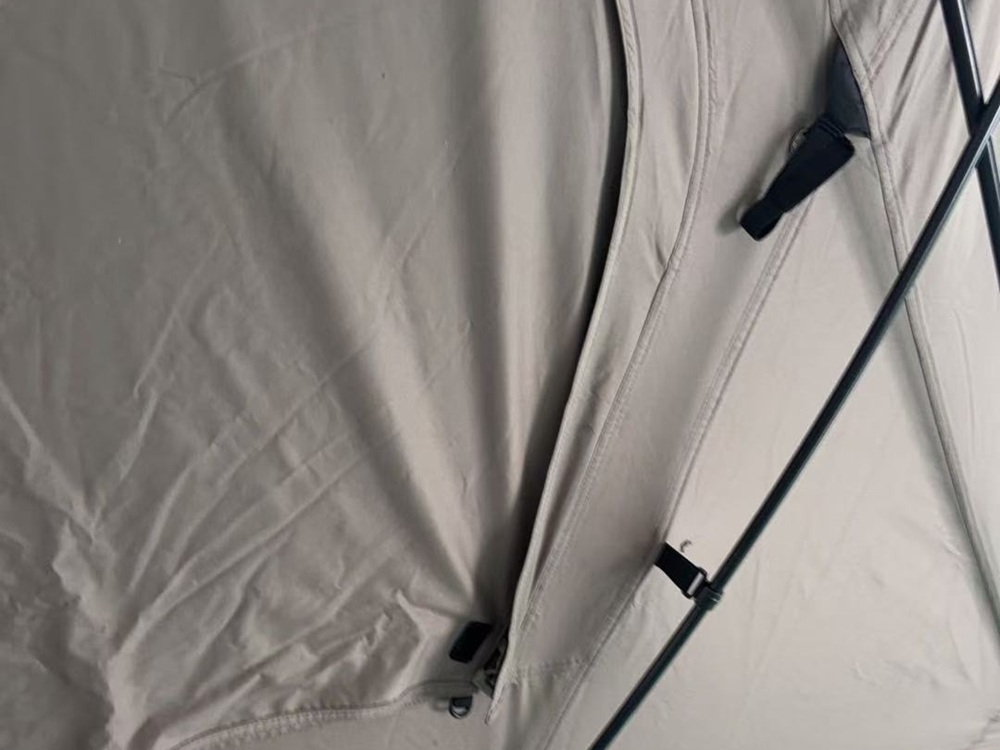
NastoCamp encountered this in a project for a Japanese customer involving a frame tent.
The buyer initially proposed D25 mm steel poles. Based on the support required for that project and NastoCamp’s experience with similar products, the factory considered D22 mm steel poles sufficient for that particular tent.
The buyer accepted the recommendation. According to NastoCamp’s project experience, the change reduced both the pole cost and the overall product weight.
The lesson from this case is not that D22 mm is better than D25 mm. The available project information does not provide the wall thickness, steel grade or quantified load data needed to make that comparison.
What the case shows is that a buyer’s proposed number can be reviewed against the requirements of the finished tent instead of being accepted simply because the larger specification appears more robust.
Once the required support for a particular application has been satisfied, increasing the specification further may add weight and cost without addressing another product requirement. In other projects, specification choices may also affect considerations such as transportation, product positioning and user experience, depending on the product.
A proposed tent pole specification is a starting point, not proof that the specification is right for the finished product. It still needs to be considered against the tent’s size, structure, intended use and relevant previous experience. When that experience is insufficient, an actual sample may be needed to support the decision.
The goal is not to maximize the pole specification. It is to use a specification that is appropriate for the tent and the conditions in which it is expected to perform.