An inflatable tent sample may look good, inflate properly, and meet the brand’s initial performance requirements. But if an air beam or valve is damaged after the product reaches customers, what can actually be repaired or replaced?
That question is worth answering before sample approval.
Before approving an inflatable tent sample, an outdoor brand should confirm which air-beam components can be removed or replaced, how compatible spare parts will be identified, and whether replacement procedures and spare-part arrangements have been discussed with the manufacturer.
Repairability depends on how the air beams are constructed, which components can be accessed, and whether compatible replacement parts can be supplied. For an outdoor brand developing an OEM inflatable tent, these details can influence both product design and future after-sales arrangements.
Repairability Starts With Air-Beam Construction
Inflatable tent air beams are not all built the same way.
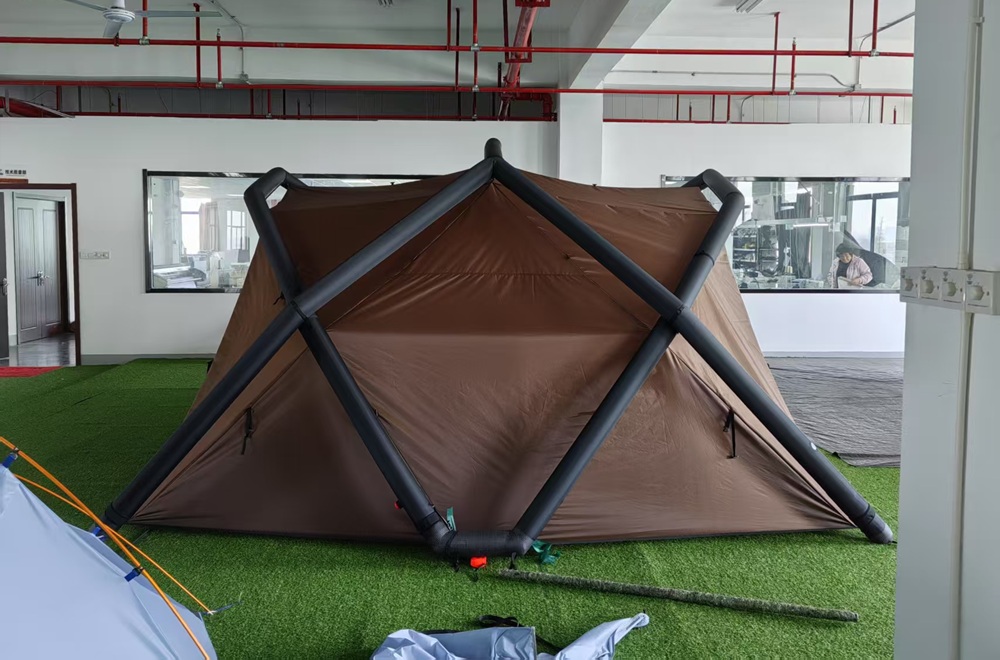
At NastoCamp, inflatable tent projects involve different constructions, including TPU bladders housed inside protective fabric sleeves and PVC air beams that form their own sealed inflatable chambers.
The material matters, but it does not determine repairability on its own.
Where the protective sleeve has an accessible zipper and the bladder is designed to be removable, the damaged bladder may be replaced separately. For other constructions, replacement may involve a larger air-beam assembly.
The situation changes when the bladder is enclosed in a permanently fixed structure or the air beam is integrated into the tent body without a practical removal method.
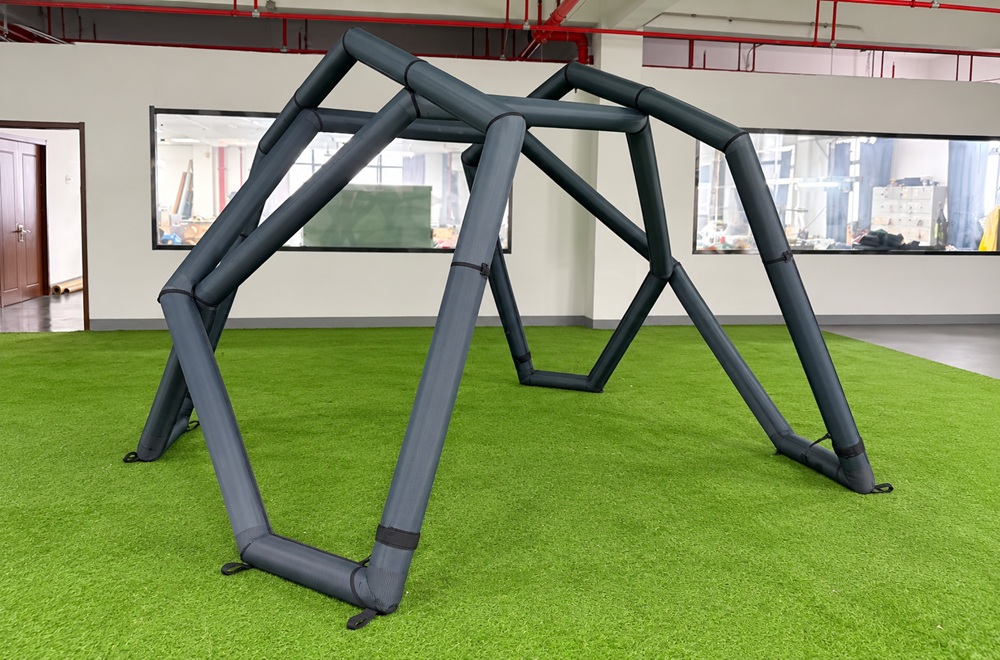
Some complete air-beam assemblies can be replaced when they are designed to detach from the tent. Others, particularly complex intersecting structures, may be difficult for end users to remove and reinstall correctly.
PVC air beams may offer different repair options because the inflatable chamber is part of the beam’s sealed construction. Whether a damaged area can be repaired depends on its location, the type of damage, and the construction of that particular beam.
For a brand reviewing an OEM sample, the first question should therefore be:
Which parts of the air-beam system can actually be accessed, removed, or replaced in this design?
Which Components Can Be Repaired or Replaced?
A tent described as “repairable” may still have important limitations. The bladder, valve, protective sleeve, and complete air-beam assembly do not necessarily share the same repair or replacement options.
| Component or Problem | What to Check |
|---|---|
| TPU bladder | Can it be removed from the sleeve and replaced separately? |
| Complete air beam | Can the assembly be detached from the tent? |
| Inflation valve | Which valve components can be replaced individually? |
| PVC air-beam leak | Is the damaged area suitable for a compatible repair method? |
| Protective sleeve | Can it be opened and correctly reassembled? |
Bladder Damage and Air-Beam Replacement
For a removable TPU bladder, replacement may be more practical than attempting to repair significant damage.
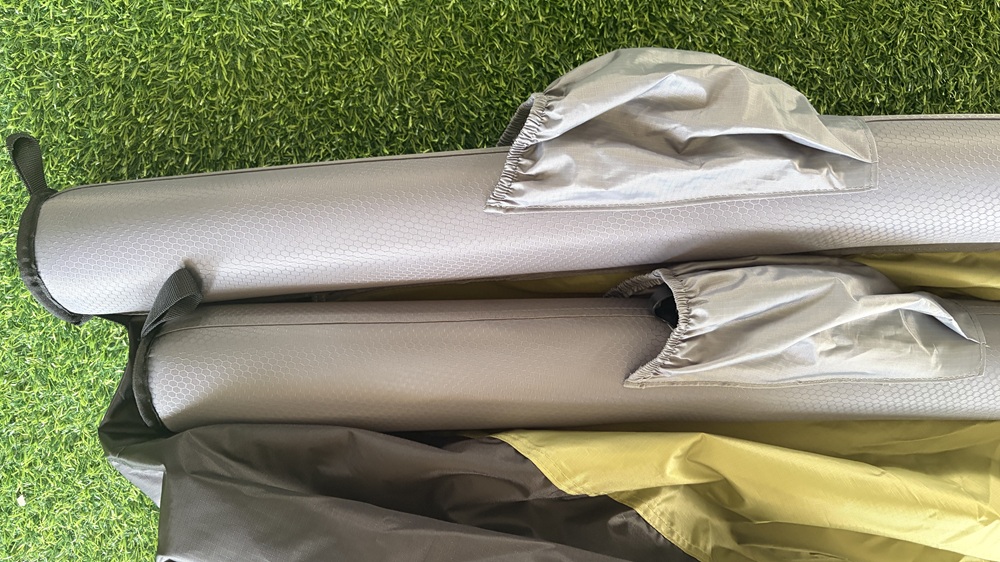
NastoCamp generally favors replacing a severely damaged TPU bladder when the construction allows it. Depending on the design, the replacement may involve the bladder alone or a larger assembly that includes its protective sleeve.
For certain localized leaks in PVC air beams, NastoCamp may provide suitable PVC patches and adhesive as a repair option. Whether repair is appropriate depends on the location and extent of the damage.
Valve Damage
Some inflation valves have removable components that can be replaced separately. Other valve components may be permanently joined to the bladder.
If the damaged part is welded or otherwise integrated into the inflatable chamber, replacing it can be more complicated than changing an accessible valve component.
Buyers should confirm exactly which parts of the valve assembly are replaceable, rather than assuming that a replaceable valve means the entire assembly is serviceable.
Problems Beyond the Inflatable Chamber
Not every apparent air-beam failure is caused by a puncture.
A protective sleeve, zipper closure, or incorrect bladder position may contribute to twisting, bulging, or abnormal deformation. PVC welded seams can also be a potential leakage location, depending on the construction and condition of the beam.
These problems require different assessments. A patch will not resolve a sleeve-positioning problem, just as replacing a valve will not correct a damaged structural assembly.
Identifying the affected component is the first step toward deciding whether repair, replacement, or a design review is appropriate.
Why Spare-Part Compatibility Must Be Checked by Model
Replacement parts need to match the approved tent design.
In custom inflatable tent manufacturing, air-beam dimensions, shapes, and assembly arrangements may vary between products. Two tents with similar appearances can still require different replacement bladders or complete air beams.
At NastoCamp, identifying the appropriate replacement commonly involves the original order number, product code, and relevant dimensions.
Custom air beams and bladders are generally not interchangeable between different tent models.
Valves may offer more flexibility, but compatibility still needs to be confirmed. Some valve components can fit multiple products when their specifications match. Similar appearance, however, is not enough to establish that two valves are interchangeable.
Connection dimensions, thread specifications, and sealing arrangements may all affect whether a replacement fits correctly.
For brands developing several inflatable tent models, a model-specific spare-part reference is more useful than a general assurance that replacement parts are available.
The supplier should be able to clarify which component belongs to the approved design and what information will be needed to identify it later.
What Should Be Verified on the OEM Sample?
When repairability is an important requirement for the brand, the OEM sample stage is an appropriate time to request a demonstration or clarify the intended replacement method.
A specification sheet may indicate that an air beam is replaceable, but the physical sample can reveal whether the relevant components are accessible and how much work replacement actually involves.
For a project where future component replacement is important, buyers should consider the following checks:
- Air-beam attachment: Is the beam removable from the tent body, or is it permanently integrated?
- Component access: Can the bladder, valve, sleeve, or complete beam be removed individually?
- Removal and reinstallation: If the design is intended to allow bladder replacement, can the supplier demonstrate the process?
- Replacement-part matching: Can the correct spare component be identified and matched to the sample?
- Reassembled condition: After reinstallation, are the bladder, sleeve, and valve correctly positioned, and does the assembly function as intended?
NastoCamp has demonstrated bladder removal and reinstallation to customers during sample development for designs that allow this operation.
Such a demonstration can help a brand understand the practical limitations of the approved construction. It may also reveal whether replacement is suitable for an end user or would be better handled by someone with appropriate technical experience.
These are suggested buyer verification points, not a universal testing procedure applied to every inflatable tent model.
The broader relationship between sample evaluation and production approval is discussed in our tent sample approval guide.
Agree on Spare Parts Before Bulk Production
Knowing that a component can be replaced is only part of the after-sales planning process. The brand also needs to know how to obtain the correct replacement.
In NastoCamp’s OEM projects, spare-part requirements are sometimes discussed during quotation or before an order is placed. Some customers arrange for additional bladders, air beams, valves, or other relevant components to be supplied with the initial bulk shipment.
These arrangements depend on the tent design and the customer’s requirements.
Before production, it is useful to clarify which parts may be needed, how they will be identified, and whether they should be included in the original order.
The buyer should also confirm the required quantities, pricing, and delivery arrangements.
For custom air beams, this discussion can be particularly important because a replacement designed for another tent model may not fit.
Long-term availability should not be assumed. If the brand expects to order replacement components after the initial production run, that requirement needs to be discussed separately with the manufacturer.
By addressing these questions early, the buyer can make a more informed decision about the approved product design and the spare parts needed to support it.
Make Repairability Part of Sample Approval
Inflatable tent repairability is not determined by material choice alone. It depends on the construction of the air-beam system, the components that can be replaced, and the availability of correctly matched spare parts.
Before approving an OEM sample, outdoor brands should understand those limitations and decide which replacement options matter for their products.
For projects involving custom inflatable tents, explore NastoCamp’s inflatable tent product range and discuss the air-beam construction and spare-part requirements appropriate for your design.