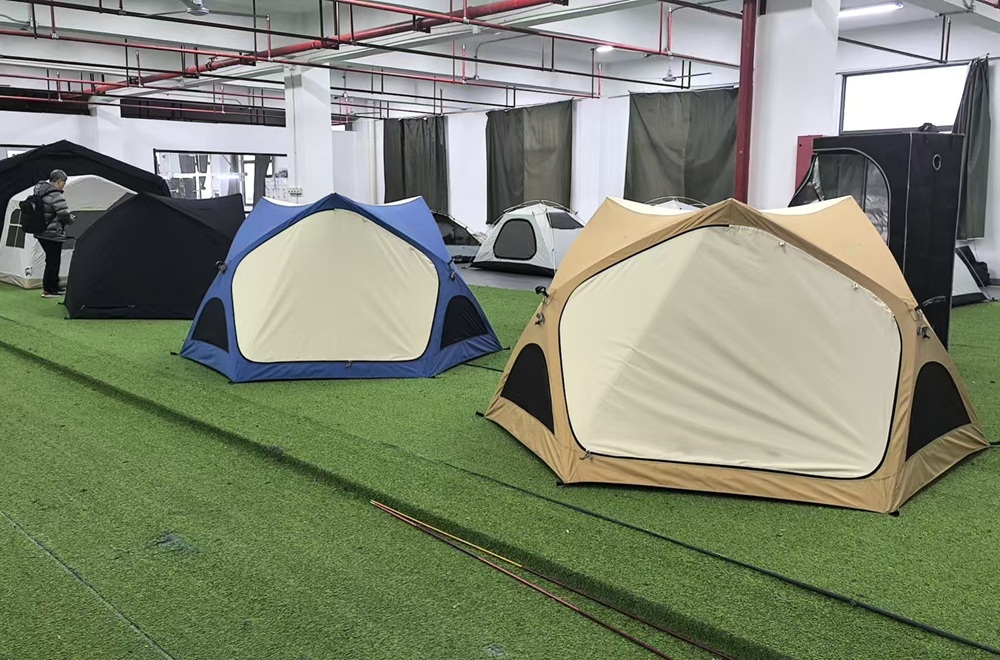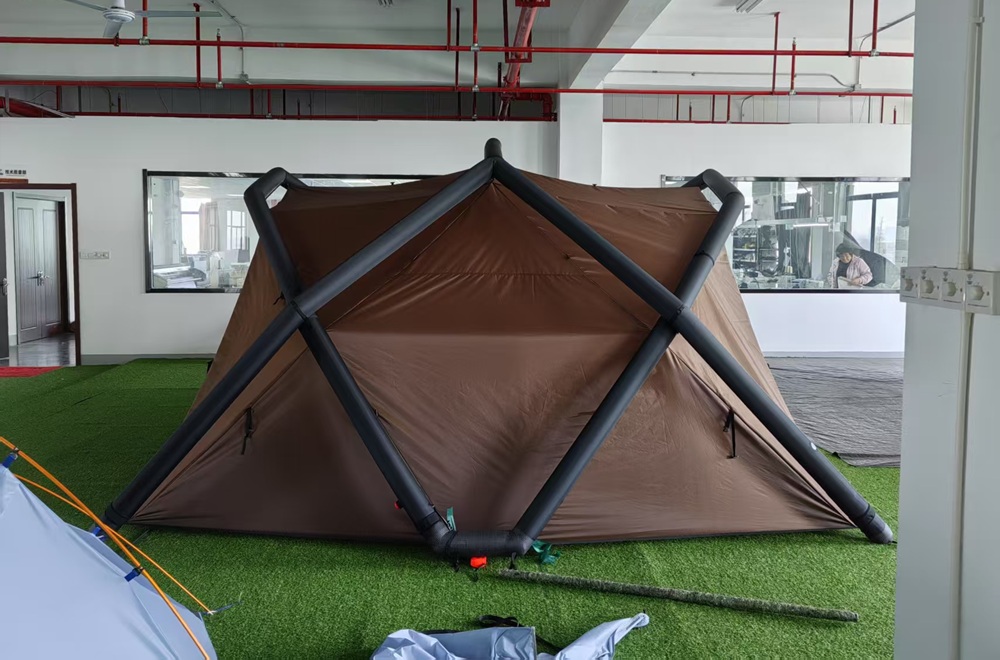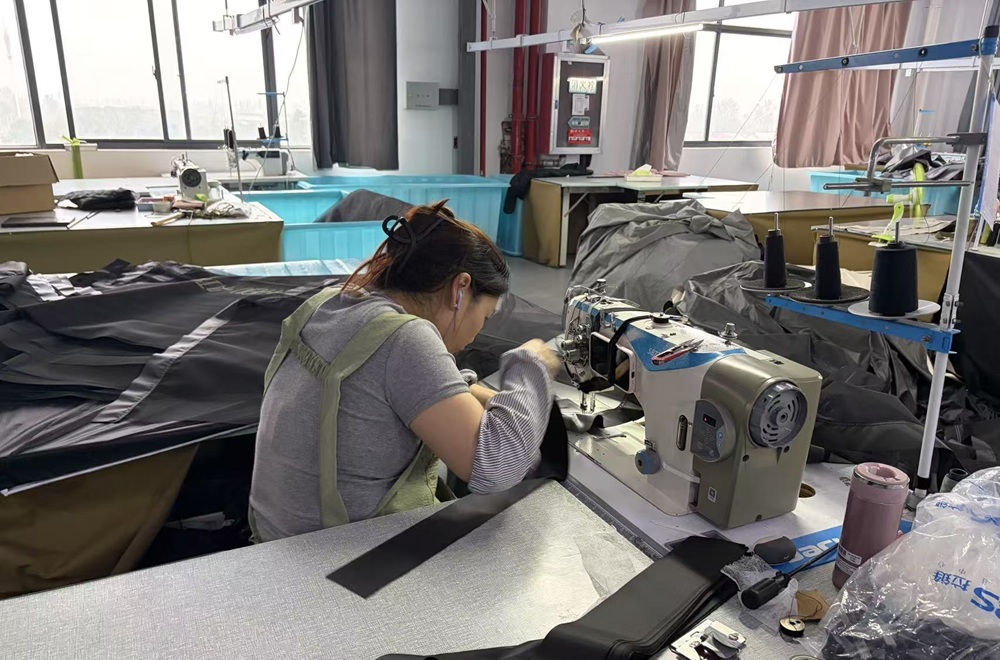
When an outdoor brand sends a physical tent to a manufacturer, it is tempting to treat every detail as something that must be reproduced.
But there is a difference between the product the buyer wants and the method the original factory used to make it.
A reference tent may establish the required shape, dimensions, materials, and functional features. It also contains sewing and assembly decisions that the buyer may never have specified.
For an OEM manufacturer, the difficult part is knowing which details must remain unchanged and which can be reconsidered during development.
A Seam Construction We Changed from the Original Reference
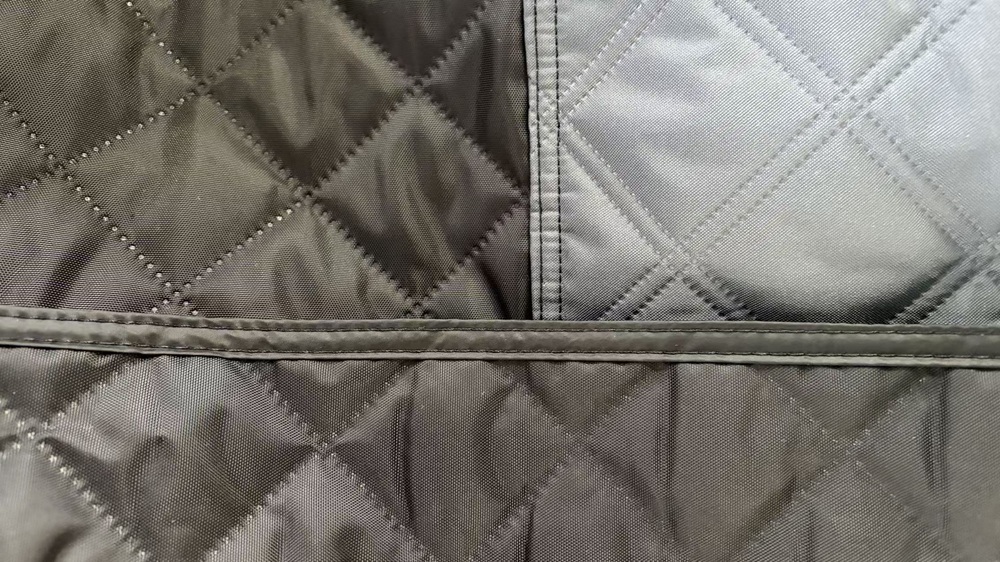
In one NastoCamp project, a customer supplied product photographs and a physical reference tent. Both showed a construction in which two fabric panels were sewn directly together.
Our production team considered using a different method: joining the panels with a binding strip applied through a sewing attachment.
The original method required less additional material. The alternative needed a separately prepared binding strip, so material consumption would increase.
However, our team preferred the bound construction for its neater appearance and more efficient sewing operation. The attachment made the process easier for the operator to handle.
We did not make the change without telling the customer.
The team prepared a small construction sample, explained the proposed method, and sent photographs by email. The customer explicitly agreed, and the bound construction was ultimately adopted for the project.
This was not a case of changing the customer’s product requirements. It was a decision about how to manufacture a particular detail of the reference tent.
Our team also considered the alternative seam stronger, but we do not have comparative test data available for this project. The case should not be taken as evidence that one seam construction is universally stronger than another.
What Should a Manufacturer Preserve from a Reference Tent?
At NastoCamp, customers providing reference tents generally have expectations about the shape, dimensions, materials, and finished product.
Those requirements are the starting point.
Some construction details also need to be preserved because they serve a specific function.
For example, a tent fly may have a door zipper constructed with binding and seam-sealing treatment to help prevent water entry. Replacing that construction without evaluating its function could change the product’s water protection.
We take a similarly cautious approach to certain reinforcements at the bottom corners of a tent. These details may have a structural purpose beyond their visible appearance.
In such cases, the question is not whether another sewing method looks neater or takes less time. It is whether the alternative can meet the intended functional requirement.
If the buyer has explicitly specified a material, construction detail, or performance requirement, the factory should not assume it can be changed simply because another method is easier to manufacture.
Which Construction Details Can Be Reconsidered?
Not every seam or assembly detail in a reference tent has the same significance.
Some reflect the equipment, working methods, or production preferences of the factory that originally made the product.
During initial sample development, NastoCamp may choose a different method for certain non-critical sewing details, particularly within the inner tent, where the construction does not affect specified product functions.
That does not mean every inner-tent seam is interchangeable. The decision still depends on the material, location, structure, and buyer’s requirements.
The seam example illustrates a manufacturing trade-off that buyers may not notice when examining the reference tent.
The original construction joined the panels directly. The alternative added a binding strip but allowed the operator to use a dedicated sewing attachment.
Using more material did not automatically make it a less attractive manufacturing option. Our team considered the overall operation, including sewing efficiency and finished appearance.
These are practical considerations rather than universal rules. A different fabric, seam location, or product requirement could lead to a different decision.
When Should the Buyer Be Asked to Confirm a Change?
There are two situations worth distinguishing.
The first occurs during initial development, when the buyer has specified the required product characteristics but has not prescribed every manufacturing method.
For certain non-critical details, the factory may select a suitable construction while preparing the development sample. The buyer can then review the completed sample against the agreed requirements.
The second situation is when the factory identifies a specific change worth recommending to the customer.
In NastoCamp’s practice, when we formally propose such a modification, we explain the reason and seek the customer’s confirmation.
That was the approach taken in the seam-construction case. Rather than relying on a verbal description, we used photographs of a small construction sample to show the proposed difference.
A local sample or photographs may be enough to explain some visible construction changes. Other modifications, especially those affecting waterproofing, structural support, or specified performance, may require more extensive evaluation.
There is no single confirmation method suitable for every change.
It is also important to distinguish development-stage decisions from modifications made after a sample or specification has already been approved. An earlier approval should not be treated as permission to make unrelated changes later.
What Should Buyers Clarify When Sending a Physical Reference?
A physical reference becomes more useful when the buyer explains what it is meant to control.
If the tent’s dimensions, fabric specifications, door configuration, waterproofing details, or reinforcement methods must match the original, those requirements should be identified.
If the buyer is open to alternative sewing or assembly methods, it helps to say so as well.
The manufacturer can then evaluate potential changes without guessing which details are important to the brand.
A useful discussion may be as simple as identifying three things:
- What must match: product features, materials, dimensions, and specified construction requirements.
- What can be evaluated: manufacturing details for which alternative methods may achieve the intended result.
- What needs confirmation: proposed changes that affect agreed requirements or that the factory specifically recommends for buyer approval.
The purpose is not to create a separate approval process for every stitch. It is to prevent an important product requirement from being mistaken for an optional production detail, or the reverse.
The Value of a Physical Reference Is in How It Is Interpreted
A reference tent gives an OEM manufacturer something concrete to examine, but it does not always explain which details the buyer considers essential.
In the NastoCamp seam example, the original construction was not automatically copied. The team evaluated an alternative, showed the customer the proposed difference, obtained agreement, and adopted the new method.
For outdoor brands developing a tent from an existing product, the important starting point is to distinguish the features that must be preserved from the manufacturing choices that can be discussed.
Learn more about how NastoCamp approaches buyer requirements and reference products through our Custom Tent Development service.