Choosing the right tent fabric is one of the most important decisions in outdoor product development.
Many buyers naturally begin by asking questions like:
- Should I choose polyester or nylon?
- Is silicone coating better than PU?
- Should I use TC fabric or cotton canvas?
- Does a higher waterproof rating always mean a better tent?
These are all reasonable questions—but they are not where the decision should begin.
At NastoCamp, we have supported the development of hundreds of OEM and ODM tent projects for outdoor brands around the world. One thing we have learned is that there is no single “best” tent fabric.
The right material always depends on the product’s positioning, the target market, the intended outdoor environment, the expected service life, and the customer’s budget.
A premium mountaineering tent, a family camping tent, a glamping lodge, and a humanitarian shelter may all require completely different material solutions, even if they appear similar at first glance.
This is why experienced OEM manufacturers rarely recommend a fabric based only on its technical specifications. Instead, they first seek to understand how the product will actually be used.
In this guide, we’ll explain how professional tent manufacturers evaluate fabric choices, compare the most common tent materials used in OEM production, and share practical recommendations based on real manufacturing experience.
Why Fabric Selection Matters More Than Many Buyers Realize
One of the biggest misconceptions in product development is that choosing tent fabric is simply a matter of comparing specifications.
In reality, fabric selection affects almost every aspect of a tent, including:
- Product weight
- Waterproof performance
- Tear strength
- UV resistance
- Breathability
- Production cost
- Manufacturing methods
- Long-term durability
- User experience
Changing the fabric often changes much more than the material itself.
For example, selecting a different coating may influence seam sealing methods. Choosing a heavier fabric may require stronger poles or structural reinforcement. Even the target retail price may change significantly depending on the selected material.
This is why fabric selection should never be treated as an isolated decision.
Instead, it should be considered part of the entire product development strategy.
Don’t Start by Choosing a Fabric—Start by Defining Your Product
One of the first questions we ask new OEM customers is not:
“Which fabric do you want?”
Instead, we usually ask questions like:
- Which market are you selling to?
- Who are your target customers?
- What type of camping experience are you designing for?
- What is your expected retail price?
- How often will the tent be used?
- What is your target order quantity?
These answers help determine the most suitable material.
For example, a lightweight backpacking tent designed for alpine hiking has very different requirements from a family camping tent intended for weekend holidays.
Likewise, a premium glamping tent designed for long-term outdoor installation requires a completely different material strategy from an entry-level promotional shelter.
Starting with product positioning, not material names, usually leads to better engineering decisions and a more competitive final product.
NastoCamp Expert Tip
Don’t choose your tent fabric first.
Choose your customer first.
The right fabric is the result of your product positioning, not the starting point.
The Five Most Common Tent Fabrics Used in OEM Manufacturing
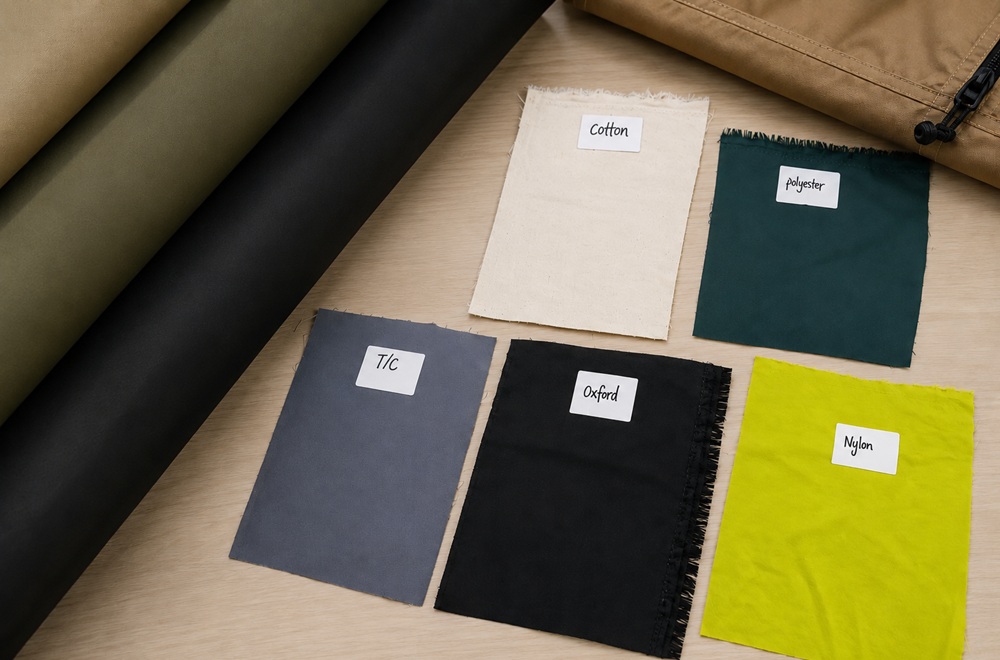
Although hundreds of textile variations are available, most OEM tent projects are built around five major fabric families.
Each offers different advantages depending on the application.
Polyester
Polyester is currently the most widely used fabric in camping tent manufacturing.
It is commonly used for:
- Family tents
- Cabin tents
- Entry-level camping tents
- Recreational outdoor products
When combined with a PU coating, polyester offers an excellent balance between waterproof performance, production efficiency, durability, and overall cost.
For many outdoor brands, polyester remains the most practical solution for mainstream consumer products.
Oxford Fabric
Oxford fabric is another material frequently used in OEM production.
Unlike many buyers assume, Oxford is not limited to tent flysheets.
It is also widely used for:
- Tent floors
- Heavy-duty components
- Humanitarian tents
- Inflatable tents
- Glamping structures
Its stronger weave makes it suitable for products requiring additional durability.
Depending on the project, Oxford fabric may be combined with different coatings to achieve specific waterproof and performance requirements.
Nylon
Nylon is generally selected for lightweight technical tents.
It is commonly used in:
- Backpacking tents
- Ultralight shelters
- Mountaineering tents
Compared with polyester, nylon typically provides a higher strength-to-weight ratio, making it attractive for products where every gram matters.
However, this improved performance usually comes with higher material costs.
For this reason, nylon is most often chosen by brands targeting professional outdoor users rather than entry-level camping markets.
TC (Polycotton)
TC fabric is typically made from a blend of polyester and cotton.
For many years, TC became increasingly popular with the growth of premium camping and glamping products.
It combines some of the natural comfort of cotton with improved dimensional stability provided by polyester.
TC fabrics are commonly found in:
- Family tents
- Cabin tents
- Glamping products
- Inflatable tents
However, market demand has changed in recent years.
While TC still performs well in premium applications, buyers should also consider its higher weight, higher cost, and lower waterproof performance compared with coated synthetic fabrics.
The right choice depends on the product’s positioning rather than current market trends.
Cotton Canvas
Cotton canvas remains one of the most recognizable materials for premium outdoor shelters.
It is often associated with:
- Luxury glamping tents
- Safari tents
- High-end camping products
- Heritage outdoor brands
Many well-known European outdoor brands continue to use cotton canvas because of its natural appearance, excellent breathability, comfortable indoor climate, and premium customer perception.
However, cotton also presents challenges.
Compared with coated synthetic fabrics, it is heavier, more expensive, and generally achieves lower hydrostatic head ratings.
It also requires careful structural design to avoid long-term water accumulation.
For this reason, cotton tents demand more attention during product development and testing than many buyers realize.
PU vs. Silicone Coatings: Which One Is Right for Your Tent?
One of the most common online discussions about tent fabrics is whether PU or silicone coating is “better.”
In reality, experienced OEM buyers rarely ask this question.
Instead, professional outdoor brands usually ask something much more specific:
Should this project use a silicone/PU combination or double silicone coating?
This reflects an important reality in tent manufacturing.
Choosing a coating is not about finding the “best” technology.
It is about selecting the most appropriate solution for the product’s positioning, expected service life, manufacturing process, and target price.
At NastoCamp, we evaluate coating systems based on the complete product strategy rather than a single performance specification.
PU Coating: The Most Practical Choice for Many Outdoor Products
Polyurethane (PU) coating remains the most widely used waterproof coating in camping tent manufacturing.
It can be applied to materials including:
- Polyester
- Nylon
- Oxford fabric
- TC fabric
One of its greatest advantages is manufacturing efficiency.
Because PU-coated fabrics can be heat seam taped during production, manufacturers can create highly reliable waterproof seams without requiring customers to perform additional sealing after purchase.
For most family camping tents and mainstream outdoor products, this offers an excellent balance between waterproof performance, production efficiency, and cost.
Other advantages include:
- Competitive material cost
- Mature manufacturing technology
- Reliable waterproof performance
- Easy large-scale production
- Suitable for most recreational camping products
These characteristics explain why PU coating continues to dominate a large portion of the global camping tent market.
However, PU is not perfect.
Over time, particularly in hot and humid environments, polyurethane coatings may experience hydrolysis, a gradual chemical breakdown caused by moisture and heat.
This can reduce coating performance after years of storage or heavy use.
For occasional campers who use their tents only a few times each year, this is rarely a significant concern.
For products expected to remain outdoors for extended periods or operate in extremely humid climates, manufacturers may recommend alternative coating systems.
Silicone Coating: Built for Lightweight Performance and Long-Term Durability
Silicone-coated fabrics are commonly selected for premium outdoor equipment where performance is prioritized over manufacturing cost.
Compared with PU coating, silicone offers several important advantages.
These include:
- Lower overall weight
- Higher tear strength
- Excellent water repellency
- Outstanding long-term durability
- No hydrolysis issues
Because silicone penetrates the fabric differently from polyurethane, it helps maintain fabric flexibility while improving tear resistance.
This makes silicone-coated nylon particularly popular in:
- Ultralight backpacking tents
- Alpine shelters
- Expedition tents
- Technical outdoor equipment
For brands targeting experienced outdoor users, silicone coating often provides meaningful long-term performance benefits.
However, these advantages also come with trade-offs.
Silicone-coated fabrics generally cost more.
More importantly, fully silicone-coated fabrics cannot be seam taped using conventional heat-sealing methods.
Instead, waterproof seams usually require manual silicone seam sealing or alternative waterproof construction techniques.
This is one reason why silicone-coated products are typically developed for experienced outdoor users who understand the maintenance requirements of high-performance equipment.
Single Silicone vs. Double Silicone: What Professional Buyers Usually Ask
One interesting difference between experienced buyers and first-time buyers is the way they discuss coatings.
Many beginners ask:
“Is PU or silicone better?”
Professional brands often ask:
“Should we use single silicone or double silicone?”
This reflects a deeper understanding of product development.
A single silicone coating generally combines a silicone coating on one side of the fabric with a PU coating on the other.
This approach allows manufacturers to apply seam tape during production while still benefiting from some of silicone’s performance advantages.
A double silicone coating, by contrast, applies silicone to both sides of the fabric.
This further reduces weight, improves water repellency, and enhances tear resistance.
However, because both sides are silicone-coated, conventional seam tape cannot be applied.
Waterproof seams must instead be sealed using silicone-based sealing methods.
For this reason, double silicone fabrics are typically chosen for premium ultralight products where performance is more important than manufacturing convenience or cost.
There Is No Universal “Best” Coating
Many buyers expect manufacturers to recommend the highest-performance material available.
In practice, this is rarely the best approach.
The right coating depends on the product’s intended use.
For example:
| Product Position | Typical Recommendation |
|---|---|
| Entry-level family camping | PU-coated polyester |
| Mainstream camping products | PU-coated polyester or Oxford |
| Premium backpacking tents | Silicone-coated nylon |
| Ultralight technical shelters | Double silicone-coated nylon |
| Long-term humid environments | Silicone coating is often preferred |
Rather than recommending the most expensive solution, experienced OEM manufacturers usually recommend the coating that best matches the product’s positioning and expected customer experience.
NastoCamp Expert Tip
The best coating is not the one with the highest specification.
It is the one that best matches:
- Your target customer
- Your outdoor environment
- Your expected product lifespan
- Your retail price
- Your manufacturing budget
Successful product development is about balancing performance, durability, manufacturability, and cost—not maximizing a single specification.
How We Recommend Tent Fabrics for Different Outdoor Brands
One of the biggest misconceptions in tent development is that manufacturers simply recommend the highest-performance fabric available.
In reality, experienced OEM manufacturers rarely start with the fabric itself.
Instead, they begin by understanding the customer’s project.
At NastoCamp, our first discussion is usually about the product, not the material.
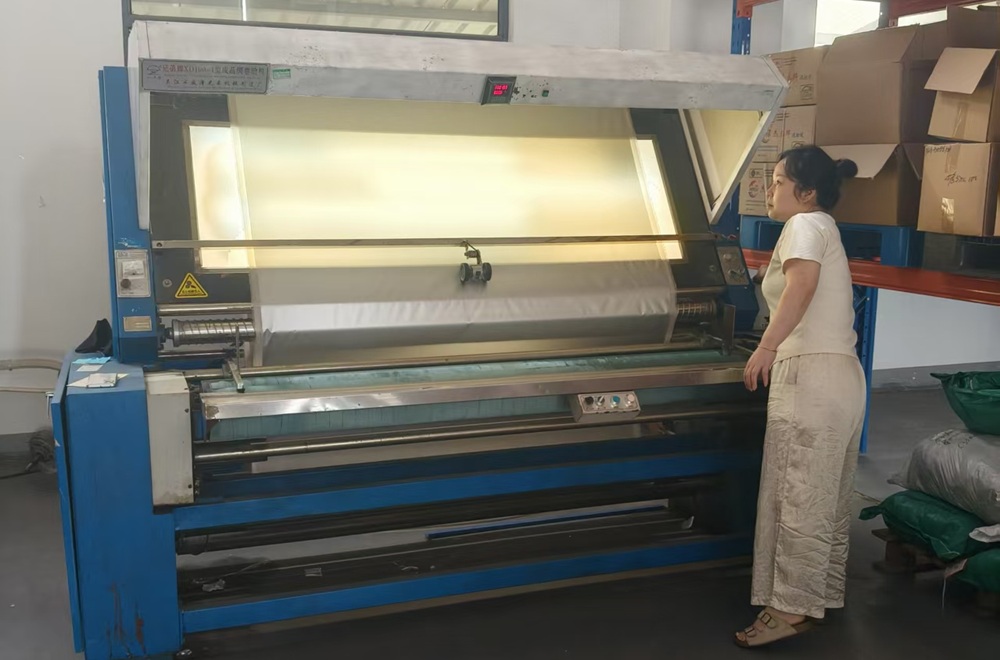
Typical questions include:
- Which country will the tent be sold in?
- Who is the target customer?
- Is the product designed for family camping, backpacking, glamping, or humanitarian use?
- What is the expected retail price?
- How often will the tent be used?
- What is the planned order quantity?
- Does the product need to compete with a specific outdoor brand?
The answers to these questions often determine the most suitable fabric long before technical specifications are discussed.
Different Products Need Different Material Strategies
Every outdoor category has different priorities.
Family Camping Tents
For most family camping tents, polyester combined with PU coating remains one of the most practical solutions.
It provides:
- Reliable waterproof performance
- Competitive production costs
- Easy seam sealing
- Stable manufacturing quality
For products designed for occasional recreational camping, this combination offers excellent overall value.
Backpacking Tents
Weight becomes much more important.
Many premium backpacking products therefore use lightweight nylon combined with silicone coating.
Although the material cost is higher, reducing even a few hundred grams can significantly improve the user experience during long-distance hiking.
Glamping Products
Luxury camping products focus less on weight and more on comfort and aesthetics.
Natural materials such as cotton canvas remain popular because they offer:
- Excellent breathability
- Comfortable indoor climate
- Premium appearance
- Traditional outdoor character
However, buyers should also understand that cotton structures require different waterproof strategies compared with coated synthetic fabrics.
Humanitarian and Project Tents
For humanitarian shelters and large project tents, durability, production efficiency, and long-term stability are usually more important than lightweight performance.
Oxford fabrics are frequently selected because they provide a good balance between strength, cost, and manufacturing practicality.
Product Positioning Always Comes First
A common mistake is selecting materials simply because another brand uses them.
Successful product development starts with understanding your own market.
A premium European outdoor brand may require a completely different material strategy from an entry-level retail product sold in another region.
The objective is not to copy another tent.
It is to build a product that matches your own customers.
NastoCamp Expert Tip
When customers ask us which fabric is “best,” our answer is usually another question:
Who are you designing the tent for?
The answer to that question almost always determines the right material.
Five Common Mistakes Buyers Make When Choosing Tent Fabrics
After working on hundreds of custom tent projects, we have noticed several common misunderstandings.
Avoiding these mistakes can save considerable development time and prevent unnecessary production costs.
Mistake 1: Assuming Higher Waterproof Ratings Always Mean Better Tents
This is probably the most common misconception.
Many buyers believe that a higher hydrostatic head automatically means a better tent.
In reality, most camping applications do not require extremely high waterproof ratings.
For many outdoor products:
- Around 3000 mm is already sufficient for normal camping conditions.
- Around 5000 mm is typically adequate for more demanding weather.
Increasing waterproof ratings far beyond actual requirements may increase cost and, depending on the coating system, can even affect fabric flexibility and tear performance.
Good engineering is about selecting the appropriate specification, not simply the highest number.
Mistake 2: Thinking Cotton and TC Are the Same Material
Many buyers use these two names interchangeably.
They are not the same.
TC fabric usually combines polyester and cotton.
Cotton canvas is generally made from 100% cotton.
Although they may look similar, they perform differently in terms of weight, breathability, waterproof behavior, durability, and maintenance.
Choosing between them should depend on the product rather than appearance alone.
Mistake 3: Believing Silicone Is Always Better Than PU
Silicone coating offers excellent performance.
However, that does not automatically make it the best choice.
Many successful camping tents around the world continue to use PU-coated fabrics because they provide excellent waterproof performance, easier manufacturing, reliable seam sealing, and attractive pricing.
The best solution depends on product positioning, not material prestige.
Mistake 4: Ignoring the Outdoor Environment
One real example involved a customer using a standard Oxford canopy with ordinary guy lines for permanent outdoor installation in a dry northern region with strong UV exposure.
Within only a few weeks, both the fabric and guy lines showed severe UV degradation.
The issue was not manufacturing quality.
It was material selection.
For long-term outdoor exposure, materials with stronger UV resistance and weather durability should be considered during product development.
Selecting materials without considering the actual environment often leads to unnecessary failures.
Mistake 5: Choosing Fabric Before Defining the Product
Perhaps the biggest mistake of all is discussing materials before defining the product itself.
Experienced buyers usually explain:
- Their target market
- Customer profile
- Product positioning
- Expected retail price
- Reference brands
- Intended application
Only after understanding these factors does fabric selection become meaningful.
This is why successful OEM development begins with product strategy, not textile specifications.
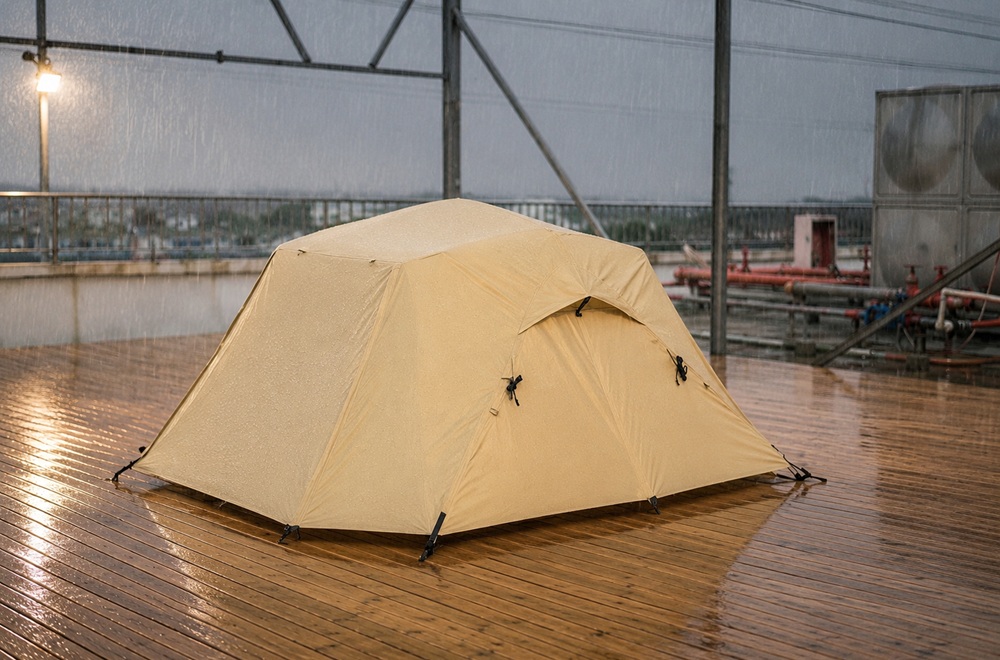
Why Cotton and TC Tents Require More Rain Testing
One question many buyers ask is:
“If cotton and TC fabrics are premium materials, why do they often require more rain testing?”
The answer lies in how these materials achieve their performance.
Unlike many synthetic fabrics, cotton canvas and most TC fabrics are generally not designed to rely on heavy PU coatings and extensive seam taping.
Doing so would reduce one of their greatest advantages, their natural breathability.
Instead, these fabrics depend much more on:
- Water-repellent treatments
- Fabric construction
- Structural drainage
- Product design
- Manufacturing quality
This means that rain testing becomes an essential part of product development.
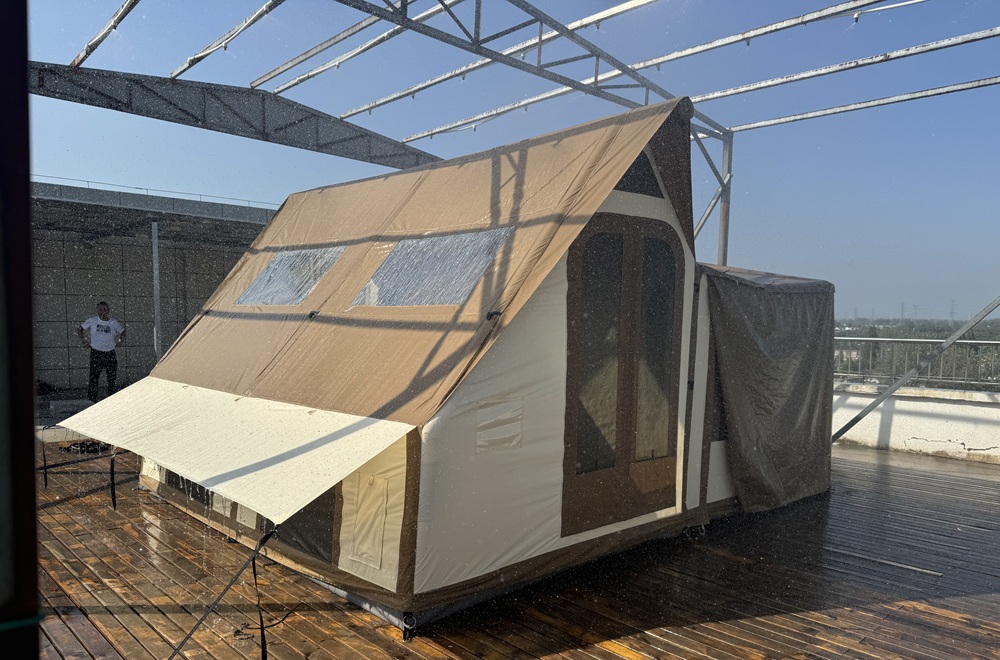
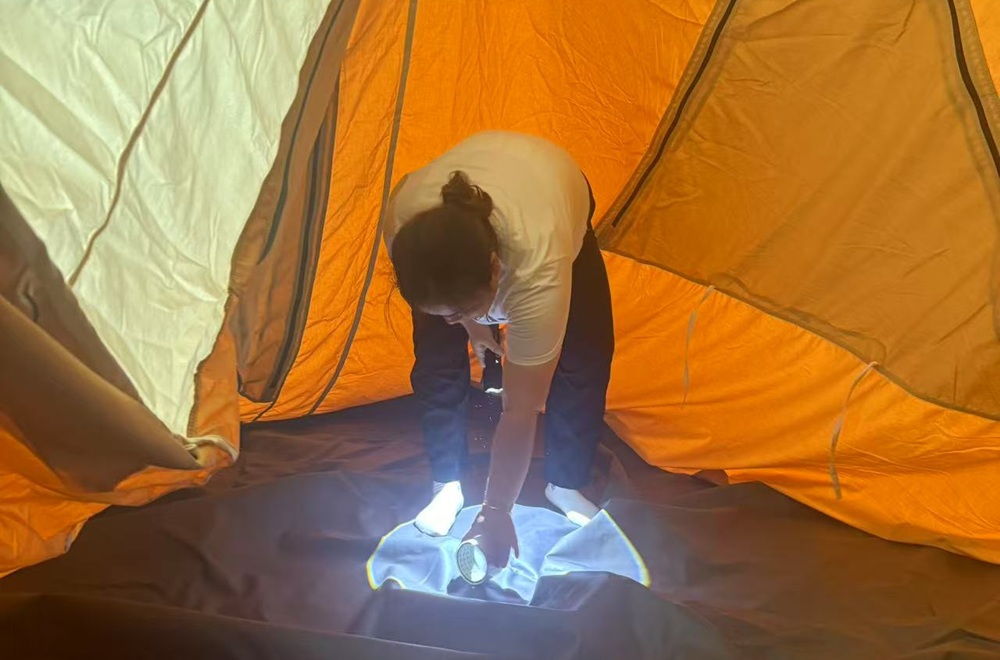
During testing, manufacturers are not only checking the fabric itself.
They are also verifying:
- Water drainage
- Potential leakage points
- Seam construction
- Webbing performance
- Structural areas where water may collect
In several development projects, testing has revealed unexpected water accumulation or leakage risks that were corrected before production.
Finding these issues during sample development is exactly what helps prevent costly failures after mass production.
How NastoCamp Helps Customers Choose the Right Tent Fabric
Choosing a tent fabric is rarely about selecting the material with the highest specification.
In our experience, successful OEM projects begin by understanding the product itself.
Before recommending a fabric, we usually discuss questions such as:
- Which market is the product designed for?
- Who is the target customer?
- What is the expected retail price?
- How frequently will the tent be used?
- Is lightweight performance a priority?
- Will the tent remain outdoors for extended periods?
- Are there any certification or project requirements?
Only after understanding these factors do we recommend suitable materials, coatings, and construction methods.
Sometimes the most expensive material is the right solution.
In many cases, however, a more balanced combination provides better value for both the brand and the end user.
Our objective is not to recommend the highest specification.
It is to recommend the most suitable solution for your product.
Final Thoughts
There is no universal “best” tent fabric.
Every successful tent begins with understanding the customer, the market, and the intended outdoor environment.
Only then can the right combination of fabric, coating, construction, and testing be selected.
Whether you are developing an ultralight backpacking tent, a premium glamping shelter, a family camping product, or a humanitarian project tent, material selection should always support the product’s real purpose—not simply follow industry trends.
At NastoCamp, we believe that successful OEM manufacturing starts long before production begins.
It starts with asking the right questions.
Choosing the right tent fabric is one of them.
Planning a custom tent project?
Contact our team to discuss your target market, product positioning, and material options. We’ll help you recommend the most suitable fabric solution before sample development begins.
Frequently Asked Questions About Tent Fabrics
Which tent fabric is best?
There is no single best fabric. The right choice depends on your target market, product positioning, outdoor environment, expected service life, and budget.
Is silicone coating always better than PU?
Not necessarily.
Silicone coating provides excellent durability and tear strength, while PU coating offers easier manufacturing, reliable seam sealing, and lower production costs.
Both are excellent solutions when selected for the right application.
What waterproof rating should I choose?
For many camping tents, around 3000 mm is sufficient.
Higher waterproof ratings are not always necessary and should be selected according to the intended outdoor environment.
Why are cotton tents tested more frequently?
Cotton and TC tents usually rely more on fabric construction and water-repellent treatments than heavy PU coatings.
Rain testing helps verify drainage performance, leakage risks, and structural waterproofing before production.
Which fabric is best for glamping tents?
Cotton canvas and TC fabrics remain popular choices because of their natural appearance, breathability, and comfortable indoor climate.
The final selection should depend on project requirements and maintenance expectations.
How do OEM manufacturers recommend fabrics?
Professional manufacturers usually begin by understanding:
- Target market
- Customer profile
- Product positioning
- Budget
- Outdoor application
Only then do they recommend suitable fabrics and coating systems.
Related Reading
Continue exploring our OEM tent manufacturing knowledge: