Many outdoor brands assume that if two factories receive the same design drawing, the final products should be identical.
In reality, that is rarely the case.
Even when the materials appear similar and the specifications match on paper, tent quality can vary significantly from one manufacturer to another.
The difference often comes down to what happens inside the factory—before, during, and after production.
From pattern making and material inspection to sewing quality and final inspection, every stage of the manufacturing process influences the performance, durability, and appearance of the finished tent.
In this article, we take a closer look at the OEM tent production process and explain why manufacturing expertise matters.
Why Similar Tent Designs Can Produce Different Results
Many buyers focus primarily on materials.
They compare fabric specifications, waterproof ratings, pole materials, and accessories.
While these factors are important, they represent only part of the equation.
A tent is a complex assembled product.
Its performance depends on how accurately it is developed, manufactured, inspected, and tested.
The same design can produce very different results depending on:
- Pattern-making accuracy
- Material selection
- Manufacturing experience
- Sewing quality
- Production management
- Quality control procedures
This is why choosing the right manufacturing partner is often just as important as selecting the right materials.
Step 1: Pattern Making Determines Product Accuracy
The manufacturing process begins long before mass production starts.
Before a tent enters production, a pattern must be created.
Pattern making is one of the most important stages in tent development because it determines how individual fabric panels fit together once assembled.
Small errors at this stage can create significant problems later, including:
- Poor fit
- Structural distortion
- Water accumulation points
- Production inefficiencies
At NastoCamp, pattern development is handled by experienced technicians with more than 25 years of tent industry experience.
Their role goes beyond simply converting drawings into production files.
They continuously evaluate:
- Product functionality
- User experience
- Structural performance
- Manufacturing feasibility
The goal is to optimize the design before production begins.

Step 2: Material Inspection Before Production
Once materials arrive at the factory, inspections are conducted before they enter production.
For fabrics, common inspection points include:
- Fabric weight
- Color consistency
- Surface defects
- Appearance quality
Accessory components are also inspected.
Examples include:
Zippers
Testing may include:
- Pull strength
- Top stop strength
- Bottom stop strength
- Slider strength
Tent Poles
Inspection focuses on:
- Surface quality
- Length tolerance
- Structural integrity
- Appearance consistency
Buckles
Dimensions and strength performance are verified.
Webbing and Ropes
Inspection includes:
- Color consistency
- Surface quality
- Weight
- Tensile strength
Material inspection helps identify issues before they affect production quality.
Material inspection is one part of a broader quality control system designed to ensure consistent product performance.
Step 3: Sample Development and Rain Testing
Before mass production begins, sample tents are typically developed using production-intended materials.
This stage provides an opportunity to verify:
- Product structure
- Material compatibility
- Assembly methods
- Waterproof performance
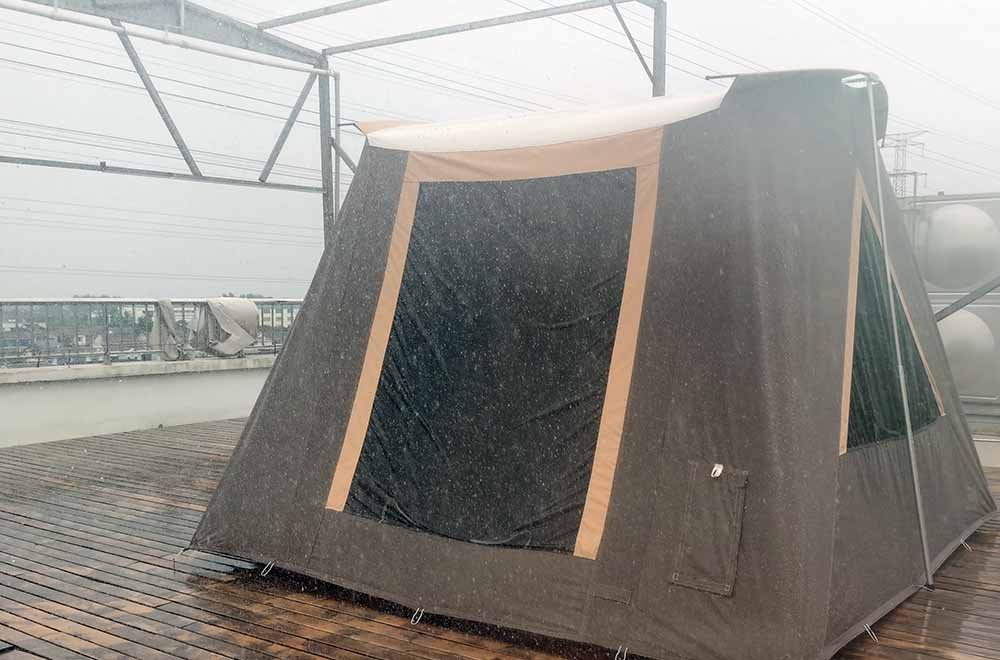
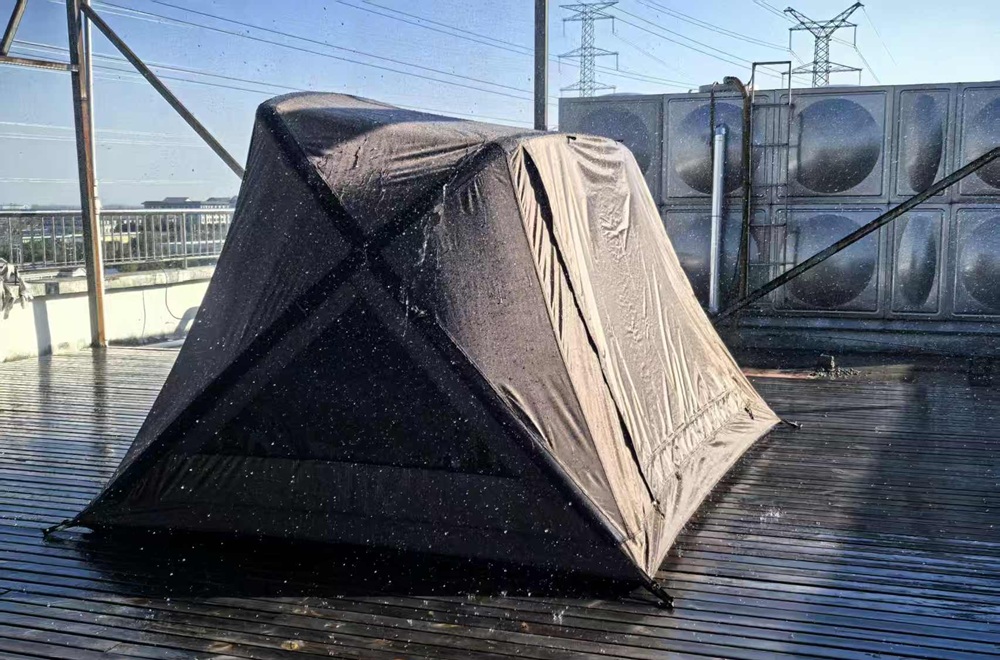
Rain testing is often conducted during this stage, particularly for new products, cotton canvas tents, TC tents, and customer-requested projects.
As discussed in our article on rain testing, real-world testing can reveal issues that laboratory material tests alone may not identify.
By resolving problems during sample development, manufacturers reduce production risks later.
Step 4: Precision Cutting and Material Efficiency
After sample approval, production materials move to the cutting stage.
At NastoCamp, automatic fabric spreading systems are combined with computer-assisted marker planning and manual cutting operations.
Precision at this stage is critical.
Poor cutting accuracy can lead to:
- Dimensional inconsistencies
- Assembly difficulties
- Material waste
Computerized marker planning helps improve material utilization while maintaining production accuracy.
In many cases, material utilization rates can exceed 95%.
Step 5: Sewing Quality Shapes the Final Product
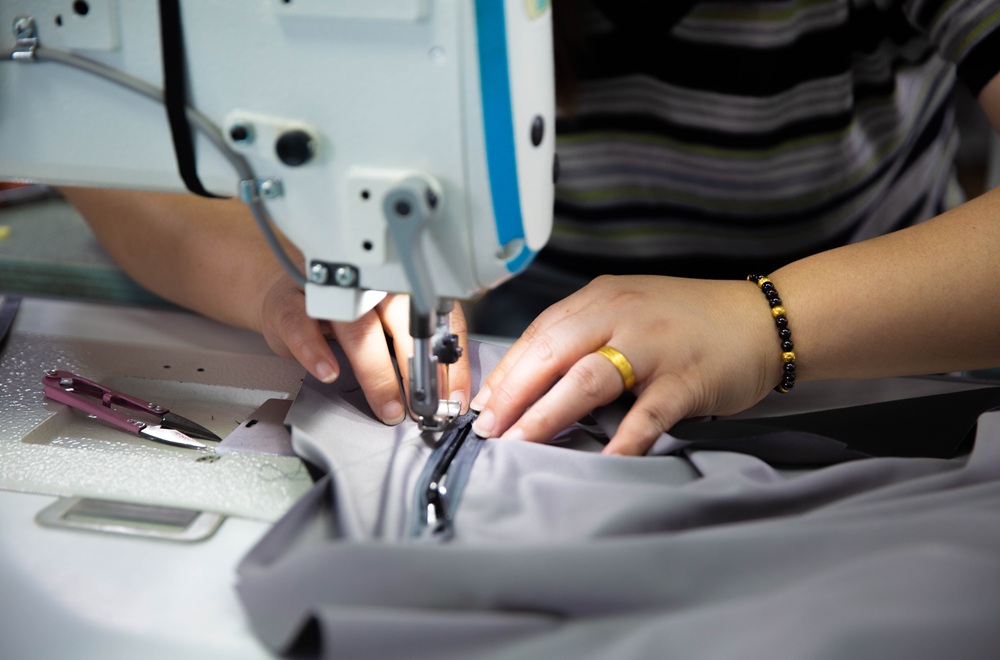
If pattern making determines product accuracy, sewing determines the final appearance and workmanship quality.
Sewing is often the most visible representation of manufacturing quality.
Even when materials are identical, differences in sewing quality can dramatically affect the finished product.
Potential issues may include:
- Skipped stitches
- Uneven stitch spacing
- Misaligned seams
- Appearance inconsistencies
At NastoCamp, sewing operators typically have more than 10 years of industry experience.
Production teams follow standardized operating procedures and participate in regular production meetings to review quality performance and production requirements.
Equipment setup and machine maintenance are also monitored throughout production to ensure consistency.
Step 6: In-Process Quality Control
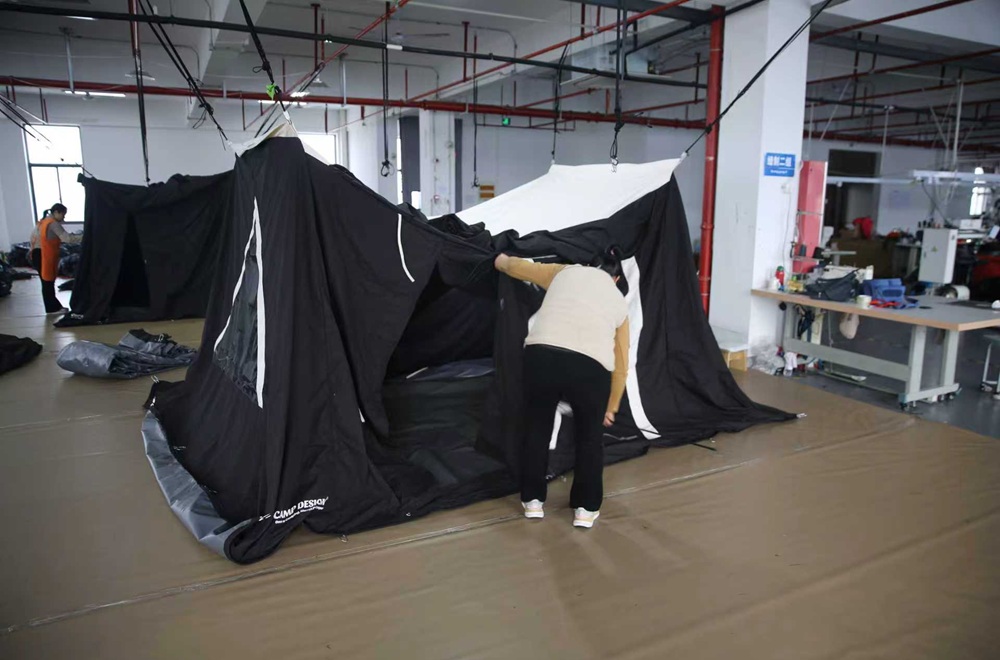
Quality control is not limited to final inspection.
Effective manufacturers monitor quality throughout production.
This approach is integrated into our overall manufacturing workflow and quality management process.
At NastoCamp, quality management includes:
- Production line inspections
- Process audits
- Sampling inspections
- Dedicated QC personnel
When issues are identified, corrective actions may include:
- Immediate rework
- Batch isolation
- Root-cause analysis
- Process correction
This approach helps prevent minor issues from becoming large-scale production problems.
Step 7: Final Inspection Before Shipment
Before shipment, finished products undergo final inspection procedures.
Inspection commonly includes:
- Appearance verification
- Assembly verification
- Accessory count verification
- Packaging inspection
Semi-finished products are inspected throughout production, while finished products are evaluated according to established AQL sampling standards.
The objective is to verify that products meet agreed specifications before shipment.
What Buyers Should Look for When Evaluating a Tent Manufacturer
When comparing manufacturers, buyers often focus on product specifications.
However, production capability should receive equal attention.
Questions worth asking include:
- Who develops the production patterns?
- How are incoming materials inspected?
- Is sample testing conducted before production?
- How is sewing quality controlled?
- What quality control procedures are used during production?
- What final inspection standards are followed?
The answers often reveal more about a factory’s capabilities than a product catalog alone.
Manufacturing Expertise Matters More Than Many Buyers Realize
A tent is not simply a collection of materials.
It is the result of thousands of manufacturing decisions made throughout the development and production process.
Pattern accuracy, material selection, sewing quality, inspection procedures, and production management all contribute to the final product.
This is why two factories can start with similar specifications and still produce very different results.
For outdoor brands, distributors, and importers, understanding how a manufacturer works behind the scenes is an important step toward reducing risk and achieving consistent product quality.
Interested in seeing real production, inspection, and testing activities? Explore our gallery to view manufacturing records and factory documentation from NastoCamp.
Because in OEM tent manufacturing, quality is built into the process, not added at the end.
For buyers comparing quotations, see our guide to evaluating quality when tent specifications appear identical.
Frequently Asked Questions About Tent Manufacturing Quality
Why can two factories produce different quality tents from the same design?
Tent quality depends on more than drawings and materials. Pattern-making accuracy, sewing quality, production management, and quality control procedures all influence the final result.
What is the most important stage of tent manufacturing?
Every stage is important, but pattern making and sewing typically have the greatest impact on product fit, appearance, and performance.
Why is sample development important before mass production?
Sample development allows manufacturers to verify design accuracy, material compatibility, and product performance before committing to full-scale production.
How is sewing quality controlled during tent production?
Quality control may include operator training, production-line inspections, process audits, and corrective actions when issues are identified.
What should buyers ask when evaluating a tent manufacturer?
Buyers should ask about pattern development, material inspection procedures, sample testing, quality control systems, and final inspection standards—not just product specifications.