When outdoor brands, distributors, and importers evaluate a camping tent, one of the first questions they ask is:
“How waterproof is it?”
The answer often starts with a waterproof rating such as PU3000mm or PU5000mm. While these numbers are important, they do not tell the whole story.
In real-world outdoor conditions, waterproof performance depends on much more than fabric specifications. Construction details, seam sealing, accessory materials, and manufacturing quality all play critical roles.
That is why professional tent manufacturers perform rain testing before mass production. Rain testing helps identify potential issues that laboratory fabric tests alone may not reveal. Rain testing is just one part of a comprehensive quality control process that helps ensure consistent product performance before mass production.
In this article, we explain what rain testing involves, why it matters, and what it can reveal about the true waterproof performance of a tent.
Why Waterproof Performance Matters
For outdoor brands, waterproof performance is directly connected to customer satisfaction and brand reputation.
A tent that leaks during heavy rain can lead to:
- Product returns
- Negative reviews
- Warranty claims
- Damage to brand credibility
For project buyers and distributors, waterproof reliability is equally important because product failures can affect large groups of users.
As a result, waterproof performance should never be evaluated solely based on a fabric specification sheet.
What Does a Waterproof Rating Actually Mean?
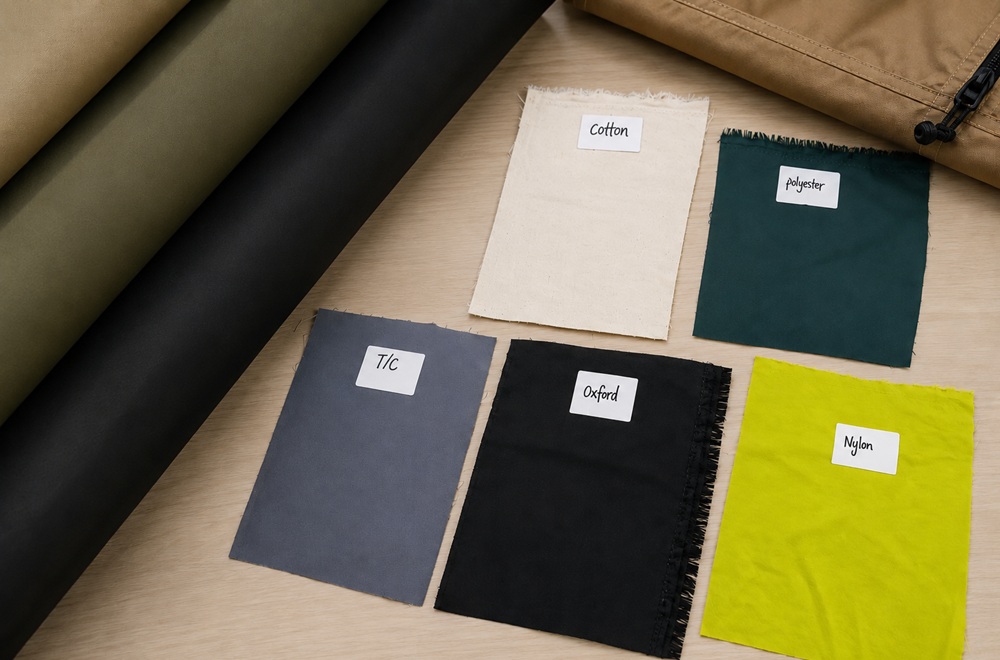
Most tent fabrics are tested using a hydrostatic pressure test.
The result is typically expressed as a waterproof rating such as:
- 2000mm
- 3000mm
- 5000mm
- 10000mm
Generally speaking:
- 2000–3000mm is suitable for moderate outdoor conditions.
- 3000–5000mm is common for quality camping tents.
- Higher ratings are often used for more demanding environments.
For tent floors, waterproof ratings are usually higher because the floor experiences greater pressure from users, equipment, and ground moisture.
Many camping tent floors use waterproof ratings between 5000mm and 10000mm.
However, there is an important point many buyers overlook:
A fabric can pass a waterproof test while the finished tent still develops leaks.
Why Waterproof Fabric Alone Is Not Enough
Waterproof fabric is only one part of the equation.
Several other factors influence whether a tent remains dry during prolonged rainfall.
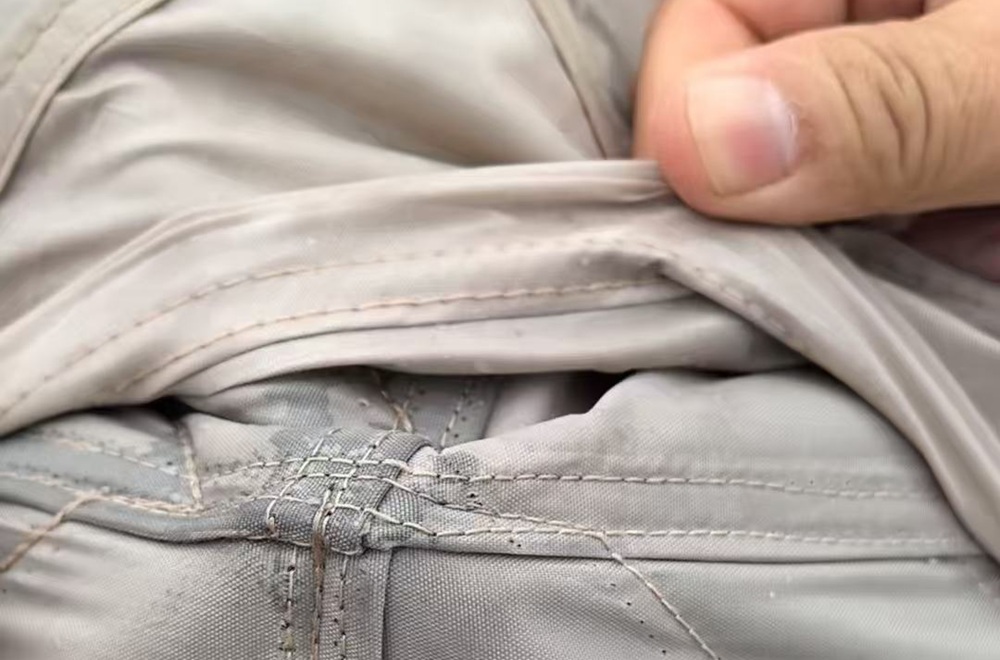
Seams
Needle holes created during sewing can become entry points for water.
Depending on the product design and customer requirements, seams may require seam sealing or seam taping to maintain waterproof performance.
Zippers and Openings
Doors, windows, and ventilation openings must be properly designed to prevent water intrusion.
Tent Structure
Rainwater should flow away efficiently from the tent surface.
Poor structural design can create water accumulation points.
Accessory Materials
Webbing, reinforcement patches, attachment points, and other components can affect waterproof performance if they absorb moisture.
Manufacturing Quality
Even when high-quality materials are used, improper production processes can compromise waterproof performance.
This is why finished-product testing remains essential.
A Real Example From Rain Testing
During the development of a cotton canvas tent, our team conducted a routine rain test before production.
The tent fabric itself met the required specifications.
However, during testing, inspectors discovered water entering the tent interior.
The initial assumption was that the fabric or seams might be responsible.
After further investigation, the actual cause was identified elsewhere.
The webbing used on the tent was not water-repellent.
During prolonged exposure to rain, the webbing absorbed water and gradually transferred moisture into the interior of the tent.
The fabric was not leaking.
The seams were not leaking.
The webbing was the source of the problem.
After replacing the original webbing with water-repellent webbing, the issue was resolved successfully.
This example highlights an important lesson:
True waterproof performance depends on the entire tent system, not just the main fabric.
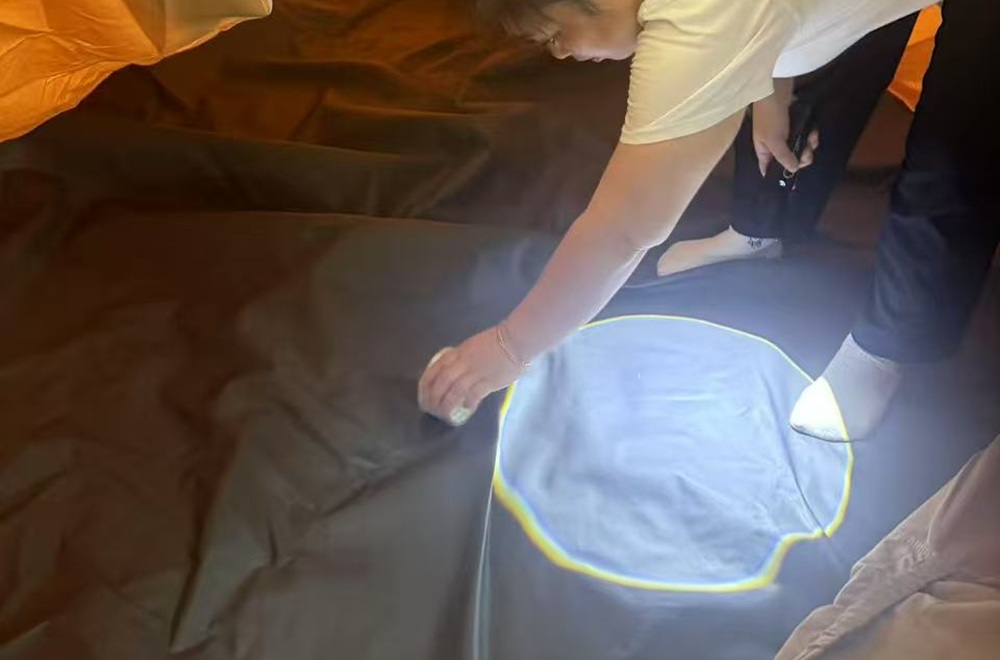
How NastoCamp Conducts Rain Testing
At NastoCamp, rain testing is an important part of product development and quality verification.
Testing is commonly performed for:
- New product development projects
- Cotton canvas tents
- TC tents
- New structural designs
- Customer-requested testing
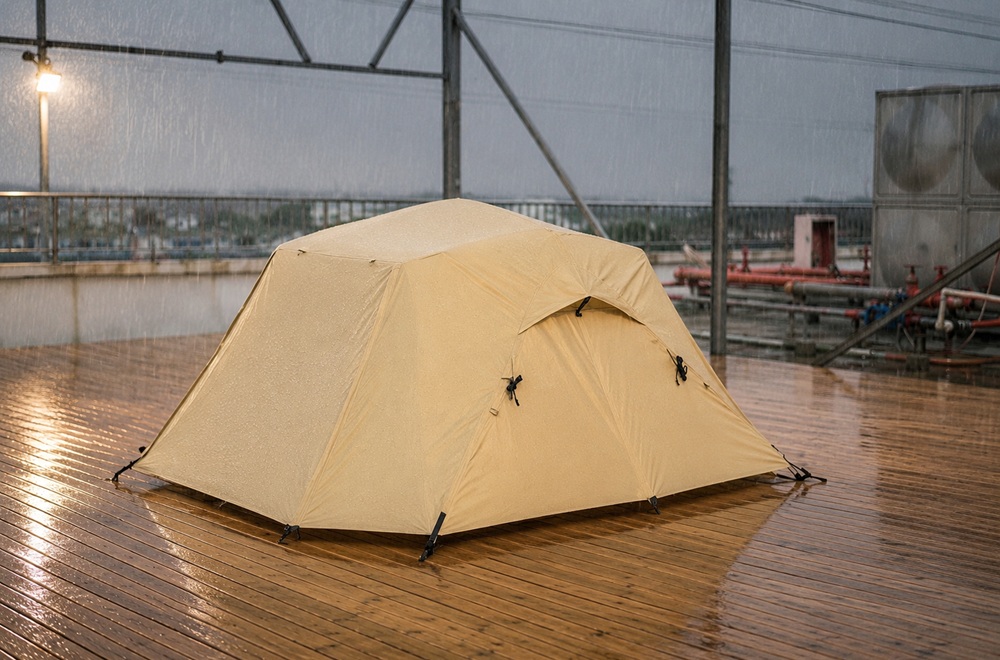
Our testing area uses a simulated natural rainfall environment with wind exposure to create realistic outdoor conditions.
A typical rain test lasts approximately one hour, although testing duration may vary depending on product design and project requirements, which is usually sufficient to identify potential waterproof issues.
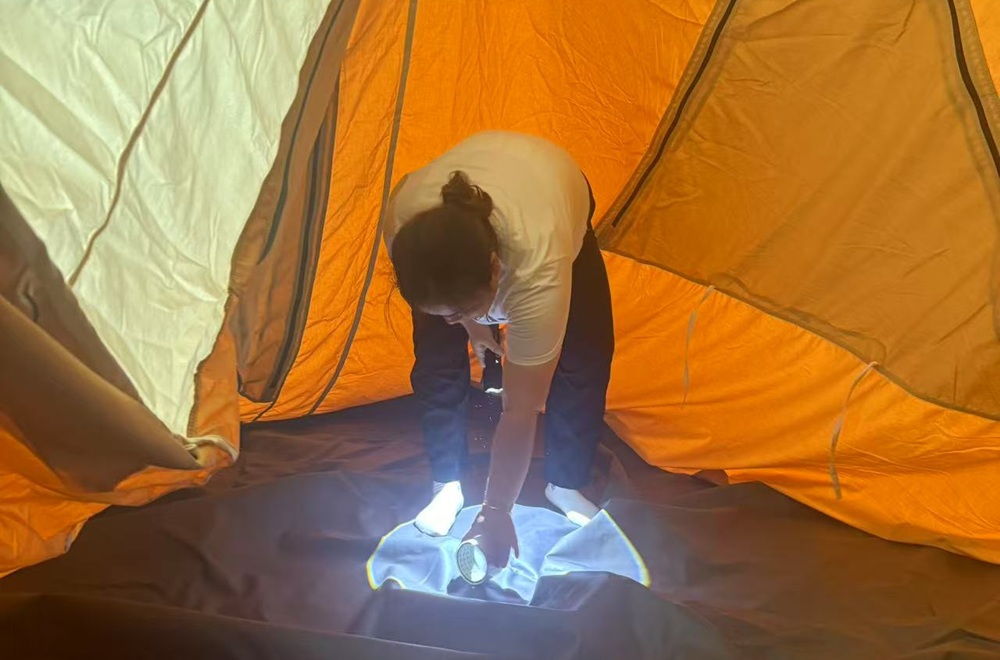
During testing, our team carefully inspects:
- Tent seams
- Doors and windows
- Groundsheet performance
- Potential leakage points
- Internal moisture accumulation
Inspectors may enter the tent during testing to observe conditions directly and identify areas requiring improvement.
The goal is not simply to confirm that a tent can withstand water.
The goal is to identify weaknesses before the product reaches the customer.
Rain testing is integrated into our broader manufacturing and quality assurance workflow, helping our team verify product performance before production and shipment.
Common Questions Buyers Ask About Waterproof Tents
Can a tent with a 5000mm waterproof rating still leak?
Yes.
Waterproof ratings only measure fabric performance.
Leaks may still occur due to seams, accessory materials, structural design, or manufacturing defects.
Are taped seams necessary?
It depends on the tent design and intended application.
Many waterproof tents use seam sealing or seam taping to improve performance, but requirements vary by product.
Is higher waterproof rating always better?
Not necessarily.
The appropriate waterproof rating depends on the intended use, climate conditions, and overall product design.
Can cotton canvas tents be waterproof?
Yes.
However, cotton canvas tents require proper design, suitable accessory materials, and thorough testing to ensure reliable performance.
What Outdoor Brands Should Verify Before Ordering
When evaluating a tent manufacturer, buyers should ask more than just the waterproof rating.
Consider asking:
- Has the finished tent been rain tested?
- What waterproof rating is used for the flysheet?
- What waterproof rating is used for the floor?
- Are seams sealed or taped?
- Can testing photos or videos be provided?
- What quality control procedures are used during development?
The answers to these questions often reveal more about product reliability than waterproof ratings alone.
Interested in seeing real testing records and factory activities? Explore our gallery for additional manufacturing and testing documentation.
Final Thoughts
Waterproof ratings are important, but they are only one part of understanding tent performance.
Real-world waterproof reliability depends on materials, construction details, manufacturing quality, and thorough testing.
Rain testing provides valuable insight into how a tent performs as a complete system and helps identify issues that laboratory fabric tests may miss.
For outdoor brands and importers, evaluating waterproof performance should always go beyond the specification sheet.
Because in tent manufacturing, true quality is proven through testing, not assumptions.